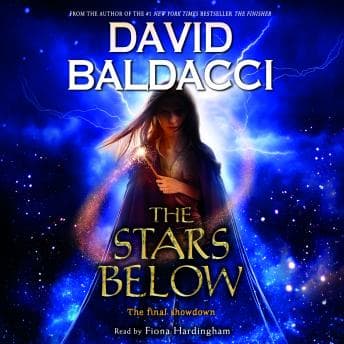

"This. Means. War."
That's literally how the book description starts, and around hour ten, when Vega Jane is finally facing down Necro in what can only be described as a magical cage match with the fate of the world on the line, I understood why. I was supposed to be debugging my procedural generation code. Instead I'm white-knuckling my coffee mug at 3 AM while a YA fantasy finale goes absolutely nuclear.
Baldacci Wrote a Fantasy Series and Nobody Told Me
Here's the thing that's been bugging me since I discovered this series existed: David Baldacci—the guy whose political thrillers my dad reads on airplanes—quietly built a four-book fantasy world with magic systems, creature-infested wilderness, and a villain literally named Necro. (Yes, "death" in Latin. No, subtlety is not on the menu. I respect the commitment.)
Compared to his thriller work, the pacing here is different but recognizable. Baldacci knows how to structure tension, how to build toward a climax, and that skill transfers surprisingly well to fantasy. I went down a Baldacci rabbit hole after finishing this and landed on Collectors—different genre entirely, but you can absolutely feel the same architectural instincts at work. Where his thrillers might have car chases and political machinations, Stars Below has magical confrontations and army-building. Same bones, different skin. And honestly? The progression is satisfying. Vega started as a nobody, fought her way through three books of increasingly dangerous obstacles, and now she's earned this final showdown. It's not Sanderson-level hard magic with explicit rules and thermodynamic costs, but there's enough internal consistency that my brain didn't revolt.
Hardingham's Been Living With These Characters
Fiona Hardingham took over narration from Nicola Barber after book one, which means she's had three full books to settle into these voices. By the finale, that investment pays off. There's a lived-in quality to her performance—she knows how Vega sounds when she's scared versus when she's determined, knows the cadence of the supporting cast. The emotional beats during the climax land because she's not figuring out the characters anymore. She owns them.
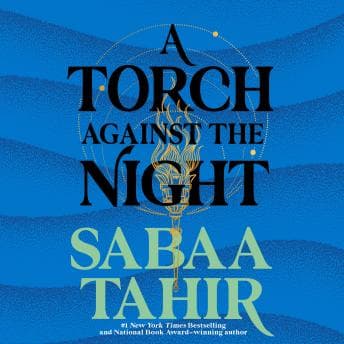
Single-narrator YA fantasy lives or dies on whether that narrator can carry you through extended action sequences without losing clarity. Hardingham handles the war scenes—and there are war scenes, plural—without the chaos becoming muddy. She brings that same battle-scene clarity to Torch Against the Night, which I listened to after stumbling onto this series—different world, same sense that you're in completely capable hands. You can track who's where, who's in danger, who's making the heroic sacrifice. At 12 hours, that's no small feat.
Is she Steven Pacey? No. (Steven Pacey walked so other narrators could run, but comparing anyone to his Logen Ninefingers is unfair.) She's a professional who serves the story with genuine emotional investment. That's what you need here.
The D&D Party Energy Is Strong
What surprised me most—and what would absolutely appeal to my gaming group—is how well the ragtag army element works. Vega didn't just level up alone. She gathered misfits, each with their own skills and histories, and watching them come together for the final battle scratches that found-family itch. It's the party dynamics you hope for in a good campaign: the reluctant allies, the earned trust, the moment when everyone's individual strengths combine for something bigger.
My D&D group would love this. I'm already thinking about how to adapt some of the creature encounters for our next session. (Dr. Patel would be appalled at how I'm using my "research time.")
Who Should Storm These Stars (And Who Should Run)
This is a finale. Book four of four. If you haven't read the first three, you're going to be lost and you're going to miss the emotional weight of everything that happens. Don't start here. That's like watching Return of the King first and wondering why everyone's so emotional about a ring.
If you've been with Vega since the beginning, this is your payoff. The collision course between her iron will and Necro's magical power delivers exactly what it promises. Young readers who've grown up with this series get a satisfying conclusion. Adults who enjoy earnest YA fantasy without irony—this works. It's not grimdark, it's not morally complex in the way adult fantasy can be, but it's well-constructed and it earns its ending.
Skip if: you need hard magic systems with explicit rules, you want morally gray protagonists who make questionable choices, or you're allergic to anything that smells like chosen-one narrative. Also skip if you haven't read books one through three. Seriously. I cannot stress this enough.
Thesis Still Unwritten, No Regrets
I finished this at 4 AM. My procedural generation algorithms remain untested. Dr. Patel's next email is going to be pointed. But sometimes you need a straightforward good-versus-evil fantasy where the scrappy underdog faces the powerful sorcerer and the stakes are literally world-ending. It's comfort food for the fantasy reader's soul—the kind of satisfying finale that reminds you why you fell in love with the genre in the first place.
Yes, it's 40+ hours across the series. Yes, it's worth it. Especially if you've got a young reader ready to graduate from Percy Jackson energy into something with a bit more edge, or if you're a grad student who's made peace with his procrastination habits. Either way.
Baldacci did something interesting stepping outside his usual genre, and the result is a competent, entertaining conclusion to a solid YA adventure. Not revolutionary, but earnest and well-executed. Sometimes that's exactly what you need.