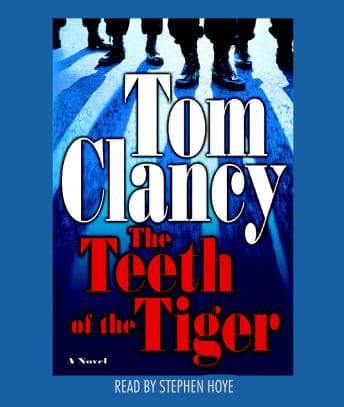

I've been a Clancy fan since my dad left a dog-eared copy of The Hunt for Red October on my nightstand when I was probably too young to be reading about submarine warfare. So when I say this audiobook was a struggle, I'm not coming at it as a hater. I'm coming at it as someone who genuinely wanted to love it.
The premise is solid—maybe even great. Jack Ryan Jr. stepping into his father's shadow, working for a shadow intelligence firm called "The Campus" that operates outside government oversight? That's the kind of morally gray territory that makes for excellent thriller content. And when Clancy starts weaving together Arab terrorist cells and Colombian drug cartels, you can feel the gears of a massive geopolitical machine starting to turn. This is what Clancy does. He builds these clockwork plots where every piece matters.
But here's the thing about audiobooks: the narrator is half the experience. Maybe more.
Stephen Hoye's Understated Approach
Hoye has credentials. The man has won fifteen AudioFile Earphones Awards and two Audies. He clearly knows what he's doing in general. But something about this pairing just... doesn't work.
His delivery is understated to the point of flatness. In a thriller—especially a Clancy thriller with its sprawling cast of intelligence operatives, terrorists, and political players—you need vocal differentiation to keep track of who's who. I found myself rewinding constantly because I'd zone out during dialogue-heavy sections. Was that Jack Jr. speaking or his cousin? Is this the cartel guy or the Campus handler? The voices blur together into this masculine, benign drone that—and I'm not exaggerating—nearly put me to sleep on more than one commute.
It's not that Hoye is bad exactly. He's clear. His pacing is consistent. The production quality is clean with no weird audio issues. But thriller narration requires commitment. It requires understanding that you're not just reading words—you're embodying tension. That tension was missing here. The delivery sometimes felt like someone reciting poetry rather than performing a story about terrorism and covert assassination.
Clancy's Clockwork Plotting Still Delivers
Here's what saves this from being a total wash: Clancy's plotting is still Clancy's plotting. The man understood how intelligence agencies actually work, how money moves through shadow networks, how a terrorist attack gets planned and executed. The technical details are fascinating if you're into that sort of thing (I am). The story moves at a brisk clip when you can stay focused on it.
And honestly? The concept of The Campus—a private intelligence firm that can do what the CIA legally can't—feels even more relevant now than it probably did when this came out in 2003. Clancy explores this moral territory even further in Locked On, though that one has its own narration issues. There's something unsettling about watching Jack Jr. become a killer for an organization that answers to no one. Clancy doesn't shy away from the moral implications, even if he doesn't dwell on them either.
The problem is that all of this good stuff gets buried under narration that doesn't serve it. A thriller should make your heart rate spike. This one made me check how many hours I had left.
Maybe Read This One Instead
I hate saying this about a Clancy book. I really do. But if you're interested in The Teeth of the Tiger—and the story itself is genuinely worth experiencing—you might be better off with the print version. Or at minimum, be prepared to bump the speed up to 1.25x or 1.5x to inject some energy into the narration.
Die-hard Clancy completionists working through the Ryan universe will probably push through regardless. The plot payoffs are there. The worldbuilding is solid. Jack Jr. is an interesting character to watch develop. But if you're new to Clancy or you need dynamic narration to stay engaged? This isn't your entry point. The monotone delivery and lack of character voice differentiation make 16+ hours feel like a marathon—not the good kind where you lose track of time, but the kind where you're very aware of every passing minute.
My podcast listeners know I'll forgive a lot if the story hooks me. I gave Girl Before a similar pass when the premise grabbed me despite some execution stumbles. This story did hook me, conceptually. I just wish the audio experience had matched the ambition of the plot.