
How many soldiers died from infections before they died from bullets?
That question hit me about an hour into this audiobook, somewhere on I-35 between Austin and Dallas. I've seen guys lose limbs to IEDs, watched medics work miracles with field surgery - but I'd never really thought about what combat medicine looked like before antibiotics existed. Three Day Road showed me battlefield medicine from an even earlier war - WWI, where the horrors were just as real but the tools even more primitive. Before sulfa. Before we could actually fight the invisible enemy.
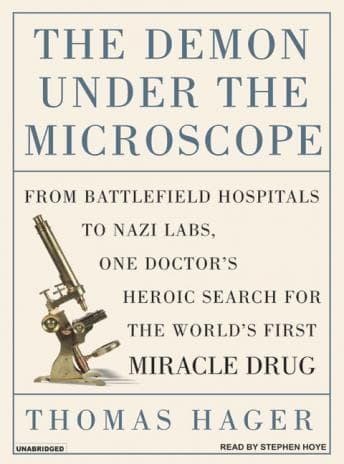
Thomas Hager's book grabbed me by the collar and didn't let go.
The Mission Brief You Never Got in History Class
Here's what they don't teach you: the Nazis found the first antibiotic. Let that sink in. The same regime that conducted horrific medical experiments also stumbled onto a drug that would save millions of Allied lives - including Churchill and FDR Jr. The irony isn't lost on me, and Hager doesn't shy away from it.
The book reads like an intelligence dossier crossed with a thriller. You've got German scientists racing against time, corporate espionage, patent wars, and battlefield hospitals where doctors were basically watching men die from paper cuts. (I'm exaggerating, but not by much.) The pre-antibiotic era was brutal in ways that make our modern medical complaints look ridiculous.
What I appreciated - and I mean genuinely appreciated as someone who's sat through countless briefings - is that Hager doesn't dumb it down OR make it impenetrable. He explains the chemistry without making you feel like you're back in high school. The man can write about molecular structures and somehow make it feel like you're reading a spy novel.
Stephen Hoye Behind the Mic
Look, I've got opinions about narrators. Stephen Hoye is... competent. He pronounces the German names correctly, handles the medical terminology without stumbling, and keeps a steady pace through 12-plus hours of material. That's not nothing.
But here's the thing - some listeners have called his delivery "about as animated as a stuffed bear," and I can see where they're coming from. There are moments in this story that deserve more fire. When you're describing doctors watching helplessly as soldiers die from streptococcal infections, I want to feel that frustration. Hoye keeps it professional, which works for the scientific sections but sometimes flatlines during the human drama.
Did it ruin the experience? No. Did I occasionally wish for a narrator with more range? Yeah, a bit. But his clarity with the technical content is genuinely valuable - I never had to rewind because I missed a chemical name or got confused about which scientist was which.
Why This Matters Beyond the History
Here's where my security consulting brain kicked in. This book isn't just about medicine - it's about how innovation happens under pressure. The drug approval process we have today? Sulfa created it. The FDA regulations that sometimes drive pharmaceutical companies crazy? Direct result of sulfa's wild west era, when companies were selling untested drugs that killed people.
I kept thinking about parallels to modern threat assessment. The way Hager describes the race to understand bacterial infections reminded me of how we approach cybersecurity threats now - invisible enemies, constantly evolving, requiring both systematic research and creative thinking.
The book also doesn't flinch from the ethical messes. Nazi scientists contributed to medicine that saved millions. American companies rushed dangerous products to market. Good intentions led to bad outcomes, and sometimes terrible people did useful work. Alexander Hamilton wrestles with similar contradictions - brilliant men with serious flaws shaping history in ways both inspiring and troubling. That moral complexity is refreshing - Hager trusts you to handle it.
The Repetition Problem
Gotta be honest - there are stretches where Hager circles back on points he's already made. Around the 8-hour mark, I found myself thinking "Yes, I know bacteria were a mystery before germ theory, you've told me." It's not fatal, but if you're the type who gets impatient with repetition, bump the speed to 1.25x. I did, and it helped.
Ranger slept through most of this one, which I take as a sign that the pacing, while solid, isn't exactly edge-of-your-seat. More of a slow burn than a sprint. The payoff is worth it, but you've got to commit.
Who's This For (And Who Should Skip It)
If you've got any interest in medical history, World War II, or just how we got from "pray and hope" to modern medicine - this is a must-listen. Skip it if you need constant action or can't handle moral ambiguity in your history. The narration won't blow you away, but it won't tank the experience either. Think of Hoye as a reliable NCO - he gets the job done without drama.
I walked away from this book with a new appreciation for something I'd completely taken for granted. Next time I take an antibiotic, I'll think about the German scientist who first figured it out, the Allied soldiers whose lives it saved, and the messy, complicated path from laboratory to battlefield hospital.
Mission accomplished, Hager. Ranger approved.





![Steve Jobs [unabridged audiobook] audiobook cover](/_next/image?url=https%3A%2F%2Fcovers.audiobooks.com%2Fimages%2Fcovers%2Ffull%2F9788499923406.jpg&w=1920&q=75)