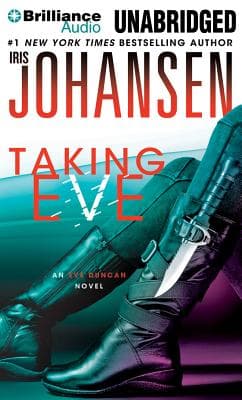

Here's a sentence that probably describes half the Eve Duncan books: a forensic sculptor with a tragic past gets dragged into someone else's nightmare. I know. I know. But stick with me, because Taking Eve does something specific that made me grip my steering wheel on the 202 heading home at 6 AM - it weaponizes the thing Eve is best at, her actual skill set, against her. Jim Doane doesn't want Eve dead. He wants her hands. He needs her to reconstruct a skull, and he's willing to burn the entire world down to get her cooperation. That's a villain with a plan, and plans are scarier than monsters.
I started this one during my post-shift drive on a Tuesday after a genuinely rough night - we had a multi-vehicle on I-10 come in around 2 AM and I was still running on cortisol and cold coffee when I hit play. Which, in retrospect, was maybe not the ideal mental state for a thriller about abduction and obsession. But also? Perfect. Because Johansen writes trauma like someone who understands that the body keeps score. Eve's grief over Bonnie - her daughter taken at seven, the wound that defines the entire series - isn't background noise here. Doane is essentially holding up a mirror to Eve's own twenty-five years of not knowing, and watching Eve recognize herself in his desperation is genuinely uncomfortable in a way that good thrillers should be.
When the Villain Has a Reason That Actually Makes Sense
This is what separates Doane from your standard kidnapper-of-the-week. He's not irrational. He's a man who watched his son disappear and has only burned skull fragments to show for it. He can't go to the police - his past makes that impossible - so he manufactures a situation where Eve has no choice. As someone who's worked with law enforcement at the hospital, I can tell you: people with dark pasts who can't involve authorities do desperate, creative, terrible things. Doane feels real in that specific way. The madness isn't random. It's built on something recognizable, which makes it worse. I ran into that same unsettling logic with the antagonist in House on Vesper Sands - a villain whose reasoning you can almost follow, which is so much harder to shake than one who's just cartoonishly evil.
The forensic sculpture details are handled reasonably well - not perfectly, but Johansen's done her homework on the series long enough that the procedural bones are solid. Eve's process, the way she talks about the skull as a person with a story, that part rings true. I didn't yell at my dashboard once about the science. That's a genuine compliment.
Elisabeth Rodgers: The Part Where I Have Mixed Feelings
Okay. So. Elisabeth Rodgers has been with this series long enough that she is Eve Duncan at this point. Her slightly Southern lilt for Eve is consistent, lived-in, comfortable. And she does something genuinely impressive with Michael - Eve's son - where the voice is age-appropriate in a way that doesn't feel patronizing or fake. That's harder than it sounds. Child voices in audiobooks are usually either too babyish or weirdly adult. Rodgers threads it.
The villain, though. Doane. I understand what she's going for - eerie, controlled menace - and maybe 70% of the time it works. But there are moments where the male character voices tip into something that made me actually laugh out loud in my car, which is not the intended effect for a scene where someone is being threatened. The negative reviews calling the male voices "laughable" aren't wrong. They're not wrong. It doesn't ruin the book because the story carries enough weight on its own, but if you're sensitive to narrator consistency, you'll notice.
For a 9h 58m book, that's a meaningful caveat. You're spending real time with these voices.
Borrow It, But Don't Start Here
If you're new to Eve Duncan, this is book 16. Starting here is like walking into a trauma bay mid-code - technically you can catch up, but you're missing context that would make everything hit harder. The emotional payoff with Bonnie's story, which is central to why Doane's mirror-dynamic works, requires knowing what Eve's been carrying for fifteen books.
For series fans? This is a solid, propulsive entry. Not the best in the series, but not filler either. The abrupt ending is real - several listeners flagged it and they're right, it's a trilogy setup and it stops mid-breath - so go in knowing you're committing to at least one more book.
Perfect for that post-shift decompression, as long as you've got the next one queued up. Carlos asked me why I was still in the driveway at 7 AM. I told him I needed five more minutes. I needed fifteen.