
I was folding laundry at 7 AM after a twelve-hour night shift - that specific kind of tired where your hands are moving but your brain is somewhere else entirely - when Mark Hammer read a sentence so flat I actually stopped mid-fold and stared at the washing machine like it had personally offended me.
James Lee Burke wrote that sentence. And it deserved better.
Burke's Louisiana Is a Character You Can Almost Smell
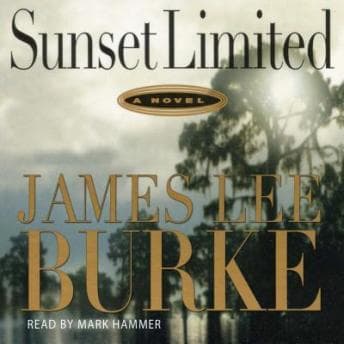
Here's the thing about Sunset Limited that I need you to understand before anything else: the writing itself is stunning. Burke is doing something genuinely rare here - he's weaving a forty-year-old crucifixion (an actual crucifixion, labor organizer Jack Flynn nailed to a barn during a strike) into a present-day conspiracy involving Cool Breeze Broussard, a small-time criminal who turns out to be the thread that unravels everything. The racial violence isn't backdrop. It's the whole architecture. Burke writes about the legacy of Southern brutality the way I've watched trauma work in patients - it doesn't leave, it just changes shape. That same weight of history pressing down on the present is something I kept thinking about when I read Lightning Rod: A Zig & Nola Novel, though Burke goes somewhere much darker with it.
Dave Robicheaux is the kind of detective who carries his own damage like a second skin, and Burke gives him this internal monologue that hits like good poetry on no sleep. There's a particular quality to how Burke describes New Iberia, Louisiana - the heat, the Spanish moss, the class warfare baked into every interaction between old money and everyone else - that made me feel like I was sweating through my scrubs just listening. I've been to the South exactly twice. Didn't matter. Burke puts you there.
Megan Flynn, the photojournalist who comes back to investigate her father's murder and drags Robicheaux into the mess, is drawn with this specific kind of recklessness that I recognized immediately. I've treated people like her in the ER. The ones who run toward the thing that hurt them because stopping feels like surrender. Burke gets that psychology right in a way that most thriller writers don't bother with.
The Narration Problem Is Real and It's Significant
I need to talk about Mark Hammer. I really do.
Listeners who've heard Will Patton narrate other Robicheaux books are going to feel this like a demotion. Hammer reads this book with a kind of... evenness that works against everything Burke is doing. Burke's prose has rhythm - it rises and falls, it has weight and release. Hammer delivers it like he's reading a moderately interesting insurance document. No distinction between characters. Cool Breeze Broussard sounds like Dave Robicheaux sounds like the villain sounds like Megan Flynn. For a book where class and race and regional identity are literally the whole point, losing those vocal distinctions is not a small problem.
I kept turning it up in the car thinking maybe I was just too tired to track the voices. I was not too tired. There just weren't any voices to track.
The content warnings are real here too - racial violence, historical brutality, the kind of class warfare that makes you want to call your union rep. Burke doesn't flinch and he shouldn't. But Hammer's flat delivery sometimes made the most devastating moments land with less force than they deserved. That's a specific kind of failure.
Who This Is For (And Who Should Wait)
If you've never read Burke before, don't start here with this narration. Go find a Will Patton version of a Robicheaux book first, get calibrated on what Burke sounds like when the audio is working for you, then come back.
If you're already a Burke devotee and you've read this one in print, the audiobook might be fine as a revisit - you'll fill in the vocal texture yourself from memory. But if you're coming to Sunset Limited fresh and audio-only, the narration is going to cost you something that Burke earned.
The book itself? Four stars, easy. The audio experience? That's where it gets complicated.
Carlos asked me why I looked annoyed when I came in for breakfast. I said the laundry was wrinkled. He knew I was lying. The man has lived with me for eleven years.