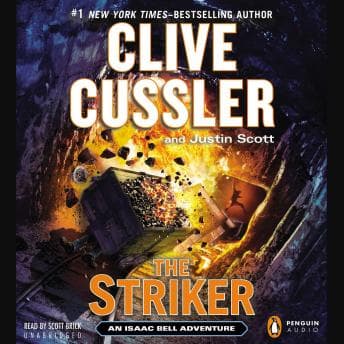

I was supposed to be debugging my procedural dungeon generator at 2 AM. Instead, I had Scott Brick in my ears describing Isaac Bell going undercover in 1902 coal mines while I stared blankly at my code and pretended I was being productive. My thesis advisor would be disappointed. I am not.
Here's the thing about Striker - it's essentially a prequel campaign for a character I already know from later adventures. Young Isaac Bell, barely two years out of his detective apprenticeship, getting his first real solo mission. And if you've ever run a D&D session where you let a level 2 character think they can handle a level 8 encounter? That's the energy here. Bell's got the skills but not the experience, and watching him piece together that this isn't just union sabotage but something way bigger - that's satisfying progression right there.
Pittsburgh 1902: Load-Bearing Setting
Cussler and Scott nail the historical atmosphere in a way that scratches my world-building itch. Pittsburgh's Duquesne Club, the brutal reality of strikebreaking, the coal mines themselves - this isn't just period decoration. It's load-bearing setting. The class divide between the mine owners and the workers creates natural tension that doesn't need much explanation. You feel the soot in your lungs and the danger in every tunnel.
But - and this is where my thesis-avoiding brain started noticing patterns - the action is front-loaded with setup and back-loaded with payoff. The first several hours are investigation and character establishment. If you're expecting Cussler's usual breakneck adventure pacing from minute one, you might get antsy. I didn't mind because I was procrastinating anyway, but if you're trying to power through on a road trip, know that the runaway tipple car sequence and the real confrontations come later.
Scott Brick: Reliable Party Member
I've listened to enough Brick narrations to know his range, and he's doing solid work here. His emotional delivery during the tense moments hits right - there's genuine enthusiasm when the action kicks in, not just reading faster. He gives Bell a younger, less certain quality that distinguishes this from the more confident detective in later books. The dialogue moves cleanly, and he differentiates characters well enough that I never lost track of who was speaking during conversations.
Is it Steven Pacey walking on water? No. But Brick is a reliable narrator who elevates material rather than just delivering it. Whenever I see his name attached to something, I know the audio experience will be professional and engaging. That consistency matters when you're committing ten hours to something.
Where The Cracks Show
Some listeners have noted that Justin Scott (Cussler's co-author) seems less engaged in this one compared to other Bell novels, and I can see it. There are stretches that feel like competent adventure fiction rather than inspired adventure fiction. The villains are ruthless and ambitious, sure, but they're more functional antagonists than memorable ones. You won't be quoting their dialogue at your D&D table.
The book also assumes you care about Isaac Bell as a character. If you're new to the series, this prequel actually works as an entry point - you're meeting young Bell alongside his first big case. But if you've never vibed with Cussler's style of period adventure, Striker won't convert you.
Roll For Initiative (Or Don't)
This is for the historical adventure crowd who wants competent pulp fiction with real period detail. If you like your protagonists clever but not infallible, your settings researched and immersive, and your action sequences earned rather than constant - Striker delivers. My D&D group would absolutely mine this for early 1900s campaign material.
Skip it if you need wall-to-wall action or if historical fiction puts you to sleep. Also skip if you're looking for deep character psychology - Bell is likeable and capable, but he's not keeping you up at night pondering his inner demons.
Worth The Thesis Delay?
At just under ten hours, Striker is a solid investment for focused listening. It's not Cussler's best work, but it's better than the last couple Bell novels according to folks who track these things. Scott Brick makes the journey smooth, the historical setting is genuinely interesting, and watching young Bell prove himself scratches that progression fantasy itch even in a non-fantasy context. That same satisfaction of watching a character level up through actual competence shows up in Timeless: A Drizzt Novel, though obviously with more swords and significantly less coal dust.
Did I finish debugging my code? No. Did I enjoy my night more than I would have otherwise? Absolutely. Dr. Patel can wait.