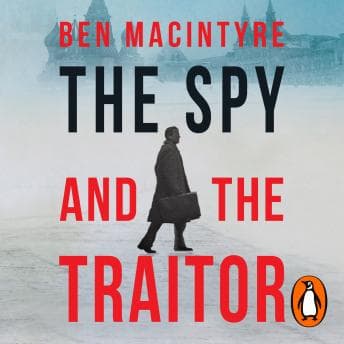
Let me cut to the chase: I've read more intelligence briefings than I can count, sat through countless after-action reports, and watched enough History Channel documentaries to know when someone's padding the story. Ben Macintyre doesn't pad. This is the real deal.
I finished this one during a three-day security audit in Houston - fourteen hours of windshield time each way, and I'm genuinely annoyed that the drive wasn't longer. That's not something I say often.
The Kind of Intel That Changes Everything
Oleg Gordievsky. KGB colonel. British asset for over a decade. And here's what got me - Macintyre doesn't just tell you what Gordievsky did, he shows you the operational environment. The dead drops. The brush passes. The chalk marks on lampposts that meant "I'm burned, get me out." This isn't some novelist guessing at tradecraft based on a Wikipedia binge. Macintyre clearly did his homework, and as someone who's worked with intelligence assets in theater, I can tell you - the details ring true.
The 1985 exfiltration from Moscow? I've seen some hairy extractions in my time. Nothing quite like stuffing a man in the trunk of a diplomatic vehicle and driving him through Soviet checkpoints while his family follows in a separate car, his infant daughter drugged to keep her quiet. That's not Hollywood dramatics. That actually happened. And Macintyre builds the tension so effectively that I nearly missed my exit on I-10.
When the Author Reads His Own Work
Here's where I usually get skeptical. Authors narrating their own books can go sideways fast - they know the material too well, rush through the good parts, linger on their pet theories. Macintyre doesn't fall into that trap. His British delivery is measured, professional, and he knows when to let the story breathe. There's a restraint to his narration that matches the subject matter perfectly. These were men who survived by controlling their emotions, by never betraying themselves. Macintyre's voice captures that discipline.
Does he do character voices? No. And thank God - I don't need a British historian attempting a Russian accent for fourteen hours. What he gives you instead is clarity. You always know who's speaking, what's at stake, and why it matters.
The Traitor in Question
Aldrich Ames. CIA counterintelligence officer. Sold out every American asset in the Soviet Union for cash. Macintyre doesn't sensationalize Ames - he doesn't need to. The facts are damning enough. What struck me was the parallel structure: Gordievsky risking everything for ideology, for belief in something better, while Ames betrayed his country because he wanted a nicer car and his wife liked expensive things.
I've seen this scenario play out in real life, on a smaller scale. The guy who sells out his unit for money versus the guy who takes a principled stand. The contrast Macintyre draws isn't heavy-handed, but it's devastating.
Who Needs This in Their Ears
If you've got any interest in Cold War history, intelligence operations, or just want to understand how the shadow war actually worked - this is your book. Le Carré called it the best true spy story he'd ever read, and that man knows his business. Business Adventures has that same quality - meticulous research into high-stakes decisions where one wrong move costs everything.
Skip it if you want explosions every chapter. This is methodical, detailed, and assumes you can follow complex organizational structures (KGB, MI6, CIA - Macintyre keeps them straight, but you need to pay attention). Not a background listen. Not for the gym. This demands focus.
Debrief Complete
Fourteen and a half hours, and I'd do it again. Ranger slept through most of it - Cold War espionage doesn't have enough gunfire for him - but I was locked in. Macintyre has written the definitive account of one of the most important intelligence operations of the twentieth century, and he's delivered it in a format that respects both the subject matter and your time.
This is essential listening for anyone who wants to understand what the Cold War actually looked like in the trenches. Not the nuclear standoffs and summit meetings, but the quiet war fought by men who knew they'd be executed if they made one wrong move. Gordievsky made a lot of right moves. So did Macintyre.






![Steve Jobs [unabridged audiobook] audiobook cover](/_next/image?url=https%3A%2F%2Fcovers.audiobooks.com%2Fimages%2Fcovers%2Ffull%2F9788499923406.jpg&w=1920&q=75)