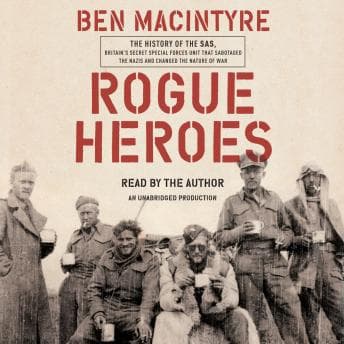

Let me cut to the chase: Ben Macintyre has written the definitive account of how a bunch of aristocratic misfits, desert rats, and certified lunatics invented modern special operations warfare. I finished this one during a late-night drive back from a client site in Houston, and Ranger got an earful about David Stirling's audacity.
Here's what surprised me. The reviews I'd seen called Macintyre's narration "tolerable" - damning with faint praise if I've ever heard it. But I'll respectfully disagree. The man wrote the book, and when he describes Paddy Mayne's barely controlled rage or Stirling's aristocratic dismissal of conventional military thinking, you can hear him relishing his own material. Is he a professional voice actor? No. Does that matter when he clearly understands every tactical decision these men made? Not to me.
The Kind of Crazy That Wins Wars
What Macintyre captures brilliantly is just how unhinged the early SAS really was. These weren't polished operators following doctrine - doctrine didn't exist yet. They were inventing it while getting shot at in the North African desert. Stirling literally talked his way past hospital guards while recovering from a parachute injury to pitch his idea to a general. The man couldn't walk properly, but he had a plan to parachute behind Rommel's lines and blow up aircraft.
The episodic structure - jumping from sabotage missions in Libya to operations in Egypt, Italy, France, and eventually Germany - works because that's how the war actually unfolded for these units. Some listeners have complained about lack of broader context, and I get that. You won't find deep analysis of Montgomery's strategy or Churchill's political maneuvering. But that's not what this book is. It's about the men on the ground, the ones crawling through the dark with explosives strapped to their backs.
When Authors Narrate Their Own Work
Macintyre reads at a measured pace - I'd normally bump to 1.25x, but his British delivery actually benefits from letting it breathe. His psychological insights into figures like Paddy Mayne hit harder when you're not racing through them. Mayne was a legitimate war hero who also might have been a clinical psychopath. Macintyre doesn't flinch from that complexity.
The 13-hour runtime is substantial, but it covers years of operations across multiple theaters. I've seen comparisons to his earlier books about single missions or characters, and yes, this is less tightly focused. It's more of a unit history than a thriller. If you're expecting the concentrated tension of a single operation, recalibrate.
Where It Gets Complicated
I've got mixed feelings about some of the pacing. The early desert campaigns crackle with energy - small teams, impossible odds, audacious results. But as the war progresses and the SAS grows from a handful of originals to a larger organization, some of that intimate intensity dissipates. The later European operations are well-documented but lack the same romantic desperation of those first raids.
And look, I've got to be honest about something. Macintyre clearly did his homework - unprecedented access to SAS archives, the whole nine yards. But sometimes that research shows. There are stretches where you're getting competent military history rather than the cinematic narrative the book's reputation promises. I had a similar experience with Bury My Heart at Wounded Knee - meticulously researched history that sometimes trades narrative momentum for documentary thoroughness. Not a fatal flaw, but worth knowing going in.
Who Gets the Green Light (And Who Doesn't)
If you're a military history junkie, this is essential. Period. If you've ever wondered how special operations evolved from "crazy idea" to "cornerstone of modern warfare," here's your answer. Veterans will appreciate that Macintyre gets the details right - nobody's calling magazines "clips," and the tactical decisions make sense. That authenticity matters - it's why Thank You for My Service hit home for me despite being a completely different kind of war story.
Skip it if you need constant action. This is thoughtful history, not a thriller. There are stretches of organization, training, and personality conflicts between missions. Real war involves a lot of waiting and planning. Macintyre doesn't pretend otherwise.
Mission Debrief
Ranger approved this one, and so do I. Macintyre has delivered a serious piece of military history that happens to read like adventure fiction - most of the time. The author-narration won't win awards, but it carries authenticity that a hired voice couldn't match. Worth your time if you want to understand how a few dozen mavericks changed warfare forever.
Thirteen hours well spent. Now I need to convince Linda that "research for work" is a valid reason to watch the TV adaptation.






![Steve Jobs [unabridged audiobook] audiobook cover](/_next/image?url=https%3A%2F%2Fcovers.audiobooks.com%2Fimages%2Fcovers%2Ffull%2F9788499923406.jpg&w=1920&q=75)