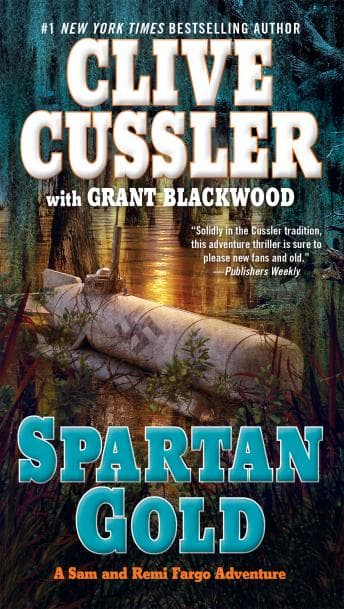

"Napoleon creates a map on the labels of twelve bottles of rare wine." That line hit me somewhere around hour two, and I actually stopped walking along the lakefront to think about it. Not because it's great prose - Cussler has never been accused of writing Faulkner - but because the sheer audacity of that premise is so perfectly, wonderfully pulpy that I couldn't help grinning. This is a book that knows exactly what it is. And honestly? I respect that.
Napoleon's Wine Labels and a U-Boat in a Swamp
Let me set the scene for you. The book opens with a historical prologue - Xerxes, Delphi, gold pillars - then leaps to Napoleon stumbling across them in the Alps, then lands us in modern-day Delaware where Sam and Remi Fargo are poking around the Great Pocomoke Swamp and find a German U-boat. In a swamp. In Delaware. If you're the kind of reader who needs plausibility, this book will lose you before the first act break. But if you're the kind of reader who hears "Nazi submarine in a Delaware swamp" and thinks "tell me more," then welcome home.
The Fargos are Cussler's answer to a question nobody asked but everyone secretly wanted: what if Indiana Jones married a woman who was just as smart and capable, and they had unlimited money and zero day jobs? Sam and Remi are wealthy, charming, competent at everything from scuba diving to cryptography, and genuinely like each other. It's wish fulfillment, sure. But it works because Cussler and Blackwood never pretend it's anything else. That same unapologetic embrace of genre conventions shows up in Silverthorn, where the fantasy tropes are worn like a badge of honor. The villain, Hadeon Bondaruk - half-Russian, half-Persian, claims descent from Xerxes himself - is cartoonish in the best adventure-novel tradition. He wants his ancestral gold back and he's willing to kill for it. That's the whole motivation. No tragic backstory, no moral complexity. Just a rich guy with a grudge and hired guns.
My students would hate this. I love it.
Scott Brick Does What Scott Brick Does
Here's the thing about Scott Brick narrating Cussler: it's a natural pairing, like bourbon and ice. His voice has this warm, confident baritone that suits adventure fiction the way a leather jacket suits a motorcycle. He reads Sam Fargo with an easygoing American authority, and Remi gets a slightly lighter, quicker cadence that suggests intelligence without tipping into caricature. The pacing is solid - Brick knows when to push through an action sequence and when to let a quieter moment between the Fargos breathe.
But - and this is the one thing that kept pulling me out - the accents. Brick does accents the way I do impressions at faculty parties: with enthusiasm and limited accuracy. His Russian characters carry this unmistakable American twang underneath, like someone doing a Slavic accent through a Chicago filter. (I should know. I live here.) It's not terrible. It's just... present. You notice it. For a 12-and-a-half-hour listen, that noticing adds up. I found myself wishing he'd just commit to a slightly more neutral delivery for the international characters rather than reaching for something that doesn't quite land.
That said, the narrator understands that pause is punctuation. Brick's timing during the chase sequences - and there are many - keeps the tension where it needs to be. He doesn't rush. He doesn't drag. He rides the rhythm of Cussler's short, punchy action sentences like a drummer who knows the song cold.
Who Gets the Extra Credit
This is for the reader who wants a Saturday matinee in their ears. If you loved the Dirk Pitt novels, this is their spiritual successor - same DNA, younger protagonists, slightly more modern sensibility. It's not literary fiction. It's not trying to say something profound about the human condition. It's trying to entertain you for twelve hours, and it does. Silent Patient operates on similar terms - pure entertainment with just enough craft to keep you hooked, no pretensions about being capital-L Literature.
Skip it if you need your historical fiction grounded in rigorous research. The history here is a springboard, not a foundation - Cussler uses Xerxes and Napoleon the way a jazz musician uses a melody, as a starting point for improvisation. If that bothers you, this isn't your book.
I listened to most of this during late-night grading sessions - stacks of sophomore essays on The Great Gatsby while Sam and Remi chased wine bottles across Europe. The contrast was almost cruel. My students struggling with symbolism while I'm privately following a treasure map encoded on Napoleonic wine labels. But that's the beauty of a book like this. It doesn't ask anything of you except your time. And at 1.0x speed - because the author chose those words - it's a perfectly pleasant way to spend a week of evenings.
Worth Pausing the Faculty Meeting For?
Almost. Not quite. This is solid popcorn adventure fiction with a reliable narrator who stumbles slightly on the international cast. It's the first in the Fargo series, and it does what a first book should: introduces the characters, establishes the formula, and leaves you curious enough to come back. I'll probably pick up book two the next time Principal Martinez schedules a two-hour budget review. Great pace with enough detail to keep interest, even if the prose itself won't make anyone forget Hemingway. But then again - this reminds me of what Hemingway said about prose being architecture. Cussler builds strip malls, not cathedrals. And sometimes you just need a strip mall.