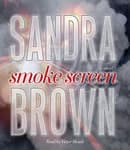

Okay, let's get this out of the way immediately—if I woke up next to a dead body, especially a celebrity cop, I am not "investigating." I am calling a lawyer. I am calling my union rep. I am probably vomiting. But Britt Shelley? She decides to play detective. At least when I tried Return of Sherlock Holmes, the detective actually had training.
(This is why I stick to non-fiction usually, but I needed a break from reality after a triple-trauma night.)
Look, I see bad decisions in the ER every night. Drunks who think they can jump fences, teenagers who swallow things on a dare. But the decision-making in the first twenty minutes of Smoke Screen? It made me want to scream at my dashboard. Britt wakes up, no memory, dead guy in her bed. Classic setup. A bit cheesy? Maybe. But did it wake me up on the drive home? Absolutely.
The Voice That Kept Me Awake
I've got a 45-minute drive from the hospital to my driveway, and if the narrator is boring, I'm pulling over to nap. Victor Slezak did not let me nap.
His voice is... thick. Like humidity. He does this Southern drawl that doesn't sound like a caricature—it sounds like the cops I deal with when they bring in a suspect. Gritty. Tired. A little dangerous.
He nailed Raley Gannon. You can hear the chip on the guy's shoulder without Slezak having to shout. It's a performance that feels lived-in. Sometimes male narrators doing female voices make me cringe (it's a specific kind of falsetto that haunts my dreams), but Slezak handled Britt pretty well. He didn't make her sound breathless or weak. Thank God.
Fire, Lies, and Hospital Politics
The medical and emergency details usually ruin these books for me. "That's not how smoke inhalation works!" is a common refrain in my Honda CR-V.
But here's the thing—the central mystery revolves around a fire station and a catastrophic blaze from five years ago. And honestly? The politics felt real. The way the "heroes" were protected while Raley got thrown under the bus? That's hospital politics 101. Everyone wants to be the hero until the lawsuit drops. That same institutional rot is what made Litigators so satisfying—watching lawyers actually hold people accountable for once.
The pacing is a slow burn (pun intended, sorry). It's 15 hours long. That's basically a week and a half of commutes for me. There were moments in the middle where I thought, "Okay, we get it, everyone is corrupt, can we move on?" But Slezak's delivery kept the tension tight enough that I didn't switch to a podcast.
Where the Spark Fizzled
My one gripe? The romance.
Supposedly, this is romantic suspense. But the chemistry between Britt and Raley felt... clinical. Like a sterile field. I didn't really buy that they were falling for each other; I just bought that they were two people running for their lives who happened to be in the same room.
(Carlos asked me if the book was spicy. I told him the most exciting physical interaction was probably the running.)
Who's This For?
If you want deep, swoon-worthy romance, skip this one. But if you want a solid mystery where the corruption runs deep and the Southern atmosphere is heavy enough to choke on, it works. Perfect for long commutes when you need something gripping but not so complex you'll miss plot points at a red light.
Clocking Out
It kept me awake after a 12-hour shift. That's the highest praise I can give.