
"Kerra, you don't know what you're walking into."
Somewhere around hour three, that line hit me like a slap while I was hunched over a logo redesign at 1 AM with Diego curled on my keyboard and Frida staring at me from the bookshelf like she already knew where this story was going. And honestly? She might've been right to look skeptical.
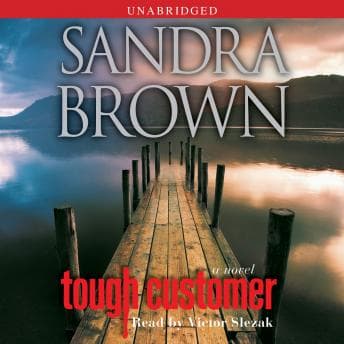
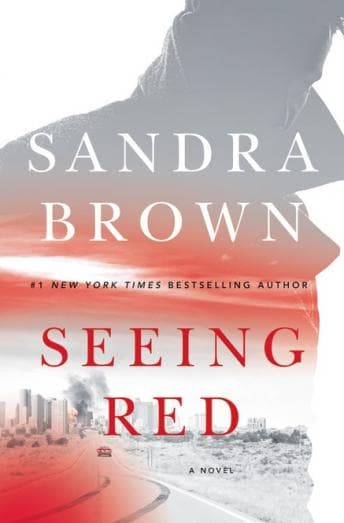
Here's the thing - I wanted to love this one. Sandra Brown doing a bombing conspiracy, a complicated father-son rift, and a journalist heroine who actually has professional ambition? That's my kind of setup. The premise has real weight: Major Franklin Trapper saved lives during a Dallas hotel bombing twenty-five years ago, became a national hero, then just... vanished from public life. His son, former ATF agent John Trapper, is still raw from whatever fractured them. And Kerra Bailey, hungry TV journalist, barrels into this family wreckage looking for an exclusive. When the interview turns violent and someone tries to kill the Major, Kerra and Trapper are thrown together in that classic Brown pressure-cooker.
So why am I giving this a lukewarm review instead of sobbing into my third coffee? Let me explain.
The Chemistry That Almost Got There
Brown knows sexual tension. She just knows it. The push-pull between Kerra and Trapper starts strong - he's this prickly, charming-then-dangerous type, and she's smart enough to be wary of him but too driven to walk away. That specific flavor of reluctant-pull actually hit harder for me in Saint, where the tension between wanting to run and wanting to stay felt genuinely dangerous rather than choreographed. There's a scene where Trapper is essentially holding her hostage "for her own protection" and the power dynamic crackles. You can feel Kerra calculating whether to trust him or knee him. I was leaning in.
But then the romance leans into some pretty heavy-handed territory with the sex scenes, and - look, I'm no prude, Abuela raised me on telenovelas where people were ripping each other's clothes off by episode three - but the intimate moments here felt more performative than earned. Like Brown checked a box rather than letting the emotional connection breathe first. The suspense kept interrupting the romance and the romance kept interrupting the suspense, and neither fully landed for me.
Victor Slezak, We Need to Talk
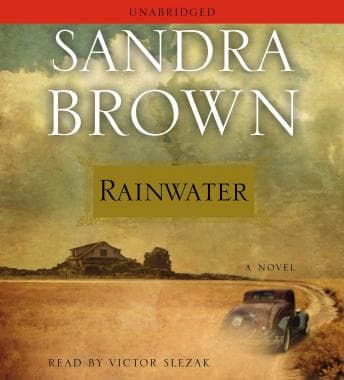
This is where I got stuck. I've heard people rave about Slezak narrating Sandra Brown, and I can see flashes of why - he's got a smooth register and he handles the shifting POVs between Kerra and Trapper without confusion. When he's locked in on a tense scene, the delivery works.
But - and this is a big but - his male characters blur together into this one gravelly "old man cowboy" voice that made it hard to distinguish between Trapper, the Major, and half the other men in this book. By hour seven, I couldn't always tell who was talking without context clues from the text. And his pacing? Flat. Not in a subtle, understated way. In a "my attention drifted to my InDesign layers panel" way. For a book with car chases and assassination attempts and conspiracy reveals, the narration should make my pulse jump. Instead, whole stretches faded into background texture while I was working. I had to rewind multiple times, and I never rewind.
For comparison, imagine if Julia Whelan narrated this - the emotional beats during the Trapper family scenes would've gutted me. The Viscount Who Loved Me audiobook is my go-to example of a narrator who actually does that work — The Viscount Who Loved Me had me wrecked at my desk in a way this performance simply refused to deliver. Slezak just... let them pass. The moment where Trapper confronts what really happened with his father should have been my ugly-cry moment. It wasn't.
Who This Is For (And Who Should Keep Scrolling)
If you're a Sandra Brown completist who already vibes with Slezak's voice, you'll probably enjoy this fine. The conspiracy plot has genuine twists - the final reveal about the bombing pulled the rug out in a satisfying way. And if you're someone who listens primarily for suspense mechanics rather than emotional payoff, the puzzle-box structure will keep you engaged.
But if you're like me - if you need the romance to make your chest ache, if you need the narrator to shift something in the air when the mood changes - this isn't going to do it. I finished all twelve hours and forty-five minutes and felt... fine. Not wrecked. Not buzzing. Fine.
This book felt like ordering your favorite dish at a new restaurant and it arrives looking right but tasting slightly off. All the ingredients are there. The execution just didn't hit.
Abuela would've watched the telenovela adaptation of this plot, though. She would've been yelling at Kerra to stop trusting Trapper. She would've been right.
The Spreadsheet Says: Zero Cries
Zero. Out of nearly thirteen hours. For a book with a father-son estrangement, a bombing that killed innocents, and a romance built on danger? That number should not be zero. My heart wanted to break open and the narration kept sealing it shut. I'm bummed, honestly. The story deserved a performance that matched its ambition.