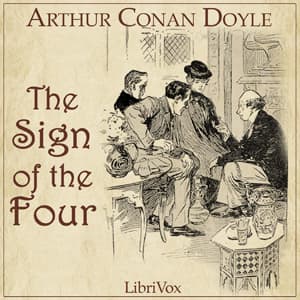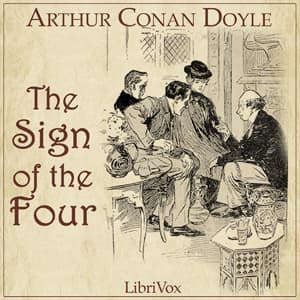

"Small's face was a study in itself—fierce, determined, and yet somehow pathetic in its desperate cunning."
That line hit somewhere around hour three, and I actually paused mid-charting to think about it. I was supposed to be documenting vitals, but Doyle's description of Jonathan Small had me staring at my screen like it contained the secrets of the universe. My charge nurse walked by and I pretended I was deep in thought about a patient's sodium levels. I was not.
The Medicine Is Victorian But The Mystery Is Timeless
Look, I picked this up because I needed something short after a brutal stretch of night shifts—four in a row, two codes, one combative patient who called me creative names in three languages. At just over four hours, The Sign of the Four felt manageable. What I didn't expect was to get genuinely invested in a mystery written in 1890.
The colonial India angle is... complicated. Doyle writes from his era, and you can hear it. The Andaman Islander character gets described in ways that made me wince on my drive home. Silkworm handles its problematic characters with more nuance, though it's working with 125 extra years of social evolution. But here's the thing—as someone who's watched medicine evolve from "leeches cure everything" to evidence-based practice, I can hold two thoughts: this is historically interesting AND some of it aged like milk left in a Phoenix parking lot in July.
What holds up? The deductive reasoning. Holmes examining a pocket watch and extrapolating an entire family tragedy from scratches around the keyhole? That's the Victorian equivalent of reading a patient's entire history from their hands, their gait, how they breathe when they think no one's watching. I do that. Every nurse does. Holmes just gets credit for it.
Robin Cotter Does The Job Without Flash
The narration is... fine. Clear, faithful to the text, no weird pronunciation choices that pulled me out of the story. But I'm not going to pretend Cotter brings theatrical magic to every character. Watson sounds like Watson. Holmes sounds like Watson with slightly more condescension. Mary Morstan sounds like Watson trying to sound gentle.
For a free LibriVox recording, this is solid work. But if you're used to full-cast productions or narrators who create distinct voices for every character, adjust your expectations. I listened at 1.25x speed and it felt natural—Cotter's pacing is measured, almost deliberate, and the speed bump helped maintain momentum during the slower descriptive passages.
No music, no sound effects. Just one person reading a book. Sometimes that's exactly what you need at 4 AM when the unit is finally quiet and you're trying not to think about the patient in room 12.
The Treasure Hunt That Kept Me Awake
The plot moves faster than I expected. Missing father, mysterious pearls arriving annually, a cryptic message leading to a midnight meeting—Doyle knew how to stack intrigue. The boat chase on the Thames genuinely had me gripping my steering wheel like an idiot. (Carlos asked why I came home looking so intense. I blamed traffic.)
What surprised me was Watson's love story with Mary Morstan. It's sweet in that Victorian way where people fall in love after approximately two conversations and some meaningful glances. But Watson's anxiety about her potential inheritance—worrying he can't propose to a wealthy woman—felt oddly real. Money stress transcends centuries, apparently.
The reveal of the four ex-convicts and their treasure pact is classic mystery structure. All That Remains uses a similar buried-secrets-coming-to-light approach, though Cornwell's forensic detail scratches a different itch entirely. Jonathan Small's confession in the final chapters drags slightly—Doyle lets him monologue about his adventures in India for what feels like forever—but the story he tells is genuinely compelling. Murder, betrayal, a wooden leg, and a small fortune in pearls hidden in a chest. My mom would eat this up. She still asks why I don't read "real literature" instead of "those murder books." This counts as both, Mom.
Who Should Queue This Up
Perfect for: Classic mystery newcomers, Sherlock completists, anyone who needs a short audiobook that doesn't require intense concentration. Night shift approved—engaging enough to keep you alert during charting, not so complex you'll lose the thread if you have to pause for a patient.
Skip if: You want theatrical narration, you're bothered by dated colonial attitudes (valid), or you need action-packed pacing throughout. The middle section slows down for investigation and deduction.
Clocking Out
This is comfort food mystery. Not groundbreaking, not life-changing, but satisfying in the way that a well-structured whodunit should be. The narration does its job without fireworks. The story reminds you why Holmes became a cultural institution.
I finished it pulling into my driveway, sat in the car for the last ten minutes to hear Small's confession through to the end. Carlos found me there, still in scrubs, listening to a Victorian criminal explain how he lost a treasure and a leg. He didn't ask questions. Fifteen years of marriage teaches you when to just bring coffee.
Four hours well spent. Now if you'll excuse me, I need to sleep before my next shift, and I'm already queuing up The Hound of the Baskervilles for tomorrow's commute.