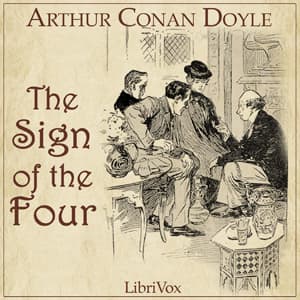

I was making chana masala—the real kind, not the watered-down version they serve on Mass Ave—when I decided to revisit an old friend. Sherlock Holmes.
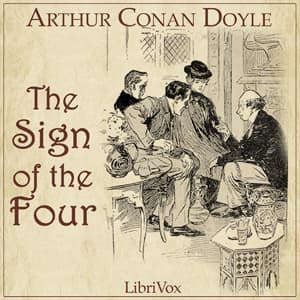
Specifically, The Sign of Four. It's a fascinating text, psychologically speaking. You have the obsession, the ennui, the colonial guilt wrapped up in a mystery. (And yes, as the daughter of Indian immigrants, listening to a story about stolen Indian treasure while cooking my mother's recipe felt a little too on the nose. Don't analyze that.)
I needed something to distract me from the fact that my latest paper on narrative identity is currently a blank Word doc staring back at me. So, I queued up this version narrated by Robin Cotter.
Here's the thing about distractions: they only work if they engage the frontal cortex. This... didn't quite get there.
The Psychology of the Flat Line
Let's talk about "flat affect." In my line of work, it's a symptom. In audiobooks, it's a crime.
Holmes is a character defined by his manic highs and depressive lows. He shoots cocaine because he literally cannot handle the boredom of existence. (My therapist would have a field day with his dopamine regulation issues, but I digress.) Watson is the grounding force, the warm, weary humanity to Holmes's cold logic.
To make this dynamic work, you need contrast. Tension.
Robin Cotter gives us... clarity. Just clarity. Her voice is incredibly clear, I'll give her that. If this were a lecture on Victorian tort law, she'd be getting an A. But for a thriller? It was so monotone I found myself zoning out while chopping onions. And I wasn't crying from the onions.
The biggest issue—and this is a dealbreaker for me—is the lack of vocal differentiation. Holmes and Watson sound like the same person talking to themselves in a mirror. Psychologically, their relationship is codependent, sure, but they shouldn't share a larynx. There were whole chunks of dialogue where I lost track of who was speaking. I had to rewind. Twice.
It breaks the immersion. Instead of being in 1888 London, I'm back in my kitchen, annoyed, wondering why the world's greatest detective sounds exactly like his doctor.
The Colonial Elephant in the Room
Okay, I have to mention the India aspect. The story revolves around the Agra treasure and the "Four." Doyle's take on India is... of its time. Let's put it politely.
Usually, a great narrator can navigate these dated elements by adding a layer of gravity or nuance to the text. Doyle's Lost World has similar colonial baggage, but at least that one leans into the adventure aspect hard enough to distract you. Cotter plays it straight. A little too straight. There were some mispronunciations that made my eye twitch. Look, I get it, some of these terms are archaic, but if you're narrating a classic, maybe check the pronunciation guide?
It just felt like a reading, not a performance. There's a difference. A reading is functional. A performance understands the underlying motivations of the characters. I didn't get the sense that the narrator really got why Holmes is the way he is. Where's the arrogance? Where's the desperation?
Final Diagnosis
Is it terrible? No. It's competent. It's clean audio. If you just want the raw data of the plot poured into your ears while you're doing something mindless—like folding laundry or grading undergraduate papers—it works.
But Holmes deserves drama. He deserves a narrator who understands that he is a deeply flawed, brilliant, annoying human being. This version smoothed all his sharp edges down until he was just... safe. And if there is one thing Sherlock Holmes should never be, it's safe.
Who should listen: Completists who need every Holmes adaptation, or anyone who wants clean background audio for mindless tasks. Who should skip: Anyone who actually wants to feel the cocaine-fueled mania and Victorian melodrama.
My advice? Read the physical book. Or find a version with a narrator who isn't afraid to chew the scenery a little. I found that kind of bold performance in Adventures of Sherlock Holmes—same detective, better execution. Life is too short for monotone mysteries.