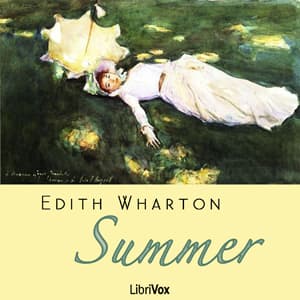

I was grading sophomore essays on The Great Gatsby at 11:47 PM—you know the ones, where every student discovers that green light symbolism like they've cracked the Rosetta Stone—when I needed something to remind me why I still love literature. So I put on Summer, Wharton's lesser-known New England tragedy, and suddenly my red pen felt heavier.
This is Wharton writing about desire with the precision of a surgeon and the patience of someone who understands that longing is its own kind of violence.
The Prose Deserves to Be Savored
Let me tell you what Wharton does here that my students would find unbearably slow: she takes her time. Charity Royall's sexual awakening unfolds across five and a half hours with the inevitability of a Greek tragedy, but Wharton refuses to rush it. She's more interested in the architecture of want—how it builds, how it distorts, how it eventually collapses under its own weight.
If you loved Ethan Frome, this is its spiritual successor. Same New England setting, same suffocating small-town claustrophobia, same sense that the landscape itself is conspiring against happiness. But Summer has more heat to it. Where Ethan Frome is all frozen resignation, this novel burns. Charity is young, restless, and desperately hungry for something beyond North Dormer—and Wharton makes you feel every moment of that hunger. Though if you're looking for something with more fire than ice, Beneath This Man takes desire and obsession to a completely different—and modern—extreme.
The class dynamics here are brutal and precise. Charity's position as a "charity case" raised by the town's lawyer-guardian Lawyer Royall creates this impossible web of obligation and resentment. Wharton understood that poverty isn't just about money—it's about the thousand small humiliations that accumulate until they become your identity. My students would hate this. I love it.
Robin Cotter's Quiet Authority
Here's something that surprised me: this is a LibriVox recording, and it sounds professional. Robin Cotter reads with the kind of restraint that Wharton's prose demands. No melodrama, no overselling the emotional beats. She trusts the text to do its work.
Volunteer recordings can be uneven, but Cotter has genuine interpretive intelligence. She understands that pause is punctuation. When Charity's world starts to narrow around her, you can hear it in the pacing.
I listened at 1.0x because the author chose those words. Wharton's sentences have a rhythm that faster speeds would destroy. Tale of Two Cities demands the same kind of attention—Dickens' prose has its own architecture that collapses if you rush it. This isn't a book you multitask through.
What Wharton Is Really Excavating
This reminds me of what Hemingway said about the dignity of movement of an iceberg—only one-eighth showing above water. Summer appears to be about a girl's summer romance, but Wharton is writing about something much darker: the way society uses women's bodies as currency, the impossible choices forced on people without resources, the violence that hides inside respectability.
Charity is frustrating. She makes choices that will make you want to shake her. But that's the point—she's operating with limited information and even more limited options. Wharton doesn't sentimentalize her or her circumstances. She just shows you, with devastating clarity, how the trap closes.
The ending is the novel's most controversial element, and I understand why some listeners find it disappointing. Without spoiling it: the conclusion feels like a surrender, a capitulation to the very forces Charity spent the whole novel trying to escape. But I think that's Wharton's point. Sometimes there is no escape. Sometimes the best you can do is survive.
Who Should Listen—And Who Should Walk Away
This is for readers who want their classics with teeth. If you appreciate psychological complexity over plot momentum, if you've ever taught literature to teenagers who don't understand why we still read dead white women (we read Wharton because she understood power better than most living writers), if you need something that rewards close attention—this is your book.
Skip it if you need likeable protagonists or happy endings. Skip it if you can't tolerate slow burns. And definitely skip it if you're looking for background listening—this demands focus.
Worth Pausing the Faculty Meeting For
At under six hours, Summer is a perfect weekend listen. I finished it walking the lakefront with Denise on Sunday morning, and we ended up talking about it for the rest of the day. That's the mark of real literature—it doesn't let you go when the audiobook ends.
Robin Cotter's narration elevates what's already a quiet triumph of American fiction. And since this is a free LibriVox recording, there's no excuse not to try it. Just don't expect comfort. Wharton never offered that, and she's not about to start now.