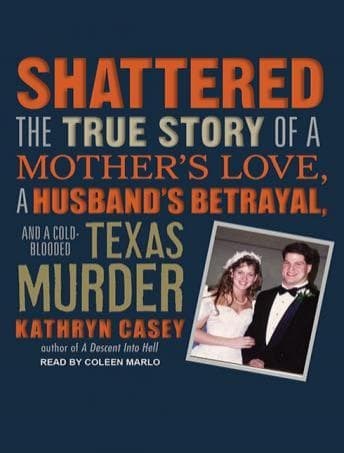

Eight months pregnant. Shotgun blast to the head. Found in a closet in a quiet Texas suburb.
I was up past midnight with this one, cleaning my Sig Sauer at the kitchen table because sleep wasn't happening anyway, and Ranger was doing that thing where he puts his head on my boot like he knows something's wrong. Something was wrong. This case is infuriating in the way that only real ones can be.
The Golden Boy Everyone Refused to See
Kathryn Casey builds the profile of David Temple the way a good intelligence analyst builds a target package - layer by layer, source by source. You start with the high school football star in a Texas town where that means something close to royalty. Then you get the college athlete, the coach, the guy everyone calls "a great family man." And then Casey starts peeling it back. The controlling behavior. The affairs - plural. The way he systematically isolated Belinda from people who loved her. The cruelty that neighbors and colleagues noticed but nobody wanted to name because, well, he was David Temple.
What got me was Belinda Lucas herself. Casey gives her real dimension - not just "the victim" but the woman her students and coworkers called "The Sunshine Girl" because she was genuinely that warm. The kind of teacher who changed kids' lives. Eight months carrying their second child. And this guy - this guy was already sleeping with a young teacher's aide while his pregnant wife was trying to hold their family together. That's not just infidelity. That's a particular kind of cruelty I've seen destroy military families too. The entitlement. The absolute conviction that you deserve whatever you want regardless of who it costs. That same portrait of a predator hiding behind a respectable public face shows up in Kremlin's Candidate, though that one wraps the rot in geopolitical thriller packaging rather than a Texas suburb.
Eight Years to Get It Right
Here's where the book surprised me. I expected a straightforward whodunit, but this is really a story about the investigation - and what happens when the system works slowly but (eventually) works. Eight years from murder to indictment. Casey tracks the detective work with the kind of detail that tells me she spent serious time with her sources. The circumstantial case that prosecutors had to build piece by piece because there was no smoking gun - no DNA, no confession, no eyewitness. Just a husband who didn't cry at the crime scene and a trail of behavior that painted a damning picture.
I've seen this scenario play out in real life - not murder, but investigations where you know exactly who did it and you can't prove it yet. The frustration Casey conveys from the detectives' perspective is palpable. And the courtroom battle that finally came? It's a reminder that justice doesn't always arrive on schedule, but sometimes it arrives.
At 11 hours, the pacing is solid. Casey doesn't pad with speculation or filler. She's a journalist, and it shows - facts first, emotion earned through facts. I never felt like she was manipulating me into feeling something. The horror of what happened to Belinda speaks for itself.
Coleen Marlo Behind the Mic
Let me cut to the chase on the narration: it's competent but not flawless. Marlo reads with an understated seriousness that fits the material - you don't want theatrics with a case like this. She matches Casey's tone of controlled outrage well. But there's a nasally quality to her voice that crept into my awareness around hour three and never fully left. It's not a dealbreaker. More like a low-grade distraction, the kind of thing you notice during quieter passages and forget during the intense courtroom scenes. I bumped it to 1.25x and that actually helped smooth it out.
She doesn't do big character voices, which is fine for true crime. This isn't fiction. I don't need her doing a Texas drawl for every witness. What I needed was clear, professional delivery of complex investigative and legal details, and she handles that well enough.
Who This Is For (And Who Should Steer Clear)
If you're into true crime that focuses on the investigation and prosecution rather than glorifying the violence, Casey delivers. If you want Ann Rule-style depth with Texas-specific detail, this is your book. If you're sensitive to violence against pregnant women - and I wouldn't blame anyone for that - know what you're walking into. This one's heavy.
Skip it if bad narration ruins everything for you. Marlo's fine, but she's not the reason to pick this up. Casey's reporting is.
Ranger's Assessment
Ranger stayed awake for the whole midnight session, which is his version of a standing ovation. This is solid true crime journalism in audio form - the kind that makes you angry at the right people and grateful for the investigators who wouldn't let it go. Not a perfect listen, but worth your time. The author clearly did her homework, and eight years of dogged police work deserved exactly this kind of telling.