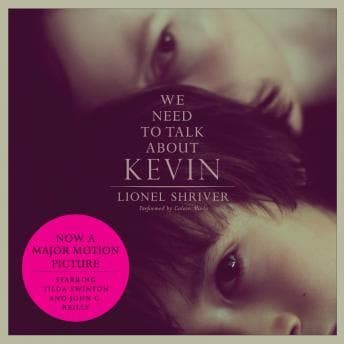

I was grading papers at 11 PM - senior essays on The Great Gatsby, the usual parade of "green light = hope" observations - when Eva Khatchadourian started telling me about her son. And I couldn't stop listening.
Look, I teach high school. I've watched Columbine documentaries. I've sat through active shooter drills where we huddle in corners and pretend this is normal. So picking up a novel about a school shooting felt like homework I didn't want to do. But Shriver isn't interested in the shooting itself. She's interested in something far more uncomfortable: what if a mother never loved her child? What if she knew something was wrong from the beginning? What if we all did?
The Epistolary Gamble
The entire novel unfolds as letters from Eva to her estranged husband Franklin. It's a risky structure - sixteen hours of one woman's voice, one woman's perspective, one woman's desperate attempt to understand what she created. In lesser hands, this would collapse under its own weight. But Shriver's prose is razor-sharp, even when it's dense. (And yes, it gets dense. There are paragraphs where Eva's intellectualizing made me want to shake her. But isn't that the point?)
This is a character study disguised as a thriller. Eva is not likeable. She's cold, pretentious, uncomfortably honest about her ambivalence toward motherhood. She describes her pregnancy like an invasion. She admits she never felt that rush of maternal love everyone promised. And here's where Shriver does something brilliant: she makes you question whether Eva's perception created Kevin's monstrousness, or whether she simply saw what everyone else refused to see.
My students would hate this book. Too slow, too literary, too much sitting with discomfort. I loved it.
Why Coleen Marlo Works (Mostly)
Here's the thing about narrating Eva - you have to walk an impossible line. Too sympathetic, and you lose the edge that makes her unreliable. Too cold, and listeners check out. Marlo finds the balance. Her voice carries that particular exhaustion of someone who has replayed every moment of her life looking for the mistake. The tenderness she brings to Eva's memories of her daughter Celia nearly broke me during a lakefront walk with Denise.
But I'll be honest - some listeners find Marlo's voice grating. I've read reviews calling it "nails on a chalkboard." I didn't experience that, but I can see how Eva's particular brand of intellectual detachment, filtered through Marlo's precise diction, might wear on certain ears. This is a narrator who won the Audie for Literary Fiction, and you can hear why. She's not performing warmth she doesn't feel. She's performing Eva.
The pacing is deliberate. Slow, even. The first few hours are Eva circling the drain of her own memories, building context, avoiding the thing she needs to say. It's literary fiction pacing, not thriller pacing. If you're looking for a propulsive true-crime feel, this isn't it. But if you've ever taught a student who made you uneasy - who smiled at the wrong moments, who seemed to be watching everyone else figure out how to be human - then Eva's observations will hit different.
Sentences Worth Slowing Down For
Shriver writes sentences that demand 1.0x speed. There's a passage where Eva describes Kevin as a child who "ichored disdain" and I had to pause. Not because I didn't understand it, but because I needed to sit with it. This is writing that trusts its readers to work. The audiobook format means you can't skim the dense paragraphs - you have to live in them. The Paris Library demands the same kind of attention, that same willingness to sit with beautiful sentences instead of racing through them. Some will find this frustrating. I found it immersive.
The Orange Prize win makes sense. This is the kind of novel that literary awards were designed for - uncomfortable, uncompromising, asking questions it refuses to answer. Scattering lives in that same space of moral ambiguity, refusing easy answers about grief and responsibility. Did Eva's coldness create Kevin? Did Kevin's essential wrongness create Eva's coldness? Shriver gives you evidence for both readings and makes you choose.
This One's For You If...
If you loved "Gone Girl" for the unreliable narration, if you've ever wondered what drives someone to violence, if you teach or parent or simply exist in a world where these tragedies keep happening - this is essential listening. Content warnings are real here: violence, psychological abuse, a school shooting rendered in aftermath rather than action, but no less devastating for it.
Skip this if you need resolution. Skip this if you want to like the protagonist. Skip this if sixteen hours of moral ambiguity sounds exhausting rather than exhilarating.
Papers Still Ungraded
I finished at 2 AM, essays still in a pile, staring at the ceiling. Denise asked if I was okay. I wasn't sure. But I couldn't stop thinking about Eva, about Kevin, about all the warning signs we choose not to see.