
Look, I'm going to be honest - I picked this up during a particularly brutal Q4 where I was averaging maybe 5 hours of sleep and my stress levels were somewhere between "startup founder" and "my parents during tax season." So when a book promises to literally rewire my brain for stress, I'm skeptical. I've seen too many CEOs buy into wellness programs that amount to expensive meditation apps and bean bag chairs.
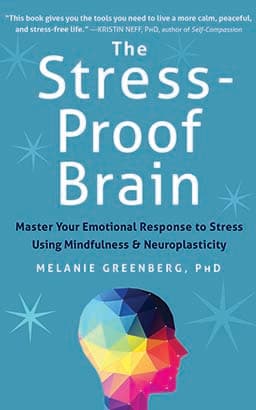
But here's the thing. Melanie Greenberg actually delivers something useful. Not revolutionary, but useful. And in the self-help space, that's rarer than you'd think.
The Science That Actually Sticks
Greenberg's a clinical psychologist, and it shows. She doesn't just throw around "neuroplasticity" like it's a magic word - she actually explains the mechanism. Your brain can change. The amygdala isn't your destiny. These aren't groundbreaking revelations if you've been in the space, but she connects them to practical applications in a way that feels... actionable.
The mindfulness stuff? Yeah, it's here. If you're allergic to anything that sounds like "be present with your breath," you might get itchy. But Greenberg grounds it in neuroscience rather than woo-woo spirituality, which made it palatable for someone like me who's been burned by too many "just visualize success" books.
What I appreciated: she acknowledges that stress isn't always bad. That fight-or-flight response kept my parents alive running a business in 1990s Koreatown. The goal isn't to eliminate stress - it's to stop the unhealthy patterns. The tunnel vision. The negative self-talk. The avoiding-problems-until-they-explode thing. (Guilty.)
Coleen Marlo Does the Heavy Lifting
The narration is calm. Almost too calm at points - I bumped it up to 1.5x because at normal speed, I was drifting during my commute. But that's actually kind of perfect for a stress book? Like, you don't want someone reading about cortisol spikes in an energetic podcast voice.
Marlo's tone is reassuring without being patronizing. She sounds like a therapist who actually likes her job, not someone reading a textbook. The pacing could be tighter - there are sections that feel padded - but the production quality is clean and professional.
Where It Falls Short
Here's my frustration: the book leans heavy on explaining WHY stress works the way it does, and lighter on the HOW of fixing it. The exercises are there, but they feel almost afterthought-ish compared to the neuroscience deep dives. If you're someone who just wants a checklist of "do this when you're stressed," you'll be waiting a while.
Also - and this is a personal pet peeve - there's no bonus content. No downloadable exercises, no guided meditations, nothing. For a book that's asking you to practice techniques, making me take notes while driving feels like a design flaw.
Jenny would say I'm being harsh. Jenny is right. The book IS helpful. It just could've been more efficient about it.
The ROI Calculation
If you've never read anything on stress management or mindfulness, this is a solid starting point. Greenberg explains complex concepts clearly, and the neuroplasticity framework gives you a reason to believe change is possible. At 6 hours 41 minutes, it respects your time more than most self-help books.
But if you've already read Kabat-Zinn or done any CBT work, you'll recognize a lot of this territory. For a different take on managing life's chaos—one that's more philosophical than clinical—Above Life's Turmoil offers some surprisingly practical wisdom despite being written over a century ago. The science is sound, the delivery is professional, but the practical application section needed more depth.
I finished it. I took some notes. I've actually used one of the reframing techniques in a tense client call since. So it works. It's just not the paradigm shift the title promises.
Who should listen: First-timers to stress management, people who need the science to buy into the practice, anyone who wants a calmer voice in their ear during their commute.
Who should skip: If you've already got a mindfulness practice, if you want pure tactical advice, or if slow pacing makes you zone out even at 1.5x.
My 2.0x speed couldn't save this one from feeling a bit long, but the core content is worth your time. Just maybe not all 6 hours and 41 minutes of it.