
So here's what I expected: another pop-psychology book dressed up in clinical language, telling therapists that some people feel things more than others. Groundbreaking. I started this one while cooking a ridiculously ambitious dal makhani on a Sunday afternoon - the kind that requires three hours of simmering and periodic stirring, which is honestly the perfect metaphor for what Aron is doing here. Slow, methodical, layered.
And I was wrong about the pop-psychology thing. Genuinely surprised.
The Subtitle Says It All (Read It Again)
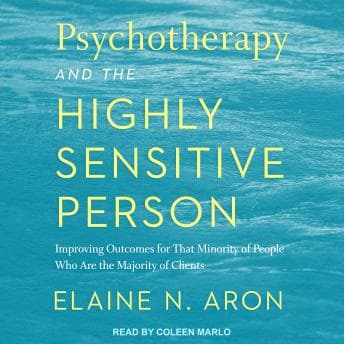
"That Minority of People Who Are the Majority of Clients." I found myself asking: why does that statistic not get more attention in clinical training? Aron's central argument is deceptively simple - sensory processing sensitivity (SPS) is a temperament trait, not a disorder, but it gets misdiagnosed as everything from generalized anxiety to avoidant personality disorder. The research actually shows that roughly 15-20% of the population has this trait, yet they're disproportionately represented in therapy. So if you're a practitioner and you don't understand SPS, you're essentially flying blind with a huge chunk of your casebase.
What makes this book compelling is that Aron doesn't just assert this - she builds the case systematically. She walks through differential diagnosis with real specificity: here's how high sensitivity presents differently from panic disorder, here's why an HSP with depression looks different from a non-HSP with depression, here's where introversion overlaps and where it absolutely doesn't. As someone who studies how people construct identity through narrative, I was fascinated by her attention to how patients internalize their sensitivity as pathology. The protagonist - and yes, the HSP client is essentially the protagonist here - exhibits classic patterns of identity confusion when their temperament gets treated as their problem.
This is a fascinating case study in how diagnostic frameworks can actually harm the people they're supposed to help. The mechanics of how group dynamics and shared frameworks shape individual experience is something I kept thinking about while reading Five Dysfunctions of a Team too — the way a flawed collective lens distorts everyone operating inside it.
Where It Gets Personal (and Where It Gets Dense)
Aron's section on self-esteem is where the book shifts from clinical manual to something more affecting. She argues that HSPs develop low self-esteem not because of sensitivity itself but because of what she calls "personal learning histories" - basically, the accumulated messages from a culture that treats quiet observation as weakness and overstimulation as personal failure. She's careful to separate innate temperament from acquired shame, and psychologically, this tracks completely with what we know about schema development.
But here's where I have to be honest: at 11 hours, this book demands commitment. There are stretches - particularly in the middle chapters covering treatment adaptations - where the material is dense enough that my attention drifted, and I was actively stirring dal, not passively commuting. If you're not a practitioner or at least deeply invested in personality psychology, some of the clinical framework discussions will feel like reading a journal article out loud. Which, in fairness, is kind of what this is.
Coleen Marlo narrates with the kind of clear, measured delivery that works well for scientific material. She's not trying to make this entertaining - she's trying to make it intelligible, and she succeeds. Her pacing on the clinical terminology is notably good; she doesn't rush through diagnostic criteria or stumble over the research citations. But this isn't a performance-driven listen. There's no vocal characterization needed, no drama. It's a straightforward reading of a professional text, and Marlo treats it with appropriate seriousness. For what it is, it's well done.
My Therapist Would Have Thoughts About This Book
Here's my honest reaction: I kept thinking about my own therapy. Not because I'm self-diagnosing (my therapist would kill me), but because Aron's framework for understanding how a trait gets entangled with life experience is exactly the kind of thing that changes how a clinician listens. The difference between "you're anxious" and "your nervous system processes stimuli differently, and also your mother told you to stop being so dramatic" - that's not a small distinction. It's the whole game.
The book's limitation is its audience. Aron wrote this for clinicians, and she means it. If you're looking for the self-help version, go read The Highly Sensitive Person instead. This one assumes you know what differential diagnosis means, that you've encountered the DSM, that you understand therapeutic alliance. It's not gatekeeping - it's precision. But it does mean the average listener picking this up for personal insight might find themselves swimming in deeper water than expected.
Who Should Press Play (and Who Should Not)
Therapists, counselors, clinical psychologists, psychiatric nurse practitioners - if you see clients regularly, this should be required listening. Psychology students and researchers studying temperament or personality will find Aron's literature review genuinely useful. HSPs who already know the basics and want to understand the clinical side? You'll get something out of it, but brace for the academic tone.
If you want validation that being sensitive is okay, this isn't your book. If you want to understand why your therapist keeps misreading your overstimulation as social anxiety - now we're talking.
The Case File Stays Open
Aron did something quietly radical here: she told an entire profession that a significant portion of their clients aren't broken, just wired differently. And she did it with enough research rigor that you can't dismiss it as feel-good nonsense. I don't agree with every claim (her evolutionary psychology arguments get a little hand-wavy in places), but the core framework is solid, evidence-based, and genuinely useful. The kind of book that changes practice - not overnight, but one clinician at a time, over eleven careful hours.