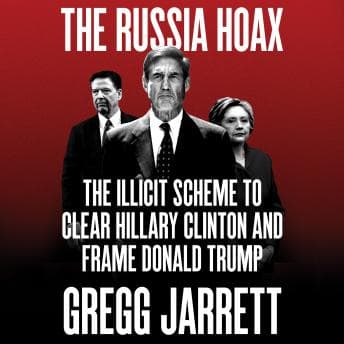

Ranger was asleep on the back seat when I cracked open this one on a long drive back from San Antonio. Client meeting had run three hours over schedule - the kind where everyone talks and nobody decides anything - and I needed something with some teeth for the highway stretch home.
Let me cut to the chase: this book is prosecutorial advocacy, not journalism. Jarrett's a Fox News legal analyst, he says so himself, and he writes like a man who decided the verdict before he called his first witness. That's not automatically disqualifying. Some of the most useful military analysis I've read came from people with a clear point of view. But you need to know what you're walking into.
What Jarrett Actually Does Well
The legal framework is genuinely useful. When Jarrett walks through the specific federal statutes Clinton allegedly violated - the handling of classified material under 18 U.S.C. 793, the destruction of evidence questions - he's operating in territory he knows. His Court TV background shows. He doesn't just say "she broke the law" and move on; he maps the elements of the offense against the documented conduct. That's the kind of analysis you don't get from cable segments, and it's worth something.
The FISA warrant section is where the book earns its keep. The mechanics of how the Steele dossier allegedly moved from opposition research into a surveillance application - the sourcing chain, the Woods Procedures that are supposed to verify facts before a warrant application, the questions about what the FBI told the court about the dossier's origins - this is genuinely complicated legal and procedural territory. Jarrett navigates it clearly. Whether you agree with his conclusions or not, the underlying process questions are legitimate and he explains them in a way that a non-lawyer can actually follow.
I've seen how bureaucratic institutions can develop their own internal logic that drifts from their stated mission. Twenty-five years in the Army taught me that. So the core argument - that career officials at FBI and DOJ let their political preferences shape investigative decisions - isn't inherently crazy. Mat Best captures that same institutional drift with a lot more humor and a lot more blood in Thank You for My Service. It happens in large organizations. The question is whether the evidence Jarrett presents actually proves what he says it proves, and that's where I started keeping score.
This Is Where It Lost Me
Jarrett treats inference as conclusion throughout. The Strzok-Page text messages are the clearest example. "We'll stop it" is genuinely alarming language from an FBI agent working a presidential campaign investigation. Full stop. But Jarrett leaps from "these agents had anti-Trump bias" to "therefore the investigation was illegitimate" without really closing that gap with evidence. Bias in investigators is a problem. Bias that actually corrupted specific investigative acts is a different and harder claim. He conflates them repeatedly.
The Hillary Clinton material is the weakest section. The Uranium One chapter reads more like a greatest-hits compilation of Fox News segments than a legal analysis. The causal chains he draws are long and the supporting evidence gets thinner the further out he goes. Comey's handling of the Clinton email investigation is legitimately criticized here - the public exoneration statement before the investigation formally concluded was procedurally weird by any standard - but Jarrett can't resist overreaching past what the facts support.
Charles Constant handles the narration and does his job fine. Clear, pleasant, professional. Jarrett reads some sections himself, which gives the book an occasional talk-radio energy that fits the material, honestly. No complaints on the audio side, but nothing remarkable either.
Field Assessment
Worth your time? Here's the debrief.
If you're already convinced of the thesis, this book will give you better legal vocabulary to argue it. The FISA and statutory analysis sections are legitimately informative regardless of where you land politically. But if you're looking for a book that will change your mind because it's airtight - this isn't it. Jarrett is an advocate, and he argues like one: selectively, persuasively, and with his thumb on the scale.
I've read better-documented books on the same period - books that take the institutional failures seriously without needing a villain on every page. This one's more useful as a brief from one side than as a full intelligence picture. Read it the way you'd read an after-action report from a unit with a stake in the outcome. Useful data. Verify independently.
Ranger slept through the whole thing. Didn't even twitch. Make of that what you will.






![Steve Jobs [unabridged audiobook] audiobook cover](/_next/image?url=https%3A%2F%2Fcovers.audiobooks.com%2Fimages%2Fcovers%2Ffull%2F9788499923406.jpg&w=1920&q=75)