
I was walking the lakefront with Denise last Saturday - one of those rare October mornings where Chicago pretends it's still summer - when Patrick Lawlor described how tyrannosaurs started out the size of golden retrievers. I actually stopped walking. Denise asked if I was okay. I was better than okay. I was having my entire conception of T. rex dismantled by a Scottish paleontologist who writes like he's telling you the best secret he's ever learned.
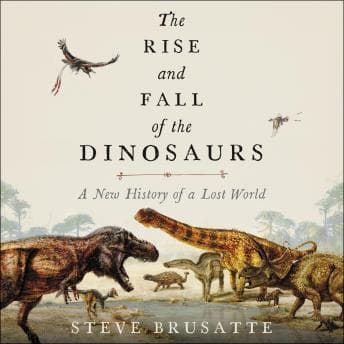
Steve Brusatte's The Rise and Fall of the Dinosaurs is what happens when genuine expertise meets genuine enthusiasm. And I say this as someone who spends his days trying to convince teenagers that Gatsby's green light matters - I know the difference between performed excitement and the real thing.
When Scientists Write Like They Actually Want You to Understand
Brusatte does something rare here. He assumes you're intelligent but not specialized. This is harder than it sounds. I've read plenty of pop science that either talks down to you or forgets you didn't spend eight years in graduate school. Brusatte walks that line with the confidence of someone who's been explaining dinosaurs to skeptical colleagues and wide-eyed children in equal measure.
The structure is elegant - he follows the dinosaurs chronologically from their humble Triassic beginnings (survivors of a mass extinction, not the dominant force) through their Jurassic peak and into that cataclysmic asteroid impact. But what makes it work is his willingness to pause and say, essentially, "Here's what we thought we knew, here's what we actually know now, and here's how we figured it out." The science isn't just presented; it's shown working.
He threads in his own fieldwork stories - digging in Poland, examining specimens in China, the politics and personalities of paleontology. It's this blend of deep history and present-day discovery that kept me walking an extra mile just to hear what came next.
Lawlor's Enthusiasm Problem (That Isn't Really a Problem)
Here's where I have to be honest. Patrick Lawlor narrates this with the kind of energy that some listeners find... much. There's an occasional lift in his voice, a slight exaggeration when Brusatte is describing something particularly dramatic, that could read as pitched toward a younger audience.
I didn't mind it. Maybe it's because I spend my days with teenagers and I've developed immunity to performative enthusiasm. Or maybe it's because Lawlor's energy actually matches Brusatte's prose - this is a book written by someone genuinely thrilled by his subject. The narration reflects that. If you want dry, detached scientific reading, this isn't it. But I'd argue that would betray the material.
The clarity is excellent. Scientific terminology comes through cleanly. Brusatte loves his Latin names, and Lawlor handles them without stumbling. At ten hours, it's substantial but never felt padded. I listened at my usual 1.0x - the author chose those words, after all - and the pacing held.
What You Lose Without the Pictures
I should note: the print edition has seventy-plus illustrations. You don't get those in audio form, obviously. For most chapters, this doesn't matter - Brusatte's descriptions are vivid enough that you can picture these creatures. But there were moments, particularly when he's describing the anatomical details that distinguish one species from another, where I wished I could see what he was talking about. Not a dealbreaker, but worth knowing.
The Part About Us
What surprised me most was the final section. Brusatte doesn't just describe the asteroid impact and extinction - he connects it to our current moment. The "sixth extinction" he references isn't heavy-handed, but it's there. These dominant creatures ruled for 200 million years. We've been around for a blink. The dinosaurs didn't see the asteroid coming. We can see what's coming.
This reminds me of what Hemingway said about writing - that the dignity of movement of an iceberg is due to only one-eighth of it being above water. Brusatte has that quality. The emotional weight isn't stated; it's earned through 200 million years of context.
Who Should Queue This Up (And Who Should Skip)
If you loved Sapiens for its sweep and ambition, this is its prehistoric predecessor - that same blend of scientific rigor and accessible storytelling. You'll find similar qualities in Being Mortal, though Gawande's examining how we face death rather than extinction. Skip this if you want dry academic analysis or if enthusiastic narration grates on you. But if you want to understand why dinosaurs still capture our imagination - and why their story matters to ours - Brusatte delivers.
Class Dismissed
My students would probably love this, actually. It's accessible without being condescending, and Brusatte has that rare gift of making you feel like you're learning alongside him rather than being lectured at. (Principal Martinez, if you're reading this - I was definitely paying attention during last week's budget meeting. I was not listening to the chapter on feathered raptors. That would be unprofessional.)
The prose deserves to be savored. So does the narration, enthusiasm and all.