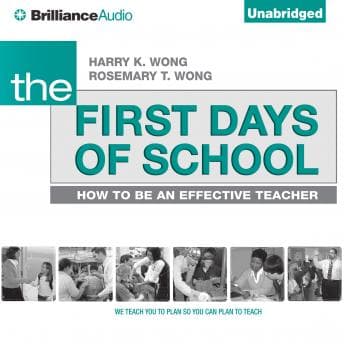

Everyone told me this was the classroom management bible. "You haven't read Wong?" colleagues would ask, eyebrows raised, as if I'd admitted to not knowing how to take attendance. So I finally downloaded it, expecting either life-changing revelation or the kind of overhyped disappointment that comes with anything labeled "bestselling." Twelve hours later, I'm somewhere in between—but leaning heavily toward the former.
Here's the thing nobody warned me about: this book would have saved me from the Great Pencil Uprising of my second year teaching. I had thirty-two eighth graders and exactly zero procedures for distributing materials. Every single day devolved into chaos the moment supplies came out. Kids wandering, arguing over who got the good erasers, one memorable incident involving a pencil launched across the room that I still can't prove was intentional. Harry and Rosemary Wong would have had me establish a pencil distribution procedure on day one. They would have had students practice it. They would have had me standing there like a reasonable adult instead of a hostage negotiator.
Scripts, Not Inspiration
The Wongs don't mess around with vague inspiration. They give you scripts. Actual words to say. "When you enter this classroom, you will find an assignment on your desk. Begin working immediately." That's it. That's the tweet. But they spend chapters explaining why that simple instruction, delivered consistently, prevents the chaos that eats new teachers alive. I listened during my morning runs, and I kept having to pause because I was mentally redesigning my old classroom procedures while trying not to trip over curbs.
Patrick Lawlor narrates like the colleague who actually answers your panicked emails. His voice is warm without being patronizing, clear without being robotic. For a book this dense with practical information, that matters more than you'd think. I've suffered through educational audiobooks where the narrator sounds like they're reading a phone book at gunpoint. Lawlor sounds like he genuinely believes this stuff works. Given his Audie nominations and AudioFile awards, he's clearly figured out how to make instructional content listenable.
Yes, Some Examples Are From 1997
Let me be honest about the dated parts. Some examples reference technology that predates smartphones, and a few classroom scenarios feel like they're set in 1997. You'll need to mentally translate "overhead projector" to "document camera" and "mimeograph" to "literally anything else." But the underlying principles? Those haven't aged a day. Kids still need to know where to sit, what to do when they arrive, and how to ask for help without derailing the entire class.
The structure here is almost aggressively practical. The Wongs walk you through the first days of school with the specificity of an IKEA manual, except the furniture you're assembling is a functional classroom environment. They cover everything from seating charts to how students should head their papers. Yes, heading papers. And somehow they make you care about it. Because when thirty kids all format their work differently, you're the one sorting through the chaos at 10 PM.
A Twelve-Hour Commitment (Worth It)
At nearly twelve hours, this is not a casual listen. I spread it over three weeks of commutes and workouts, and honestly, that pacing worked well. The information is dense enough that cramming it would be counterproductive. You need time to process, to imagine how each procedure would work in your specific context. The Wongs acknowledge that their examples won't fit every classroom, and they encourage adaptation rather than blind copying. That flexibility keeps the book relevant across grade levels and subject areas.
The production quality is spotless. No weird audio cuts, no background hiss, nothing to distract from the content. For a book many teachers will revisit—jumping back to specific sections when September panic hits—that technical polish matters. I've recommended Being Mortal to friends for similar reasons: both books take professional wisdom and make it genuinely usable, with audio production clean enough for repeated listening.
Who Needs This (And Who Should Skip It)
New teachers, obviously. This is the survival guide your credential program forgot to include. But I'd argue veteran teachers might get even more from it. After a few years, we all develop lazy habits. Procedures that started crisp become suggestions. Routines erode. The Wongs offer a chance to audit your own practice without judgment—just practical frameworks for tightening things up.
Who should skip it? Anyone expecting entertainment. This is not a gripping narrative. It's a toolbox. If you want drama, look elsewhere. If you want to stop feeling like every class period is barely contained chaos, start here.
From Surviving to Actually Succeeding
The Wongs believe teaching is a craft that can be learned, not some mystical gift you're born with. That belief runs through every chapter without ever getting preachy. Lawlor delivers their message with exactly the right energy—professional but human, instructional but encouraging. For educators tired of surviving and ready to actually succeed, this audiobook earns every bit of its reputation.