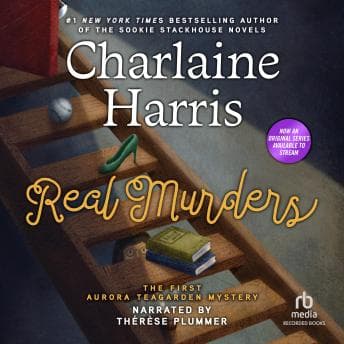

What happens when the people who obsess over murder become the murder victims?
I was shelving returns in the true crime section—because of course that's where I was—when this question hit me. A club dedicated to dissecting famous murders suddenly finds themselves living inside one. It's the kind of meta horror setup that makes my podcast-loving heart sing. Charlaine Harris understood something here: the people who think they'd survive a horror movie are usually the first to go.
When Your Hobby Becomes Your Nightmare
Aurora "Roe" Teagarden is exactly the kind of protagonist I want in my cozy mysteries—a librarian (my people!) with a morbid fascination she's channeled into respectability through her Real Murders Club. These aren't ghouls. They're academics of atrocity, meeting monthly to analyze famous cases with the same energy my podcast listeners bring to dissecting slasher films. But someone's been taking notes. And when a member turns up dead in a manner that mirrors a case they'd just discussed? That's when the fun begins.
Harris does something clever here that I appreciate: she doesn't let Roe off the hook. Everyone in this club has intimate knowledge of how murders work. Everyone knows the patterns, the mistakes killers make, the ways investigations unfold. Which means everyone is both suspect and potential victim. It's a locked-room mystery where the room is an entire small town and the lock is shared obsession.
The copycat killings that follow—brutal, deliberate, each one echoing a famous case—create this mounting dread that worked surprisingly well for a "cozy" mystery. Shirley Jackson walked so this author could run, honestly. The reveal, when it comes, is genuinely riveting. Though I'll admit some of the motive logic left me squinting. Roe herself seems a bit baffled by the why of it all, and I couldn't tell if that was intentional commentary on the unknowability of violence or just slightly undercooked plotting.
Thérèse Plummer Gets It (Mostly)
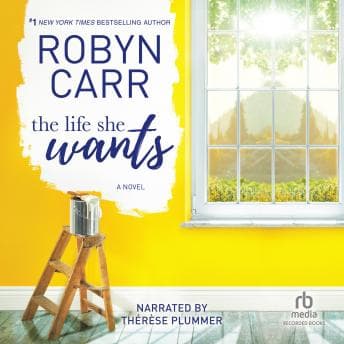
The narrator commits. That's rare. Plummer gives each character a distinct voice that makes following the ensemble cast effortless—no small feat in a mystery where you need to keep track of multiple suspects. Her Roe has this earnest quality that sells the character's genuine love of true crime without making her seem ghoulish.
Now. I have to be honest. There's a slight nasal quality to Plummer's voice that some listeners will notice immediately. I adapted within the first hour, but if you're sensitive to vocal tone, you might find it distracting. It's not a dealbreaker—her character differentiation and pacing are too good for that—but it's worth mentioning. I listened to this at 2 AM during a bout of insomnia (Shirley the cat was unimpressed by my life choices), and the voice actually kept me alert rather than lulled me to sleep, so take that as you will.
Small Town Gothic, Hold the Gore
This isn't the kind of horror that goes for visceral shock. Harris is playing a different game—she's interested in the horror of proximity. How well do you really know the people in your book club? Your neighborhood? The person who shares your niche obsession? The violence here is more suggested than shown, more dread than gore. If you scare easily, you'll be fine. For that same cozy-mystery-with-an-edge vibe, Murder in an Irish Village delivers small-town secrets without the existential dread. If you're looking for something that'll genuinely unsettle you, this is more intellectual exercise than nightmare fuel.
At just over six hours, it's a tight listen. No padding, no meandering subplots about Roe's love life that overstay their welcome (though there IS a love interest, and he's... fine). The pacing works for commutes or a dedicated afternoon, though I'd recommend focused listening over background noise. The mystery requires you to pay attention to who knew what and when. That same need for active attention applies to Second Wife, where the unreliable narrator means you can't afford to zone out for even a chapter.
My podcast listeners are going to love this—it's essentially a meta-commentary on true crime obsession wrapped in a murder mystery. Harris was doing this in 1990, way before the true crime boom made armchair detectives of us all. There's something almost prophetic about it.
Who's In, Who's Out
Listen if: You're a true crime podcast junkie who wants your obsession reflected back at you with a wink. Cozy mystery fans who can handle a little darkness will find a lot to love here.
Skip if: You need your horror visceral and your mysteries airtight. The motive wobbles, and the scares stay cerebral.
Case Closed (For Now)
This is a solid entry point to the Aurora Teagarden series, and Plummer's narration makes it easy to binge through. It's not going to haunt your nightmares—it understands that horror isn't about gore, it's about dread—but it leans more toward the cozy end of that spectrum. The premise is stronger than some of the execution, and the motive reveal might leave you with questions. But for six hours of entertainment that plays with genre conventions in smart ways? Worth your time.
Just maybe don't listen to it at your next book club meeting. You'll start looking at everyone differently.