
I was three hours into a logo redesign at 2 AM, Diego curled on my keyboard like he owned it, when I realized I'd been holding my breath through an entire battle sequence. My coffee went cold. I didn't care. This book had me by the throat in a way I wasn't expecting from post-apocalyptic fiction.
When the World Ends, Someone's Gonna Play Folk Music About It
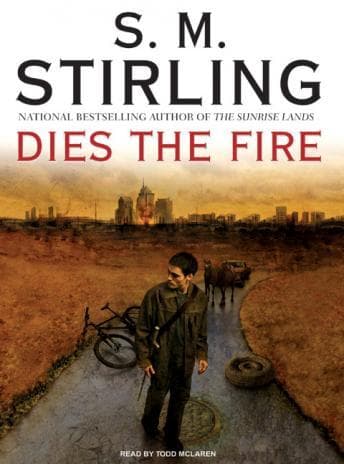
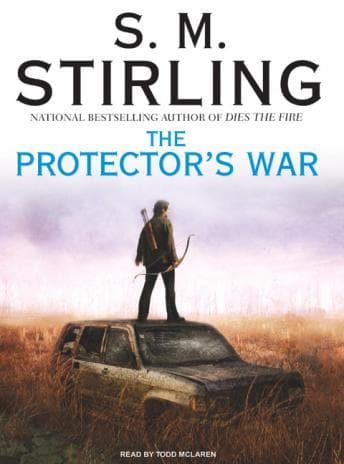
Look, I came for the drama and stayed for Juniper MacKenzie. A Wiccan folksinger leading a clan in post-collapse Oregon? Abuela would have clutched her rosary so hard it snapped, but also—she would have secretly loved her. There's something deeply romantic about rebuilding civilization through community, through ritual, through sheer stubborn hope. That same stubborn hope against impossible odds is what made Matilda wreck me—different scale, same heart. The Bearkillers with their military precision, the Clan MacKenzie with their earth-magic vibes—Stirling creates these factions that feel lived-in. Like you could smell the woodsmoke and hear the songs around their fires.
And then there's Norman Arminger, medieval scholar turned warlord, who looked at the apocalypse and said "you know what this needs? Feudalism." He's enslaving people and building an army and honestly? The audacity is almost impressive. The man had too much Game of Thrones energy before Game of Thrones was even on TV.
Todd McLaren: The Good, The Accented, and The Mispronounced
Here's where I get complicated. Todd McLaren has a genuinely good voice—warm, authoritative, the kind that makes 22 hours feel manageable. His character differentiation is solid. Michael Havel sounds like a former pilot who's seen some things. Juniper has this earthy quality that works. He brings emotional weight where it counts.
But. BUT.
Every twenty pages or so, there's a mispronunciation that yanked me right out of the Willamette Valley. Like hitting a pothole on a smooth highway. And some of the accents—particularly when the British soldiers arrive from Tasmania—are... attempts. Noble attempts. But attempts nonetheless. If you're accent-sensitive, you might wince. I winced. I kept listening anyway because the story had its hooks in me, but I'd be lying if I said it didn't pull me out of the immersion.
This is a Rainy Sunday Book (All 22 Hours of It)
Twenty-two and a half hours is a COMMITMENT. This isn't a casual listen. This is a relationship. You're going to know these characters intimately by the end—their politics, their religions, their complicated feelings about the world that was versus the world that is. Stirling doesn't rush. He builds. Layer by layer, faction by faction.
The pacing is deliberate—some might say slow, but I'd argue it's immersive. You're not just watching this world, you're living in it. The Willamette Valley becomes a character itself. The tension between the Protectorate and the free communities simmers throughout, and when it boils over, you FEEL it.
I ugly-cried exactly once—not going to spoil where—but it caught me completely off guard. In a book about warriors and warlords and the mechanics of rebuilding society, there's this moment of pure human grief that just... wrecked me. Frida looked at me like I'd lost my mind. Maybe I had.
Who This Is For (And Who Should Run)
If you love world-building that takes its time, if you're here for found family and competing ideologies and the question of what humanity becomes when the lights go out—this is your jam. Got patience for a slow burn and can forgive some accent wobbles? You'll find something special here.
If you need fast pacing, if mispronunciations break your immersion completely, if you want romance front and center (it's there but not the focus)—maybe stream this one first before committing a credit.
My Heart Needed This Weird Little Post-Apocalypse
I finished this at 4 AM with Diego still somehow on my keyboard and Frida judging me from her perch. The logo was not done. The client would wait. Because sometimes you find a book that makes you think about what you'd fight for, who you'd become, what songs you'd sing around the fire when everything familiar is gone.
The vibes are immaculate—medieval meets Pacific Northwest meets stubborn human hope. McLaren's narration is imperfect but earnest, and honestly? So is survival. So is rebuilding. So is this messy, sprawling, occasionally frustrating, deeply felt story.
Abuela would have loved the drama. She would have hated the Wiccan stuff. She would have kept listening anyway.
I miss you, Abuela. You would have had opinions about Norman Arminger.