This is not the book you read instead of your thesis. This is the book that makes you forget you have a thesis.
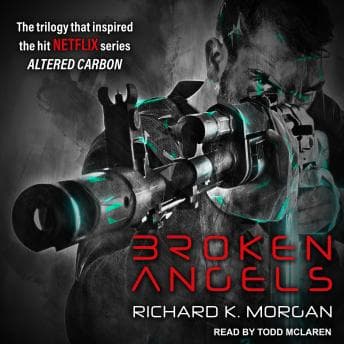
I started Broken Angels at 2 AM because I'd finished a D&D session where my party got absolutely wrecked by some homebrew nanite swarm encounter, and I thought, you know what, let's lean into this mood. Sixteen and a half hours later - spread across coding sessions, meal prep I definitely burned, and one very long walk where I missed my turn twice - I emerged feeling like I'd been through actual combat.
When Your Sequel Goes Full War Novel
So here's the thing about Broken Angels that nobody warns you about: this isn't Altered Carbon 2.0. Morgan basically said "what if I took my cyberpunk noir detective and dropped him into Apocalypse Now with aliens?" Kovacs is still Kovacs - cynical, violent, operating on his own moral compass that points somewhere between pragmatic and sociopathic - but the vibe shift is real. We've traded rain-slicked Bay City streets for a radiation-soaked warzone on some distant colony world.
The magic system here - and yes, I'm calling it a magic system because the Martian tech operates on rules we're slowly learning - is chef's kiss. Outlander does something similar with its historical world-building, layering in period details that accumulate into this rich, immersive experience. Morgan does this thing where he drip-feeds you information about the ancient alien civilization, and every revelation clicks into place like you're assembling a puzzle you didn't know you were solving. The archaeological mystery wrapped inside the military thriller wrapped inside the corporate backstabbing? This is Sanderson-level world-building, just replace the magic with xenotech and the heroic knights with mercenaries who'd sell their grandmother's sleeve for the right price.
Todd McLaren and the Art of the Hardboiled Voice
McLaren's voice is like if you distilled noir into audio form. That square-jawed delivery fits Kovacs's internal monologue perfectly - every sardonic observation, every cold tactical assessment lands exactly right. When Kovacs is calculating the odds of survival while watching colleagues die around him, McLaren hits this flat, almost dissociated tone that's genuinely unsettling in the best way.
His character differentiation is solid across the board. The corporate sleazeball Matthias Hand sounds appropriately oily. The military types have that clipped efficiency. Where it gets a little wobbly is the female characters - there's this sultry undertone to some of the women that started grating on me around hour eight. It's not dealbreaker territory, but it's noticeable enough that I found myself wincing during certain dialogue exchanges. (My D&D group would roast me for the same thing when I voice female NPCs, so maybe I'm just projecting.)
The Pacing Problem (That Isn't Really a Problem)
Look, I've seen the complaints about this one being slower and more confusing than Altered Carbon. And yeah, if you're expecting another detective thriller with a neat resolution, you're going to bounce off this hard. The narrative structure is messier. There are stretches where you're deep in military logistics and archaeological exposition that require actual attention.
But here's my hot take: the "confusion" is the point. Kovacs is operating in a warzone with incomplete information, surrounded by people who are all lying to him, and the reader experience mirrors that disorientation. By the time the pieces start clicking together in the back half, the payoff is earned. Yes, it's 16 hours. Yes, it's worth it. If you don't like info-dumps, this isn't for you (but you're wrong).
The progression is satisfying in a way that reminded me of reading through a really well-designed campaign module - you can feel the GM (Morgan) has thought through every encounter, every revelation, every way the party might try to break the scenario. Space Prison has that same meticulous plotting where you can tell the author mapped out every consequence before writing a single page.
Who Should Listen (And Who Should Skip)
This is for the people who want their sci-fi chewy. If you loved Altered Carbon but wished it had more military SF DNA, more alien mystery, more philosophical weight about what happens when human consciousness becomes truly commodified in wartime - this delivers. It's also for anyone who appreciated the Netflix show but felt like something was missing. (Spoiler: what was missing was basically everything that makes these books special.)
Skip it if you need tight plotting and clear answers. Skip it if narrator voice quirks for female characters will pull you out completely. Skip it if you want Kovacs to be anything resembling a hero.
My Thesis Can Wait Another Week
Broken Angels is the kind of sequel that trusts you to keep up. It's darker, weirder, and more ambitious than its predecessor, and McLaren's narration carries you through the brutality with exactly the right amount of detachment. I finished it feeling like I'd actually been somewhere - which is about the highest compliment I can give an audiobook.
Now if you'll excuse me, I have a thesis chapter to pretend to work on while I start Woken Furies.