
Look, I need to rant for a second about something that should not bother me as much as it does. Todd McLaren pronounces Mjolnir as "Majolneer." Multiple times. Throughout the entire audiobook. And every single time it happened, I physically winced like someone had just told me Sanderson's magic systems are "too complicated." (They are not. You are just not paying attention.)
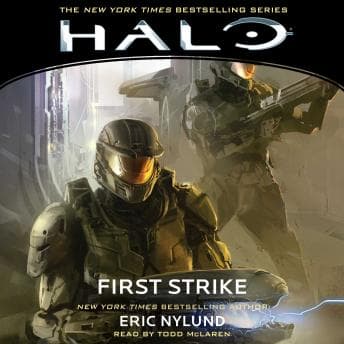
But here's the thing—I kept listening. For nearly twelve hours. Because Eric Nylund understands something fundamental about military sci-fi that a lot of authors miss: the squad dynamics matter more than the explosions.
The Bridge Between Two Apocalypses
First Strike sits in this fascinating narrative gap between the fall of Reach and the discovery of Earth's location by the Covenant. If you've played the games, you know what's coming. If you haven't... well, humanity's about to have a very bad day. But Nylund doesn't just phone in a bridge novel. He splits the narrative between two groups—Master Chief and Cortana dealing with the aftermath of the Halo ring's destruction, and a squad of surviving Spartans trapped on the glassed surface of Reach.
That second storyline? That's where the book really shines. Fred-104 and Kelly-087 leading Blue Team through the ruins of the only home they've ever known—there's something almost Tolkien-esque about it. (Yes, I just compared a Halo novel to Tolkien. My thesis advisor would be so proud. Or horrified. Probably horrified.)
Dr. Catherine Halsey's discovery beneath Reach's surface adds this layer of ancient mystery that elevates the whole thing beyond standard military fare. It's giving "there are older things in this universe than either faction" energy, and I am absolutely here for it.
McLaren's Balancing Act
So about that narrator. Todd McLaren brings genuine intensity to the combat sequences—his pacing during firefights keeps the adrenaline pumping, and he's got this dynamic range that shifts between quiet tactical moments and full-scale Covenant engagements without feeling jarring. When Spartans are coordinating attacks or Chief is processing tactical data with Cortana, McLaren finds this focused, almost clipped delivery that works really well.
But—and this is a significant but—the mispronunciations are a problem if you're a Halo fan. Mjolnir isn't some obscure deep lore term. It's the name of the iconic armor. It's like someone narrating a Star Wars book and consistently saying "Light-sab-er" with three syllables. You can get past it, but you'll notice it every. Single. Time.
Compared to some other Halo audiobook narrators I've experienced, McLaren's flexibility and emotional investment put him ahead. He's passionate about the material in a way that translates through the performance. That same passion shows up in Who the Hell is That?, where narrator commitment can elevate even familiar genre territory. Just... someone should have handed him a pronunciation guide.
World-Building That Respects the Source Material
What Nylund does exceptionally well—and this is where my D&D brain lights up—is expand the Halo universe without contradicting the games. The Covenant's military structure, the Spartan program's history, the UNSC's desperate strategic situation—it all coheres. He's adding to the lore, not rewriting it.
The pacing is tight for an almost-twelve-hour book. No bloat here, no extended philosophical tangents that don't serve the plot. (I actually like those in my fantasy, but military sci-fi operates by different rules.) Every chapter advances either the action or the character development, often both.
And the stakes? The stakes are "the Covenant knows where Earth is and they're bringing everything." That's not subtle. That's not nuanced. That's a ticking clock strapped to humanity's extinction, and Nylund never lets you forget it.
Who's Rolling Initiative on This One
If you're a Halo fan who can tolerate some pronunciation crimes, this is essential listening. New to the franchise? Start with Fall of Reach instead—First Strike assumes you know these characters and this conflict. It's not hostile to newcomers, but it's definitely optimized for people who already care about whether humanity survives.
Skip this if: you need distinct character voices (McLaren differentiates through tone and intensity more than unique voicing), or if mispronounced terminology will pull you completely out of the experience.
Queue it up if: you want military sci-fi with actual tactical depth, you appreciate squad-based storytelling, or you've ever looked at a Halo game and thought "I want to know what happens between the cutscenes."
My Thesis Can Wait Another Day
I listened to this across three coding sessions and one very long night where I should have been working on my procedural generation research. (Dr. Patel, if you're somehow reading audiobook reviews, I promise I'm making progress. The Stormlight Archive comparison was purely academic.)
First Strike isn't Sanderson-level world-building—it's operating in a different genre with different goals—but it's doing exactly what expanded universe fiction should do: making you care more about a world you already love. The magic system here is bullets and Covenant plasma, and honestly? The tactical progression is satisfying in its own way.
McLaren's performance, pronunciation issues aside, kept me engaged through nearly twelve hours. That's not nothing. That's a narrator who understands that military sci-fi lives or dies on momentum, and he never lets it stall.