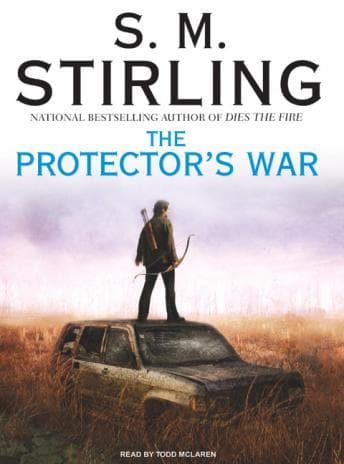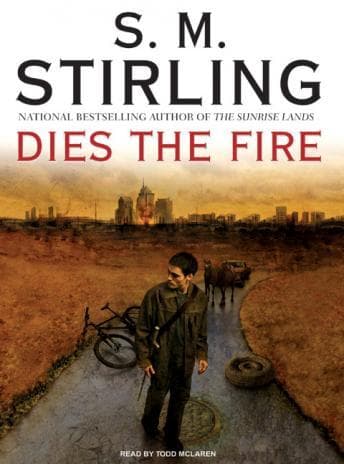

Look, I need to talk about the Gaelic. I need to vent about the Gaelic. Twenty-two hours I spent with this audiobook—grading sophomore essays on The Great Gatsby while Todd McLaren cheerfully butchered every Irish name Stirling threw at him. Samhain. Imbolc. Names that any narrator tackling a book about a Celtic-inspired post-apocalyptic clan should probably have researched for five minutes on YouTube. My wife Denise, who has actual Irish relatives, walked past my desk around hour eight and physically winced.
And yet. And yet I kept listening.
When the Lights Go Out and Physics Stops Making Sense
Here's the thing about Dies the Fire that hooked me despite my linguistic frustrations: Stirling asks a genuinely interesting question. What happens when technology simply... stops? Not breaks. Not fails. Just refuses to work according to physics as we understand them. Gunpowder won't ignite. Engines won't turn. Steam pressure won't build. It's not an EMP. It's something weirder, something almost supernatural in its selectiveness. Ruthless King operates on a similar principle—power structures that feel ancient and inevitable, even when they're being built in real time.
This reminds me of what Hemingway said about writing—that the dignity of movement of an iceberg is due to only one-eighth of it being above water. Stirling's world-building works the same way. He gives you just enough explanation to accept the premise, then spends twenty-two hours exploring what humans actually DO when stripped of three centuries of technological progress.
The answer, predictably, is both beautiful and horrifying. Some people form farming communes around a Wiccan folk singer. Others build feudal armies. Most just die.
Two Protagonists, One Scottish Accent
Michael Havel is a bush pilot. Juniper Mackenzie is a pagan musician. Their stories run parallel for most of the book—Havel crash-landing in Idaho and leading his passengers through wilderness survival, Mackenzie gathering survivors in Oregon and essentially inventing a new society from scratch.
McLaren handles the large cast with what I'd call "understated competence." He's not doing theatrical voices. He's not chewing scenery. He distinguishes characters through subtle shifts in cadence and register rather than broad characterization. The problem? His subtle shifts all seem to drift toward... Scottish. Native American character? Scottish lilt. Oregon farmer? Scottish undertones. Actual Celtic revivalist who probably SHOULD sound a bit Scottish? Well, at least that one's accurate.
(My students would call this "unintentionally hilarious." They're not wrong.)
The narration never drags—McLaren has genuine skill at pacing and emphasis—but you'll need to accept that this is the Scottish-Flavored Apocalypse whether Stirling intended it or not.
Twenty-Two Hours of How to Tan Leather
Here's where I'll lose some of you: this book is LONG. Twenty-two hours of detailed descriptions about how to tan leather, forge swords, plant crops, organize militias. Stirling clearly did his research. He wants you to know he did his research. Every chapter includes what feels like a master class in pre-industrial survival skills.
I found this genuinely fascinating during my late-night grading sessions. The methodical pacing matched my own rhythm of red-pen corrections and margin notes. But I can absolutely see why some listeners bounce off—if you're looking for constant action, you'll find the pacing uneven. The battles, when they come, are complex and strategic. The quiet stretches between them are... very quiet. Stormbird has that same rhythm—long stretches of political maneuvering punctuated by violence that actually matters.
This is not background listening material. This is "pause the faculty meeting" material. (Principal Martinez, if you're reading this, I was definitely not listening to post-apocalyptic fiction during your curriculum review. I was absolutely paying attention to assessment rubrics.)
Who Should Queue This Up (And Who Should Skip)
If you loved Earth Abides or Lucifer's Hammer—if you're the kind of reader who wants to know exactly HOW society rebuilds after collapse—this is your spiritual successor. It's literary survival fiction disguised as genre entertainment.
Skip it if mispronounced Gaelic will ruin your immersion. Skip it if you need fast pacing. Skip it if you're looking for something to half-listen to while doing other things.
But if you want a book that takes its premise seriously, that explores the genuine logistics of civilizational collapse, that asks hard questions about what skills and values actually matter when the power goes out forever?
Red Pen Down, Sequel Queued
Dies the Fire isn't perfect. The narrator has clear limitations. The pacing requires patience. The Gaelic pronunciation borders on criminal.
But I finished all twenty-two hours. I'm considering the sequel. And I haven't stopped thinking about what I'd actually DO if the rules of physics suddenly changed. (Probably die in the first month, if I'm honest. My survival skills are limited to making coffee and explaining unreliable narrators.)
The story earns its length. McLaren earns his Earphones Award—just not for linguistic accuracy. And Stirling earns a spot on my shelf next to the other big thinkers about how civilizations end and begin.
My students would hate this. I love it.