
When's the last time someone was genuinely honest with you about prayer? Not the "just have more faith" kind of honest, but the uncomfortable, I-don't-know-why-God-isn't-answering kind of honest?
I finished this one on a Saturday morning walk along the lakefront with Denise. She was talking about her sister's upcoming visit and I was nodding along with one earbud in, but somewhere around the halfway mark I actually pulled both earbuds out and told her about what Miller had just said about bringing your mess to God instead of cleaning yourself up first. She gave me that look — the one that says "you're being weird about an audiobook again" — but then we talked about it for twenty minutes. That's the kind of book this is. It interrupts you.
The Guy Who Admits He's Bad at Prayer (And That's the Point)
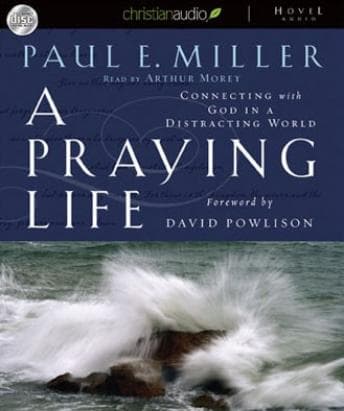
Paul Miller does something I rarely see in Christian nonfiction: he leads with failure. His own failure. He talks about his autistic daughter Kim and the grinding, daily reality of praying for someone whose situation doesn't visibly change. He doesn't wrap it in a neat bow. He doesn't offer the three-step formula. Kind Is the New Classy aims for that same unvarnished honesty about living out faith, though I'd argue Miller gets considerably closer to the bone. He tells you what it's actually like to sit in the silence after you've asked God for something for the fifteenth year in a row.
This reminds me of what Hemingway said about writing — that the most essential gift for a good writer is a built-in, shock-proof crap detector. Miller has that same detector aimed at Christian platitudes about prayer. He dismantles the idea that prayer is some spiritual performance you need to get right, and instead frames it as something closer to a messy, ongoing conversation. Like marriage. Like parenting. Like any relationship where you show up imperfect and hope the other person meets you there.
At under eight hours, the book doesn't overstay its welcome, which is rare for this genre. So many devotional books could lose a third of their content and be stronger for it. Miller stays lean. His family stories — particularly the ones about watching his kids navigate their own faith struggles — carry real weight because they're specific and unvarnished. He's not performing fatherhood. He's reporting from the trenches.
Arthur Morey Knows When to Get Out of the Way
Here's what I appreciate about Morey's narration: he doesn't dramatize. This isn't the kind of book that needs vocal fireworks. Miller's prose is conversational and plain-spoken — almost deceptively simple — and Morey reads it like a man sitting across a kitchen table from you. There's a clarity to his delivery that lets Miller's self-deprecation and vulnerability land without interference.
The narrator understands that pause is punctuation. Morey uses silence well, particularly during the passages where Miller is describing what it feels like to pray and hear nothing back. A lesser narrator would rush through those moments or add emotional weight with vocal trembling. Morey just... sits in them. It's the audio equivalent of a teacher waiting for the classroom to get uncomfortable enough that someone finally answers the question. (I use this technique daily. My students hate it.)
Is the narration perfect? Not quite. There are stretches — particularly in the more theological sections where Miller is building frameworks around concepts like "helplessness" as a spiritual posture — where Morey's even-keeled delivery can feel a little too steady. The pacing doesn't shift enough to signal when Miller is making his most crucial points versus when he's setting something up. You have to do some of that interpretive work yourself. But honestly, for a book about slowing down and paying attention? Maybe that's fitting.
Who Needs This (And Who Doesn't)
If you've ever felt guilty about your prayer life — and let's be real, that's most people who've spent any time in a church — this book meets you exactly there. It's not going to fix your prayer life. It's going to reframe what "fixed" even means. Miller's argument is essentially that cynicism about prayer is often just honesty waiting to be channeled properly, and that God can handle your doubt better than your performance.
My students would hate this. I love it. Not because it's inaccessible, but because it asks you to be patient with ideas that don't resolve quickly — which is basically my entire curriculum in one sentence.
If you're looking for a systematic theology of prayer, this isn't it. If you want something more academic, go find a seminary lecture. But if you want the book equivalent of a long, honest conversation with someone who's been praying badly for decades and somehow found God in the mess of it — this is worth your time.
The Assignment I'd Actually Give
Listen to this during your quiet hours. Not on a run, not while grading papers at 11 PM (trust me, I tried — too easy to drift). This one wants your full attention, or at least most of it. At 7 hours and 46 minutes, it's a weekend commitment, not a marathon. And it might be the most useful book on prayer precisely because it never pretends to have prayer figured out.