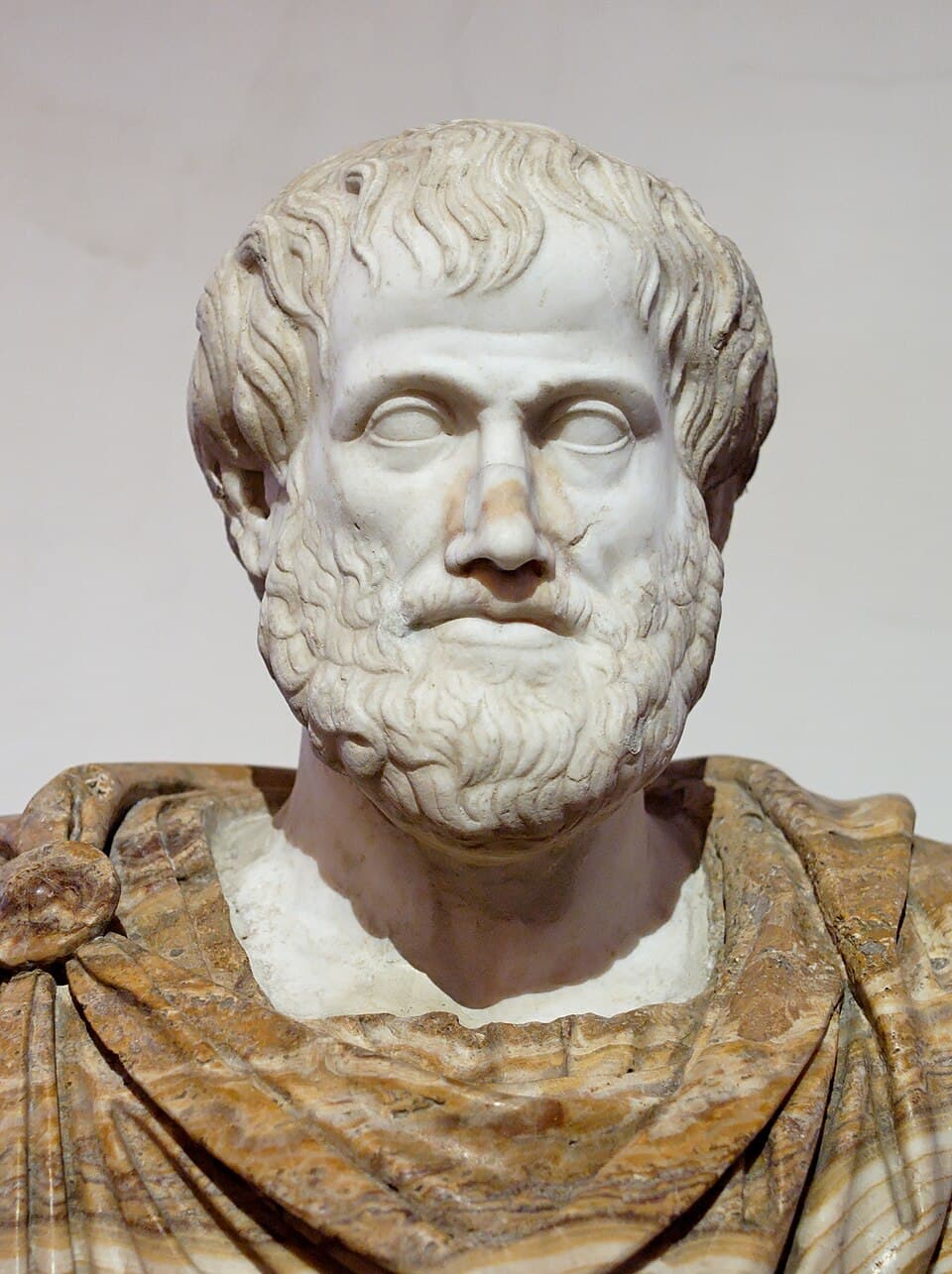

Aristotle's Politics is not the book I expected to be listening to at 2 AM while batch-exporting logo files for a client who keeps changing their mind about serif vs. sans-serif. But here I am, and honestly? This ancient Greek man had me in a chokehold.
Let me be real with you: I did not cry during this book. Not once. And for me, that's basically a alien experience. But something else happened — something I wasn't prepared for. I got genuinely mad. Like, sitting-up-straighter, pausing-the-audio, talking-to-Frida-about-it mad.
The Part Where a 2,400-Year-Old Man Made Me Want to Throw My Phone
Aristotle's takes on women and slavery hit different when you're a first-gen Mexican-American woman working for herself at midnight. He just... casually categorizes entire groups of people as naturally subordinate, and the matter-of-fact tone of it — both his writing and the narrators reading it — made my skin crawl in a way that felt important. Like, this is the foundation of Western political thought, and it's got these massive cracks running through it that people just... papered over for centuries. Abuela would've had WORDS. She would've turned this off and put on her novela and said "mija, that man needs Jesus."
But here's the thing I didn't expect: the sections on citizenship and what makes someone truly belong to a political community? Those parts grabbed me by the throat. Aristotle's whole argument that you can only become your best self through active participation in your community — that virtue isn't something you achieve alone in your apartment with your cats (sorry, Diego) — that actually moved me. Not to tears, but to something quieter. A kind of ache.
Multiple Narrators, Multiple Problems
Okay, so. The "Various Readers" situation. This is a LibriVox-style production, and you can tell. Some of the narrators have this warm, lecture-hall energy — one reviewer compared it to their favorite poli-sci professor, and I get that. When the narration clicks, the dense philosophical arguments actually become followable, which is no small feat for a text this old and this translated.
But then a new chapter starts and suddenly someone is reading at 1.5x speed like they're trying to catch a bus, and I'm rewinding because I missed an entire argument about oligarchy vs. democracy. At my sacred 1.0x listening speed. The inconsistency between readers is the real issue — it's not that any single narrator is terrible, it's that the shifts in pace and tone yank you out of whatever flow you'd built up. One narrator will have this measured, thoughtful cadence, and the next sounds like they're reading a grocery list. There's no emotional continuity, and for someone like me who lives and dies by a narrator's ability to hold emotional space — that's rough.
I will say: nobody here is giving Julia Whelan. Nobody is giving velvet and honey. But for a free audiobook of ancient philosophy, I've heard worse. The bar is just... adjusted. I've been thinking about narration quality a lot lately — Sword Song reminded me how much a steady, committed voice can carry even the densest material without losing you at chapter breaks.
Where the Ancient Vibes Actually Hit
The section where Aristotle systematically breaks down six types of government — monarchy, aristocracy, polity, then their corrupted versions: tyranny, oligarchy, democracy — is genuinely fascinating. He's so precise about how each system rots from the inside. And his critique of Plato's Republic? Imagine publicly dragging your teacher's life work with surgical precision and zero shade, just pure intellectual disagreement. The audacity. I respect it.
This book felt like sitting in on a conversation you weren't supposed to hear — between a brilliant, deeply flawed man and the future of civilization. Some of it aged like fine wine (political community as essential to human flourishing). Some of it aged like milk left on a San Antonio porch in July (everything about women and enslaved people).
Who This Is For (And Who Should Run)
If you're a philosophy student being forced to read this — the audiobook will at least make it bearable. If you're genuinely curious about where Western political ideas started, warts and all, this is worth the nine hours. Listen during focus time, not while doing dishes. Your brain needs to be ON.
If you want clean, polished narration with a single consistent voice? Find a different edition. If you can't stomach outdated views on gender and race even in historical context? Skip entirely and read a summary.
This is not a rainy Sunday book. This is a clear-eyed Tuesday book. Coffee, not wine.
The Stamp I'd Put on This File
I'm glad I listened. I'm glad it made me angry. I'm glad it made me think about what belonging to a community actually means — especially for people Aristotle never would've included in his definition of citizen. That tension between his brilliance and his blind spots is the whole point of engaging with old texts. You don't have to agree. You just have to show up and wrestle with it.
Abuela would not have loved this one. But she would've loved that I fought with it.