
"Engineering slow and painful deaths by poison, with his victims entirely unaware of the drugs flooding their bloodstream until it's too late."
I was standing at the stove making pancit at 7:30 AM, still in my scrubs, and that line hit me so hard I forgot to stir. Because as someone who's actually worked a code on a patient whose tox screen came back looking like a pharmacy shelf - yeah. That concept? It's not fiction to me. It's Tuesday.
A Killer Who Understands Pharmacokinetics (And That's Terrifying)
Here's what Helen Fields gets right that most thriller writers don't even attempt: the slow poison angle isn't just a gimmick. The killer in Perfect Death isn't splashing cyanide in someone's coffee like a Scooby-Doo villain. He's engineering deaths that look natural, that slide past toxicology screens, that leave victims deteriorating in ways their own doctors can't explain. Fields is a former barrister, not a clinician, but the methodical cruelty of the kills - the watching from afar, the patience of it - that rings true in a way that made my skin crawl. The medical details are accurate. Finally. Or at least accurate enough that I wasn't yelling at my dashboard, which is a win.
The investigation itself moves at a pace that mirrors real casework. Callanach and Turner don't just stumble into DNA evidence in chapter three. They grind. They hit walls. They argue about jurisdiction and resources like actual professionals who are understaffed and overtired. I felt seen.
But I'll be honest - there are stretches in the middle where the investigation slows to the point where I started mentally reorganizing my med cart. At nearly 14 hours, this book asks for patience. The payoff is there, but you have to trust the process.
Robin Laing Does the Thing With Voices
Robin Laing narrating this series is one of those pairings that just works. His French accent for Luc Callanach walks the tightrope between charming and believable - it never slides into caricature, which I appreciated because nothing kills a thriller faster than a narrator doing a bad Pepe Le Pew. The Scottish voices feel grounded and specific. DS Lively's sardonic delivery through Laing's performance made me actually laugh out loud during a 4 AM charting lull, which earned me a look from the respiratory therapist.
That said, there's one moment - and I had to rewind to confirm - where a newer detective's dialogue sounded almost identical to Luc's voice. Just a few lines, but it threw me. In a book with this many characters, that kind of slip matters because you're doing mental forensics on who's speaking instead of following the plot. It's a minor thing in an otherwise strong performance, but it's the kind of detail that sticks when you're a listener who pays attention.
Laing handles the emotional register well too. The dynamic between Callanach and Ava Turner - the tension, the unspoken stuff, the professional respect layered with something personal they're both pretending isn't there - he gives it weight without melodrama. Carlos asked why I was crying in the car. I blamed allergies. (It wasn't allergies. It was the scene where they almost say what they actually mean to each other and then don't.)
The Killer's POV Is Where This Book Earns Its Keep
Plenty of thrillers give you chapters from the killer's perspective. Most of them are lazy - just "I watched her from the shadows, she had no idea" and then back to the detective. Fields actually gets inside this person's logic. The sections from the killer's point of view are clinical, methodical, almost academic in their detachment, and that's exactly what makes them so unsettling. You're not reading about rage or passion. You're reading about someone who has turned murder into a science project. As someone who works with people in crisis every single shift, the calm ones scare me more than the ones who are screaming. Always have.
This is the third book in the DI Callanach series, and it assumes you've been along for the ride. You could probably start here, but you'd miss the accumulated history between the characters that gives certain scenes their punch. My recommendation: start from the beginning if you can.
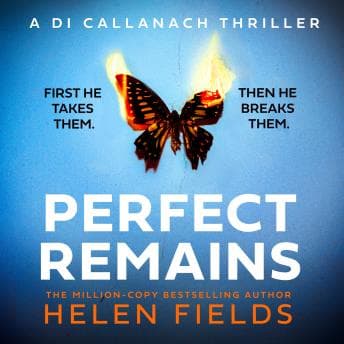
Perfect Remains introduces Callanach and Turner with the same gritty realism Robin Laing brings to every book in the series, and you'll appreciate the weight of their history in this one.Who Gets the Prescription
If you like your crime fiction methodical, your investigators flawed but competent, and your killers genuinely frightening in a quiet way - this is your book. Perfect for that post-shift decompression when you need something absorbing enough to keep your brain from replaying your shift. If you need constant action every chapter or you're not invested in the Callanach-Turner dynamic, the middle stretch might test you.
Skip if you're squeamish about detailed descriptions of how poison affects the human body. Not skip if you're a healthcare worker who wants to see if Fields gets it right. (She mostly does. I'm impressed.)
The methodical cruelty of the killer also reminded me of Dead to Her: A Novel, another thriller where the danger hides in plain sight and the slow-burn tension got under my skin in a similar way.Night Shift Approved
Thirteen hours and forty-three minutes is a commitment, and the pacing isn't always breakneck. But the killer concept is genuinely original, Laing's narration carries you through the slower stretches, and the last two hours had me sitting in my driveway with the engine running because I refused to stop listening. My mom would love this (she still thinks I should've been a doctor) - it's got enough medical detail to make her feel smart and enough suspense to keep her texting me theories at midnight.