
"The more innocent the better."
That line hit me around hour three, somewhere on I-35 between Austin and San Antonio. Client meeting could wait. I needed to know who this killer was targeting next.
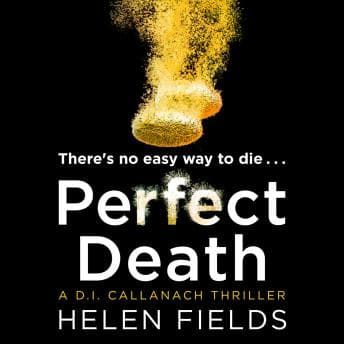
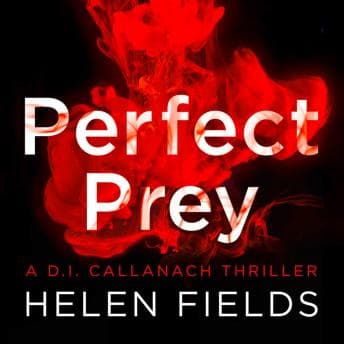
Let me cut to the chase: Helen Fields knows how to construct a proper manhunt. Perfect Prey drops you into Edinburgh during festival season—thousands of tourists, packed streets, and a killer who guts a charity worker in broad daylight. No witnesses. No motive. Just a dead good Samaritan bleeding out while the crowd thinks it's performance art. That's a hell of an opener.
The Hunt Gets Personal
What sold me on this one is the graffiti angle. The killer's tagging buildings around Edinburgh with words describing his victims—but here's the twist that made me pull over to process it. The tags appear BEFORE the murders. This psychopath is announcing his targets, and the cops can't decode the pattern fast enough. It's like watching an IED countdown with no idea where it's planted.
D.I. Ava Turner and D.I. Luc Callanach work this case with the kind of procedural grind I appreciate. No magical intuition, no convenient witnesses. Just two detectives burning through leads while bodies stack up. The second victim—a primary school teacher strangled with her own scarf, dumped in an alley—that one stuck with me. Fields doesn't flinch from the violence, and the content warnings are earned. This isn't cozy crime.
Callanach's backstory adds some weight here. French-Scottish detective with a complicated past that bleeds into the investigation without derailing it. Fields balances the personal drama with the case work better than most. I've seen too many procedurals where the detective's trauma becomes the whole show. Not here.
Robin Laing Behind the Mic
Laing handles the Scottish accents without making it a cartoon. His Edinburgh feels authentic—I've spent enough time with Scots in various operational contexts to know when someone's faking it. The pacing matches the investigation's rhythm: methodical when the detectives are grinding through evidence, urgent when another body drops.
At 13 and a half hours, this is a serious commitment. I ran it at 1.25x and it held together fine. Laing's delivery has enough clarity that speeding up doesn't muddy the dialogue. Some narrators fall apart when you accelerate them. He doesn't.
One thing I noticed—the transitions between Ava and Luc's perspectives could be sharper. There were a couple moments where I had to rewind and figure out whose head I was in. Minor complaint, but worth mentioning.
Where The Intel Gets Thin
Here's where I'll be straight with you: I couldn't find much specific listener feedback on this one beyond the usual "best series" hype. What I can tell you is that Fields practiced criminal law for thirteen years before writing, and it shows. The investigative procedures feel grounded. When Turner coordinates with forensics or Callanach navigates interdepartmental politics, there's an authenticity that separates this from amateur hour.
The "murder capital of Europe" tagline is obviously marketing hyperbole—Edinburgh's actually quite safe—but Fields uses the city well. Festival crowds, narrow closes, the contrast between tourist Edinburgh and the grimier corners. Setting becomes character.
Who Should Gear Up—And Who Should Stand Down
If you like Karin Slaughter or M.J. Arlidge, you're in familiar territory. Great Train Robbery works the same methodical angle, though the stakes are financial instead of forensic. Dark procedurals with competent detectives and killers who aren't just crazy—they're methodical. If graphic violence bothers you, sit this one out. Fields doesn't glorify it, but she doesn't sanitize it either.
This is book two in the series. I didn't read book one and followed along fine, but there's clearly backstory I missed. Not a dealbreaker, but know what you're walking into.
Mission Debrief
Worth your time? Here's the bottom line: Perfect Prey delivers a solid procedural with a genuinely clever hook. The graffiti-as-prophecy angle kept me engaged through the middle section where these things usually sag. Laing's narration is professional and unobtrusive. The violence is brutal but purposeful.
Ranger gave this one his attention for about three hours before he fell asleep. That's a solid endorsement—he usually checks out after thirty minutes if the narration's boring.
Not groundbreaking, but a damn competent thriller that respects your intelligence. I'll be grabbing book three.