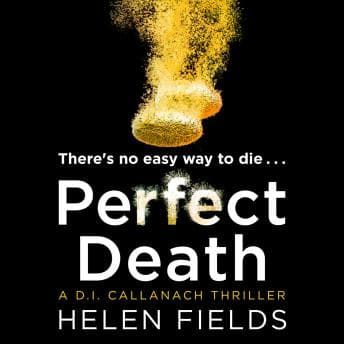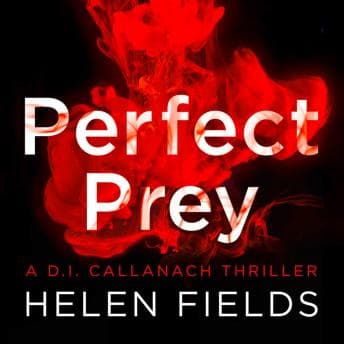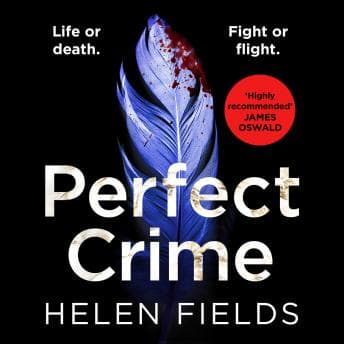

I need to talk about the French accent situation. Because I spent the first hour of this audiobook genuinely distracted by Robin Laing's attempt at making DI Luc Callanach sound like he grew up in Lyon. It's... not great. My therapist would have thoughts about how much this bothered me. But here's the thing - I kept listening. Through twelve and a half hours of Highland murder and Edinburgh rain, I kept listening. And by hour three, something shifted.
The Psychological Profile That Actually Works
Helen Fields was a criminal barrister for thirteen years before writing this, and it shows in ways that matter. The killer in Perfect Remains isn't just evil for evil's sake - there's a pattern here, a logic to the victim selection that made me pause my morning jog through Cambridge more than once to really think. Successful women. Professional women. Women who've achieved something. The antagonist exhibits classic narcissistic wounding - someone who needs to possess what they can't become. I saw similar psychological complexity in Paris Apartment: A Novel, where obsession with what others have drives the entire twisted plot.
The real Elaine Buxton screaming into darkness in that concealed back room while a burned body is discovered on a Highland mountain? That's not just shock value. That's a writer who understands that the worst horror isn't death - it's the waiting. The knowing. Fields gets human fear in a way that feels researched, not imagined.
Robin Laing's Scottish Accents Deserve Better Press
So about that narrator. Yes, the French accent for Callanach is contrived. Some listeners called it "pathetic" and honestly, I get it. But - and this is a significant but - Laing's Scottish voices are genuinely excellent. The Edinburgh characters feel rooted in place. There's a texture to the local police, the witnesses, the peripheral characters that creates an atmosphere you can almost smell. Wet stone and whisky and something darker underneath.
Here's what's fascinating: listeners who stuck with the series specifically cite Laing's narration as why they continued. His emotional delivery during the captivity scenes hit harder than I expected while I was cooking dinner alone last Tuesday. (I burned the dal. Worth it.) The immersive quality overcomes the accent issue once your brain adjusts - and it does adjust.
What Makes Callanach Compelling Is His Damage
He left Interpol under circumstances that clearly wounded him. He's eager to prove himself in Edinburgh, which is a long way from Lyon in more ways than geography. What I found myself asking: why does a man with that kind of career trajectory really choose to start over in Scotland? The book hints at answers without overexplaining, which - psychologically, this actually tracks. Trauma survivors often seek geographical distance as emotional distance. It rarely works, but we do it anyway.
The pacing moves quickly enough that I never felt the twelve-hour runtime drag. Fields structures the investigation with enough procedural detail to feel authentic without drowning in forensic jargon. The dual timeline - what's happening to the victims versus what Callanach is discovering - creates genuine tension. You know things he doesn't. You're screaming at him to figure it out faster.
The Twist That Earned Its Keep
I won't spoil it. But the "real fate of the women" that the description teases? It's more twisted than standard thriller fare. This is a fascinating case study in how readers underestimate what authors will actually do to their characters. I've read enough crime fiction to think I'm unshockable. I was not unshocked.
Content warnings are warranted here - violence, abuse, and some genuinely disturbing captivity sequences. This isn't cozy crime. This is the kind of book where you understand why Fields spent thirteen years in criminal law before writing fiction. She's seen case files. She knows what people do to each other.
Who Should Queue This Up (And Who Should Skip)
If you want psychological depth in your crime fiction - killers with actual pathology, investigators with real wounds - this delivers. Fans of atmospheric Scottish settings and procedural authenticity will find plenty to love. Skip it if you need flawless accents to stay immersed, or if captivity horror crosses a line for you. This one doesn't pull punches.
My Professional Opinion (Take It or Leave It)
If you can get past the French accent issue - and I'm telling you, you can - this is a strong series opener with a detective worth following. The Scottish setting feels lived-in rather than touristy. The psychology of both killer and investigator holds up under scrutiny (I scrutinized, believe me). And Robin Laing's narration, accent hiccups aside, creates the kind of atmosphere that makes you miss your bus stop.
Is it perfect? No. The French accent really is distracting early on. Some of the secondary character development feels rushed. But for a debut novel in audio form, it delivers exactly what it promises: a chilling look into a troubled mind, told by someone who understands that the scariest monsters are the ones who look normal.
I'm already queuing up book two. My therapist will probably have thoughts about that too.