
What does a man owe to the dead — and what does he owe to their children?
That question kept circling in my head while I was making chana masala at midnight, the kind of elaborate cooking project that takes just enough attention to keep your hands busy but leaves your brain completely free to obsess. And Dave Robicheaux gave me plenty to obsess over.
Guilt as a Character You Can't Shake
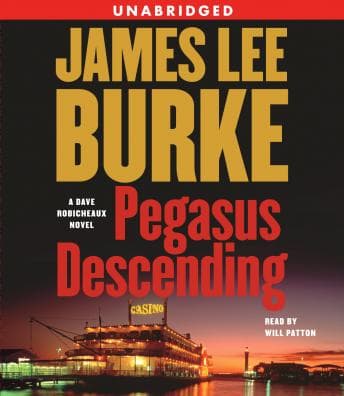
The protagonist exhibits classic survivor's guilt — but Burke does something smarter than the usual crime fiction version of that. Robicheaux's failure to save Dallas Klein twenty-five years ago wasn't some noble, tragic circumstance. He was drunk. He was useless. And now Dallas's daughter Trish shows up in Louisiana casinos, throwing hundred-dollar bills around like they're confetti, and Robicheaux has to face the fact that his failure didn't just kill a man — it created a whole trajectory of damage that's still unfolding.
This is a fascinating case study in how shame operates differently from guilt. Guilt says "I did something bad." Shame says "I am something bad." Robicheaux lives in that shame space, and Burke understands the difference. The way the investigation into Trish Klein's motives bleeds into Robicheaux's own self-punishment — connecting to a local girl's suicide, to a web of power and exploitation — it all feels psychologically honest. The man isn't solving a case. He's trying to retroactively save someone he already failed.
What makes this character compelling is that Robicheaux's moral compass is simultaneously his greatest strength and the thing that tortures him most. He can see corruption everywhere except in his own self-flagellation.
Will Patton's Voice Is Basically Louisiana Weather
I need to talk about Will Patton. His southern drawl for Robicheaux isn't performative — it's atmospheric. It sounds like humidity feels. Heavy, slow, pressing against you. When he shifts into Clete Purcell, there's this rougher, more reckless energy that immediately signals: here's the guy who does what Dave won't let himself do. Their dynamic comes through in voice alone, which is impressive for a single narrator carrying twelve hours.
Patton's female characters — particularly the ones Burke writes as dangerously clever — come through with this unsettling sweetness. You can hear the manipulation in the register shift. It's subtle enough that you buy it.
But. There's a problem. Patton has this thing where he drops to a near-whisper during emotionally intense moments, and I found myself cranking up the volume during a key scene only to get blasted when the next chapter started at normal levels. I was chopping onions and nearly lost a fingertip. (My therapist would have thoughts about me combining knives and crime fiction at midnight, but here we are.) It's not a dealbreaker, but it's genuinely annoying — especially if you're listening in a car or anywhere with ambient noise.
Where the Wings Come Off the Pegasus
Here's where I start disagreeing with the consensus. A lot of Burke devotees seem to forgive this book's pacing issues because the prose is gorgeous and the Robicheaux voice is so well-established. And look — the prose IS gorgeous. Burke writes about Louisiana the way my mother talks about Jaipur: with so much love it becomes its own character.
But psychologically, this doesn't track in places. The ending felt rushed and unsatisfying in a way that undermined the emotional buildup. You spend hours sinking into Robicheaux's pain, watching him untangle this case that's really about his own unresolved trauma, and then the resolution just... doesn't match the weight of what came before. It's like a therapy session where someone finally starts talking about the real thing and then says "actually, I'm fine" and walks out.
The pacing through the middle also drags — not catastrophically, but enough that I noticed. Some of the casino subplot mechanics felt like they belonged in a different, more plot-driven book than the intimate character study Burke was actually writing. I found myself asking: why does Robicheaux really keep pursuing this case when the institutional forces against him are so clear? The psychological answer is obvious (guilt, atonement, compulsion). But the plot-level answer isn't always convincing.
This is book fifteen in the series, and you can feel that. Not in a tired way, exactly — more in a way where Burke trusts that you already know these people. If you don't, some of the emotional shortcuts won't land.
Who Gets Wrecked by This (In a Good Way) and Who Doesn't
If you're deep into the Robicheaux series, this is essential listening. The Dave-Clete dynamic alone is worth twelve hours, and Patton's narration has become so synonymous with these characters that reading them in print might feel wrong now.
If you're new to Burke — start elsewhere. The emotional payoff here depends on accumulated history with Robicheaux's psyche. Coming in cold at book fifteen is like walking into someone else's therapy session mid-breakthrough.
If you need tight plotting and a satisfying ending, temper your expectations. This is character-driven Southern noir, not a puzzle box. I made the mistake of expecting similar character depth from Killing Tide, which leans hard into the puzzle box side of the ledger — and while that works on its own terms, the emotional residue just isn't there.
The Case File, Closed
The research actually shows that unresolved guilt changes how people process new information — they see threats and connections that others miss. That's Robicheaux in a sentence. Burke gets that, Patton voices it beautifully (when you can hear him), and the result is a flawed but emotionally authentic audiobook that stayed with me longer than the midnight chana masala did. Which, for the record, was also slightly uneven but ultimately satisfying.