
I was chopping onions for a dal that nobody asked me to make at 10 PM on a Tuesday—because apparently that's what I do when I can't sleep—when I realized I'd been listening to the same chapter for twenty minutes without absorbing a single word. Not because the plot was boring. Because the narrator had lulled me into a vegetative state.
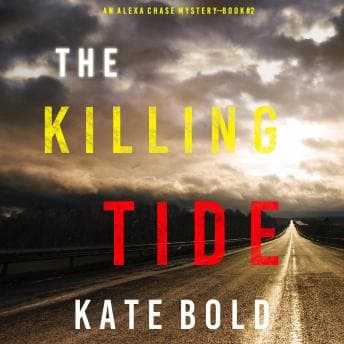
Let me be clear: The Killing Tide has the bones of a solid thriller. Alexa Chase is a fascinating case study in professional avoidance behavior. Here's a woman who was so good at profiling serial killers that the psychological toll drove her to the U.S. Marshals, where she thought she could just chase fugitives and not have to crawl inside anyone's head. The research actually shows that this kind of lateral career move—trading one high-stress role for another that feels "safer"—rarely works as intended. And sure enough, the FBI drags her right back into serial killer territory.
Psychologically, this tracks beautifully. Alexa exhibits classic approach-avoidance conflict, and watching her get pulled back into profiling work while actively resisting it creates genuine tension. The premise—federal judges being murdered, a suspect list "a mile long," the killer's vendetta possibly hiding something more sinister—is the kind of setup that should have me white-knuckling my chef's knife.
When Your Thriller Sounds Like a DMV Recording
But here's the problem. John Fisher's narration is what my therapist would call "affectively flat." And not in an interesting way.
One listener compared him to Ben Stein saying "Bueller... Bueller..." and honestly? That's generous. At least Ben Stein was doing a bit. Fisher delivers this suspense thriller—a genre that literally depends on vocal tension—with the emotional range of someone reading terms and conditions. No character differentiation. No inflection when bodies are discovered. No urgency when Alexa is racing against the clock. Multiple reviewers noted it sounded "robotic," with some questioning whether AI was involved. (It wasn't, but the fact that people asked tells you everything.)
Why does a narrator accept a suspense thriller gig if they're going to deliver it like a quarterly earnings report? The book has an FBI profiler, judges, killers, presumably some variety of human emotion—and Fisher gives everyone the same monotone treatment. It's like watching a horror movie with the sound off. You can see what's supposed to be scary, but the impact just isn't there.
What Kate Bold Gets Right About Broken Profilers
Stripping away the audio issues, the character psychology here is surprisingly solid. Alexa's PTSD isn't just a backstory bullet point—it actively shapes her resistance to the joint task force, her friction with her FBI partner, her reluctance to do the thing she's best at. The protagonist exhibits classic trauma-driven self-sabotage, and Bold seems to understand that being "too good" at reading killers comes with a price. Before I Go To Sleep explores similar territory—a protagonist whose psychological damage shapes every choice they make, though in that case it's memory loss rather than PTSD.
The judicial murder mystery itself moves at a decent clip. Six and a half hours is lean for a thriller, which usually means the plot doesn't waste time. The twist about the next victim apparently throws Alexa's assumptions into chaos, and I appreciate any thriller that's willing to undermine its own setup. Ice Princess does something similar with its investigation structure—just when you think you've got the pattern figured out, the case pivots. Is it groundbreaking? No. But it's competent, and competence in genre fiction is underrated.
The problem is that I can only tell you what should work. I can't tell you it did work, because every time tension should have built, Fisher's delivery deflated it like a sad balloon.
Who Gets Something Out of This (And Who Doesn't)
If you're a print reader curious about the Alexa Chase series, go read the book. Seriously. The character work sounds promising, and you won't have to fight a narrator who actively works against the genre.
If you specifically want the audiobook—maybe you're a completist, maybe you've got a long commute and limited options—bump the speed to 1.25x minimum. It won't fix the monotone problem, but it'll at least inject some artificial urgency. Background listening while doing something else might work, since you're not depending on vocal cues for the suspense.
Skip this if you're looking for a gripping audio thriller that'll make your morning jog fly by. I tried. I really tried. But by the time I finished that dal (which was excellent, thank you for asking), I'd mentally checked out of the investigation entirely.
Case Closed, Diagnosis: Narrator Mismatch
Kate Bold understands how to construct a damaged protagonist and a twisty plot. John Fisher does not understand how to deliver a thriller. The mismatch is almost tragic—there's a good audiobook buried in here somewhere, suffocated by flat delivery. I wanted to care about Alexa's psychological struggle. I wanted to feel the urgency of judges dying. Instead, I got a clinic in how narration can sabotage otherwise solid material.
My recommendation: borrow this if you must, stream it as background noise, but don't spend a credit on it. The story deserves better. You deserve better. And honestly, Alexa Chase—with all her trauma and brilliance and avoidance patterns—deserves a narrator who sounds like they've actually met a human emotion.