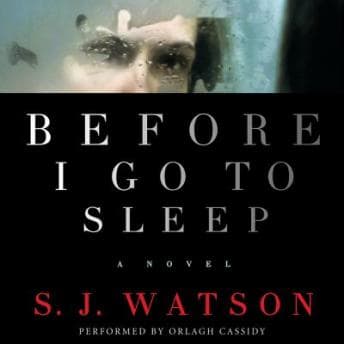

Look, I have a bone to pick with amnesia narratives. They're everywhere in psychological thrillers, and ninety percent of them use memory loss as a gimmick rather than genuine horror. So when I started Before I Go to Sleep, I was ready to be annoyed. I was folding laundry at midnight (don't ask), Shirley was judging me from her perch on the dryer, and I figured I'd give it an hour before moving on to something with more teeth.
I finished the whole thing in two days. At 2 AM. With all the lights on.
The Dread That Builds in Daylight
Here's what S. J. Watson understands that so many thriller writers don't: horror isn't about the monster in the dark. It's about the slow, creeping realization that the person you trust most might be the monster. Christine wakes up every single day with no memory of who she is. Her husband tells her one story. Her hidden journal tells another. And Orlagh Cassidy's narration - god, she gets it. She understands that Christine's terror isn't loud. It's quiet. It's the moment you realize something is wrong but you can't prove it, can't even remember why you feel afraid.
The repetition that some listeners complain about? That's the point. You're supposed to feel the claustrophobia of Christine's existence. Every morning is the same disorientation. Every day she has to rebuild her understanding of reality from scratch. Watson weaponizes that repetition, and Cassidy delivers it with this undercurrent of mounting panic that had me genuinely unsettled during my commute. (My coworkers at the library definitely noticed I was distracted during our Monday meeting.)
Where Cassidy Shines - And Where She Grates
I'll be honest. Cassidy's voice won't work for everyone. She has this particular way of emphasizing certain phrases that, after eleven hours, can feel like someone tapping the same spot on your arm over and over. I noticed it. I didn't love it. But here's the thing - her emotional delivery when Christine pieces together fragments of trauma? Devastating. She conveys confusion and horror in a way that feels earned, not melodramatic.
The character voices are distinct enough that I never lost track of who was speaking, which matters in a story where Christine can't trust anyone, including herself. Ben sounds reasonable. Dr. Nash sounds helpful. And that's exactly what makes the whole thing so unsettling. Everyone sounds like they're telling the truth.
I should mention the content warnings here because they matter: this book deals with sexual assault, domestic violence, and psychological trauma. It's not gratuitous, but it's not gentle either. If those are triggers for you, this isn't the audiobook to put on while you're winding down for bed.
The Slow Burn That Actually Pays Off
Yes, the middle section drags. I won't pretend otherwise. There's a stretch where you're reading the same journal entries, the same morning confusion, the same careful piecing together of clues - and your brain starts to wander. I caught myself zoning out during a particularly repetitive section and had to rewind about ten minutes. But the payoff in the final third? Worth it. Watson doesn't cheat. The ending isn't some out-of-nowhere twist that makes you feel stupid for not guessing it. It's the kind of reveal that makes you want to immediately relisten to catch what you missed.
Watson understands that horror isn't about gore - it's about dread. The terror of being trapped in a life you can't remember choosing. The horror of depending completely on someone who might be lying to you. Shirley Jackson walked so this author could run, and I mean that as the highest compliment I can give. That same slow-building dread lives in House of a Thousand Candles, though it trades psychological manipulation for gothic atmosphere.
Who Should Listen (And Who Should Skip)
If you're the kind of listener who needs constant action, skip this. If you get impatient with character-driven stories that take their time building tension, this will frustrate you. But if you love psychological thrillers that actually mess with your head? If you want to feel genuinely uncomfortable in a way that lingers after you pull out your earbuds? This is your book.
I'm already planning to cover it on the podcast. My listeners are going to have opinions about that ending, and I cannot wait to hear them argue about whether the signs were there all along. (They were. They absolutely were.)
I listened in the dark. Mistake? Maybe. Worth it? Absolutely.