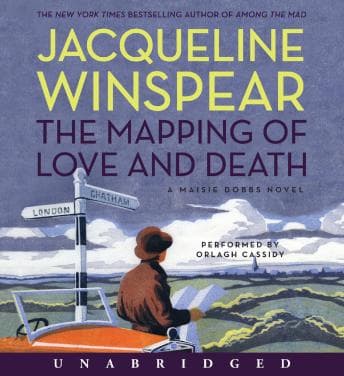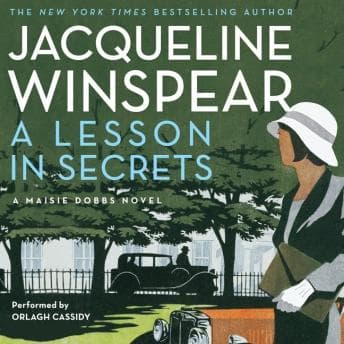

Maisie Dobbs is the colleague I wish I had in every faculty meeting — quiet, observant, and always three steps ahead of everyone else in the room.
I came to A Lesson in Secrets late on a Sunday night, grading a stack of sophomore essays on The Great Gatsby (half of which opened with "In the novel The Great Gatsby by F. Scott Fitzgerald..."), and I needed something to keep me from writing increasingly unhinged margin notes. Winspear's eighth Maisie Dobbs novel turned out to be exactly the right company — intelligent, unhurried, and concerned with the kind of moral questions that don't resolve neatly by the final chapter.
When the Mystery Is Really a History Lesson in Disguise
Let me be upfront: if you're coming to this book for a tight whodunit with clues dropping like breadcrumbs, you might feel restless. The murder of the pacifist college founder happens early enough, but Winspear is far more interested in the why than the who. And honestly? That's what makes this book worth the ten hours.
Maisie goes undercover as a junior lecturer at a private Cambridge college — and as someone who's spent two decades in classrooms, I was delighted by how precisely Winspear captures the politics of academic institutions. The petty hierarchies, the ideological posturing, the way a faculty lounge can feel like a Cold War dead drop. Maisie navigates all of it while secretly reporting to the British Secret Service about activities sympathetic to the rising Nazi Party. It's 1932, and the shadow of what's coming hangs over every conversation like fog over the lakefront.
This is why we still read the classics — and why Winspear writes books that feel like them. Three Day Road pulled me under the same way — historical fiction that uses violence and moral weight to ask questions the genre usually dodges. She's doing something Agatha Christie rarely bothered with: she's asking what happens to a detective's soul when the case is bigger than any single murder. The conspiracy Maisie uncovers isn't just criminal. It's historical. You know where it's heading. That dramatic irony — the reader's knowledge of what 1932 becomes — gives every scene a weight that pure mystery plotting can't achieve.
Orlagh Cassidy Understands That Pause Is Punctuation
Cassidy has narrated every Maisie Dobbs book, and by this eighth installment, she is Maisie in a way that goes beyond vocal performance. Her British accent is crisp and period-appropriate without sounding like a BBC costume drama parody. But what impressed me most was her work with the secondary characters — the German accents she deploys for the Nazi sympathizers carry just enough edge to feel dangerous without tipping into caricature. Her Scottish characters sound like actual Scots, not someone doing a Groundskeeper Willie impression. (My students would appreciate that reference more than the Faulkner ones.)
The real craft, though, is in Cassidy's pacing. Winspear writes scenes where Maisie is simply thinking — processing what she's observed, weighing moral calculations — and Cassidy gives those moments room to breathe. She doesn't rush internal monologue to get to the next plot beat. The prose deserves to be savored, and Cassidy knows it. At 1.0x, her delivery has a rhythm that mirrors the novel's own deliberate tempo.
One fair warning: there are stretches where Maisie is literally driving back and forth between Cambridge and London, and some listeners find these repetitive. I didn't mind — they felt like the procedural reality of intelligence work, the boring connective tissue between moments of tension — but if you need constant forward momentum, these sections might test you.
The Classroom Connection I Didn't Expect
Here's what caught me off guard. I teach kids who think history is something that happened to other people. They read about the rise of fascism the way they read about plate tectonics — as a settled fact, inevitable, distant. Winspear does something quietly brilliant in this book: she puts you inside a moment when fascism was not inevitable, when people were making daily choices about whether to ignore it, appease it, or fight it. Maisie's Cambridge college is full of well-meaning pacifists who believe dialogue will prevent the worst, and the dramatic tension comes from knowing — as they don't — that it won't.
I kept thinking about my AP students. About how I might use this book to show them that history doesn't feel like history when you're living it. It feels like Tuesday. It feels like a faculty meeting where someone proposes something monstrous in a reasonable voice.
My students would hate the pacing. I love it.
Who Gets the Assignment and Who Gets Excused
This is for readers who like their mysteries psychological and their history personal. If you loved Remains of the Day for its quiet devastation, or if Foyle's War is your idea of perfect television, Maisie Dobbs is your people. If you need a body count or a twist every forty minutes, this isn't your book — and that's fine.
Start with book one if you haven't met Maisie. You can jump in here, but the emotional payoff of watching her evolve across eight novels is considerable. This isn't a series where each book resets the clock.
Worth Pausing the Faculty Meeting For
Winspear wrote a mystery novel that's really about the cost of paying attention when everyone around you would rather not. Cassidy narrates it with the kind of quiet authority that makes ten hours feel earned rather than endured. It's not flashy. It's not fast. But it's smart, and it's humane, and it stayed with me longer than most books that try much harder to be memorable.
Principal Martinez, I promise I'll listen to the next budget presentation. Probably.