
What happens to a person's identity when they literally burn their old self and walk away?
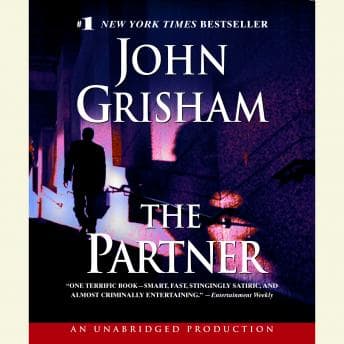
I was up late making dal makhani — the kind that needs three hours of slow simmering, which means I had nothing to do but stir occasionally and listen — when Patrick Lanigan's story pulled me in by the collar and wouldn't let go. And honestly, The Partner kept me standing at the stove long after the dal was done, just… listening.
A Man Who Murdered Himself (And Got Away With It. Sort Of.)
Here's what Grisham understands that most thriller writers don't: the most interesting crime isn't the theft. It's the psychological architecture behind it. Patrick Lanigan doesn't just steal ninety million dollars. He fakes his own death, watches his own funeral from a distance, reinvents himself as Danilo Silva in Brazil, learns Portuguese fluently, gets plastic surgery, drops weight — he systematically dismantles every marker of his former identity. The protagonist exhibits classic dissociative reinvention, but what makes him fascinating is that Grisham never lets you forget the cost. Patrick didn't just leave a law firm. He left a daughter.
I found myself asking: why does Patrick really run? The money is the obvious answer, but Grisham layers in a marriage that was already dead, partners who were already corrupt, a firm that was already stealing from its own clients. Patrick's theft starts looking less like greed and more like — what? Justice? Survival? Narcissistic rationalization? The book is smart enough not to answer definitively, which is psychologically honest in a way most legal thrillers aren't.
Compare this to something like The Firm, Grisham's other famous escape narrative. Mitch McDeere is reactive — he discovers corruption and responds. Patrick is proactive. He plans his disappearance for over a year. He's not a victim who fights back; he's a chess player who sets the board on fire. That distinction makes him far more morally ambiguous, and far more interesting as a case study in self-justification.
Frank Muller Earns Every Dime of His Audie Award
Frank Muller's narration here is the kind of performance that makes you forget you're listening to one person. His enunciation is razor-sharp — there's a crystalline quality to his voice that suits Grisham's clean, declarative prose perfectly. Where he really shines is in pacing: during dialogue-heavy legal scenes, he brings genuine energy, almost an urgency, that keeps courtroom strategy from feeling like a lecture. His slight tonal shifts between characters are subtle — this isn't a full-cast theatrical production — but they're consistent enough that you always know who's talking without checking.
The thing I appreciate most? Muller doesn't oversell the tension. When Patrick is being tortured early in the book (content warning: it's brutal, involving burns), Muller lets the prose do the heavy lifting. He doesn't go full dramatic performance. The restraint is what makes it horrifying. My therapist would have thoughts about why I found that scene so effective while stirring lentils at midnight, but here we are.
Where the Clockwork Gets a Little Too Clever
Here's my one real complaint, and it's with Grisham, not Muller. The final few chapters stack twist upon twist upon twist in a way that starts to feel less like organic character behavior and more like a novelist showing off his plot machinery. Patrick has contingency plans for his contingency plans, and at a certain point — psychologically, this doesn't track. No human being, no matter how meticulous, can anticipate every variable across four years and three countries. The research actually shows that real-life fugitives succeed through adaptability, not omniscient planning. Patrick starts feeling less like a desperate man and more like a screenwriter's fantasy. Interestingly, T Is for Trespass handles this much better — Grafton lets her antagonist be frighteningly competent without tipping into implausibility, and the psychological profile actually holds together under scrutiny.
It doesn't ruin the book. But it knocks the ending down from "stunning" to "very satisfying, with an asterisk."
Who Gets the Most Out of This
If you like legal thrillers where the psychology actually holds up — where characters make choices that feel rooted in who they are rather than what the plot demands — this is one of Grisham's best. It's also a strong pick if you're newer to audiobooks or English isn't your first language; Muller's clarity is genuinely exceptional.
Skip it if you need likable protagonists. Patrick is compelling, but he abandoned his infant daughter and faked his own death. The book asks you to root for him anyway. Whether you can is your own moral Rorschach test. That same tension between compelling and likable kept me riveted through Woman in Cabin 10, where the protagonist's credibility is constantly in question and you're never quite sure if your investment in her is warranted.
The Case File, Closed
At 11 hours and change, The Partner is the rare Grisham that works as both a legal procedural and a character study in self-reinvention. Frank Muller's performance is the kind that makes you understand why audiobook narration is its own art form. The ending overplays its hand, but getting there is a genuinely smart ride. I finished it, cleaned my kitchen, and immediately started thinking about what identity even means when you can just… choose a new one.
Somebody get Patrick Lanigan a therapist. And maybe me one too. (Oh wait, I have one.)