
"Work—that's all Ivan Denisovich had to keep him warm."
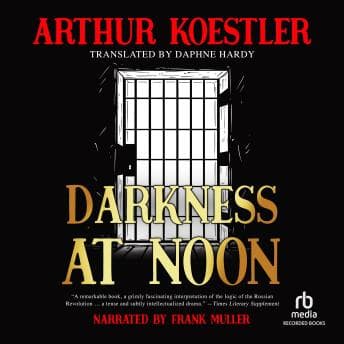
I paused the audiobook right there. Had to let that line settle. Because honestly, that's the whole book in one sentence. And Frank Muller delivers it with this quiet, matter-of-fact exhaustion that made me stop grading mid-sentence. (Sorry, Jaylen's essay on The Great Gatsby. You'll have to wait.)
I've been teaching Solzhenitsyn for fifteen years. Assigning excerpts, watching students' eyes glaze over, trying to explain why a book about a single day in a Soviet labor camp matters to kids who've never known a world without smartphones. And here's the thing—I'd never actually listened to it. Read it three times, sure. But listening? That's different.
Why This Still Hits After Sixty Years
Let's talk about what Solzhenitsyn is really doing here. This isn't a prison escape narrative. There's no dramatic rebellion, no heroic last stand. It's just... a day. One day where Shukhov (that's Ivan Denisovich's surname—we're on intimate terms now) tries to scrounge an extra bowl of gruel, hides a piece of bread in his mattress, and counts himself lucky because he didn't get thrown in solitary.
My students would hate this. I love it.
The genius is in the mundane. Solzhenitsyn makes you feel the weight of survival stripped down to its barest elements. Finding warmth. Getting food. Avoiding the guards' attention. Every carefully chosen detail—the cold seeping through worn boots, the politics of the food line, the small victories that keep a man human—deserves your full attention.
And at four and a half hours, it's tight. No fat. Hemingway talked about leaving out everything that can be left out. Solzhenitsyn learned that lesson in the camps, apparently.
Frank Muller Understood the Assignment
Here's where the audiobook format actually elevates the material. Muller doesn't try to do a Russian accent. Thank God. Nothing kills a serious literary work faster than a narrator doing dinner theater Slavic impressions.
Instead, he reads with this weathered, almost resigned cadence that feels right. He understands that pause is punctuation. When Shukhov gets that extra bowl of oatmeal—a moment of genuine triumph in this world—Muller lets the silence breathe. You feel the warmth spreading through a starving man's belly.
I've seen some folks online say the narration can get monotonous. And look, I get it. If you're expecting dramatic vocal fireworks, you'll be disappointed. But that's missing the point entirely. The monotony IS the point. These men lived the same brutal day over and over for years. Muller's steady, almost hypnotic delivery puts you in that headspace.
The production quality is clean—no weird audio artifacts or background noise. Just Muller's voice and Solzhenitsyn's words. Sometimes simple is better.
The Comparison That Keeps Coming Back
If you've read Viktor Frankl's Man's Search for Meaning, you'll recognize something here. Both men survived systems designed to dehumanize them. Both found meaning in the smallest acts of agency. That same search for humanity in impossible circumstances runs through Tattooist of Auschwitz, though Heather Morris tells it with more warmth than Solzhenitsyn allows himself. But where Frankl writes as a psychologist looking back, Solzhenitsyn drops you inside the experience with no philosophical distance.
And compared to The Gulag Archipelago—Solzhenitsyn's massive three-volume documentation of the Soviet prison system—this is almost gentle. A single day. A single man. But somehow more devastating for its restraint.
I listened to this over three morning walks along the lakefront. Chicago in February, wind coming off the lake, and I'm listening to a man trying to survive Siberia. The cold felt different those mornings. More earned, somehow. (Denise thought I was being dramatic when I came home and hugged her for three minutes straight. She's not wrong.)
Who Needs This in Their Ears
Here's who needs this audiobook: anyone who teaches history or literature and wants to understand—not just know about—the Soviet experience. Anyone who loved 1984 and wants something that actually happened. Anyone who thinks they're having a bad day and needs perspective.
Skip it if you need plot momentum—this will frustrate you. If you're looking for escape reading, look elsewhere. This is the opposite of escapism—it's immersion in a reality most of us can barely imagine.
The 1971 film with Tom Courtenay is worth watching afterward, by the way. But the audiobook gives you something the film can't—Solzhenitsyn's interior voice, the running calculation of survival that fills Shukhov's every waking moment.
I'm adding this to my podcast queue. Episode 48 might actually get some listeners. (Mom, you're going to love this one. Please don't fall asleep.)
Class Dismissed
There's a moment near the end where Shukhov reflects that the day was "almost happy." He didn't get sick, he got extra food, he wasn't caught with the bread. Almost happy. In a labor camp. In Siberia. In winter.
That line will stay with me longer than most novels I've read this year.