
What makes someone disappear? I mean really disappear - not just physically, but from the lives of people who should have noticed them slipping away?
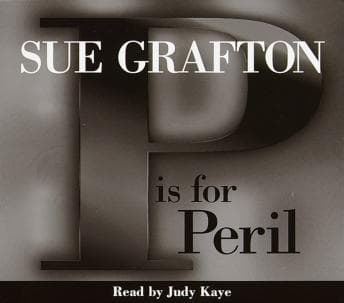
This is the question that kept nagging at me through all eleven-plus hours of P Is for Peril, and honestly, it's the reason Sue Grafton remains one of the sharpest observers of human behavior in the mystery genre. Dr. Dowan Purcell vanishes, and everyone around him - the angry ex-wife, the beautiful current wife, the colleagues, the family - they're all so wrapped up in their own psychological dramas that you start to wonder if anyone actually saw him at all.
The Psychology of Peripheral Vision
Here's the thing about this book that got under my skin: Grafton understands something fundamental about how we fail each other. The protagonist exhibits classic confirmation bias throughout - Kinsey sees what she expects to see, interprets behavior through her existing frameworks, and misses what's right in front of her. And Grafton doesn't let her off the hook for it. Doesn't let us off the hook for it.
I was listening during my morning jogs through Cambridge, and there's something about the rhythm of running that makes you notice patterns in narrative pacing. The first half? It drags a bit. I'll be honest. There's a lot of setup, a lot of interviewing witnesses, a lot of Kinsey eating fast food in her car (which, relatable, but still). But Grafton is doing something sneaky here - she's lulling you into the same complacency that traps her detective.
The research actually shows that we're terrible at noticing gradual changes in our environment. It's called change blindness. And that's exactly what happens to Kinsey. She's so focused on the missing doctor that she doesn't see the killer adjusting their position right beside her.
Judy Kaye Gets Kinsey
Okay, so the narration. Judy Kaye has this quality - I want to call it "lived-in." She doesn't perform Kinsey so much as inhabit her. The pacing is spot-on for the genre, measured but not plodding, and she differentiates the characters well enough that I never got confused about who was speaking. Kaye brings that same lived-in quality to T Is for Trespass, though in that one she's got to navigate an even darker psychological landscape. (My therapist would have thoughts about how often I get confused during audiobooks. Apparently I "dissociate during passive activities." Cool.)
I've seen some complaints about her accent being "too strong," and look - I didn't find it distracting, but I also grew up code-switching between Jersey and my parents' Hindi, so maybe I'm not the best judge of what constitutes "too much." Your mileage may vary.
What I appreciated most was how Kaye handles Kinsey's internal monologue. There's a lot of it in Grafton's books - Kinsey processes everything through this running commentary in her head - and Kaye makes it feel like eavesdropping on someone's actual thoughts rather than listening to someone read a diary aloud.
The Fatal Attraction Problem
Now, the romantic subplot. The man Kinsey finds attractive who's "hiding a fatal secret." This is a fascinating case study in how smart women make dumb choices when loneliness intersects with opportunity. And before you come at me - I'm not victim-blaming. I'm observing a pattern that Grafton herself is clearly critiquing.
Kinsey is isolated by design. Her work requires it. But isolation creates vulnerability, and vulnerability makes us miss red flags we'd spot in a friend's relationship from a mile away. Grafton understands human nature here in a way that feels almost clinical. It's not romantic. It's diagnostic.
Psychologically, this tracks perfectly. We're more likely to ignore warning signs in people who meet our emotional needs. It's not stupidity. It's survival instinct misfiring. I've seen this same pattern play out in From Dead to Worse, where characters make choices that look baffling from the outside but make perfect sense once you understand what they're trying to protect.
Who Should Listen (And Who Should Skip)
If you're already invested in the Kinsey Millhone series, this is a solid entry. Not the strongest - I found myself asking: why does Grafton spend so much time on the nursing home subplot? - but the payoff in the final third makes the slower middle worth it. Skip this one if you need constant action; Grafton writes procedurals, not thrillers. And if you're new to the series, maybe don't start here. You'll miss the accumulated weight of Kinsey's character development, and some of the emotional beats won't land the way they should.
The pleasure here is in the accumulation of detail, the slow revelation of character, the moment when you realize you've been looking at the puzzle wrong the whole time.
I finished this one making dal for dinner, standing in my kitchen stirring and listening to Kinsey finally put the pieces together. And I thought: this is what makes a good mystery. Not the shock of the reveal, but the satisfaction of watching someone see clearly at last.
Even if it takes them - and us - way too long to get there.