
What would you pack if you knew you'd never see a store again?
That question sat with me through the whole two hours of this one. I was up late, couldn't sleep - Linda was out cold and Ranger was snoring at the foot of the bed - so I plugged in and figured a short history listen would knock me out. Instead I ended up sitting in the dark, genuinely fascinated by 17th-century garbage.
The Logistics Problem That Built America
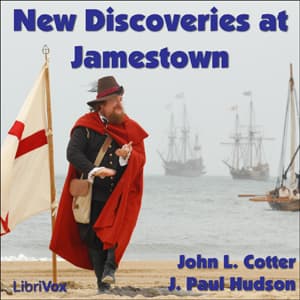
Let me cut to the chase: this is an archaeology report written for the National Park Service in 1956, and it reads like one. That's not necessarily a bad thing. Cotter and his co-author Hudson approach Jamestown the way I'd approach a site assessment - methodical, evidence-based, no speculation beyond what the data supports. They catalog what was found in the ground at Jamestown across multiple excavation efforts, then cross-reference it with shipping manifests and period documents from England.
What hooked me was the logistics angle. I've spent a career thinking about supply chains - what do you bring when you're deploying somewhere with nothing? The Jamestown colonists faced a version of that problem that makes a FOB in Helmand Province look like a resort. No resupply for months. No infrastructure. Hostile locals (and I mean actually hostile, not just uncooperative). The book walks through categories of artifacts - arms and armor, tools, ceramics, glassmaking equipment, apothecary supplies - and each category tells you something about what those people prioritized and what they got wrong.
I've seen this scenario play out in real life, minus the muskets and clay pipes. The planning failures that killed colonists aren't that different from the planning failures that get people killed in modern operations. Miracles and Massacres covers some of these same brutal lessons from American history, though with more narrative drama. Too many gentlemen, not enough tradesmen. Too much focus on finding gold, not enough on growing food. The artifacts tell that story better than any narrative history could.
Mark F. Smith and the Art of Making Pottery Shards Interesting
Here's the thing about a two-hour audiobook that's essentially a catalog of dug-up objects: the narrator has to carry it. Smith does solid work here. He's got a steady, clear delivery that treats the material with appropriate seriousness without making it sound like a lecture you'd sleep through in a college auditorium. When the text gets into dense descriptions of ceramic types or iron hardware classifications, he maintains enough energy to keep you tracking.
Is it a performance that'll blow you away? No. But for a LibriVox-style volunteer recording of a government publication from the Eisenhower era, it's genuinely good. Smith sounds like a guy who actually cares about this material, and that comes through. One listener nailed it when they said he "makes everything interesting" - that's about right. He's not doing voices or dramatic readings. He's being a smart guide through dense material, and that's exactly what this book needs.
The audio quality is clean enough. No production tricks, no sound effects, no music. Just a man and a microphone and a lot of information about colonial-era belt buckles.
Who This Is Actually For
Let me be direct. If you want a narrative about the Jamestown colony - the drama, the starvation, the Pocahontas story - this isn't it. This is the after-action report. This is the evidence collection. It's written for people who find a corroded hinge interesting because of what it tells you about construction methods and available materials in 1610.
If you're planning a trip to Jamestown for the historical sites, this is excellent prep. If you're into material culture, early American history, or archaeology methodology, you'll eat this up. If you're a logistics nerd (guilty), the supply chain implications are fascinating.
But if you need plot, characters, or anything resembling dramatic tension - wrong book. This is reference material performed aloud, and it knows what it is.
Worth Your Time? Here's the Debrief
At just over two hours, this is barely a commitment. I finished it in one sleepless sitting and came away knowing more about 17th-century colonial life than I expected to from what's essentially an excavation summary. The author clearly did their homework - well, Cotter literally spent his career doing this homework, so that's underselling it. The narration serves the material well. It's not going to change your life, but it's a sharp, efficient little history lesson that respects your time.
Ranger slept through the whole thing. But then again, he's not much of a history buff.