
Here's my complaint: I've spent twenty years trying to convince teenagers that Mark Twain is more than Tom Sawyer and whitewashed fences. That he got dark. That he got bitter. That the man who wrote the funniest lines in American literature also wrote one of its most nihilistic philosophical documents — and most of them look at me like I've suggested we read the tax code for fun.
So I finally put The Mysterious Stranger on during a Saturday morning lakefront walk with Denise, figuring four hours was manageable. She peeled off after twenty minutes to call her sister. I kept walking. And walking. I ended up doing about seven miles because I couldn't stop.
What Twain Is Actually Doing Here (And It's Not What You Think)
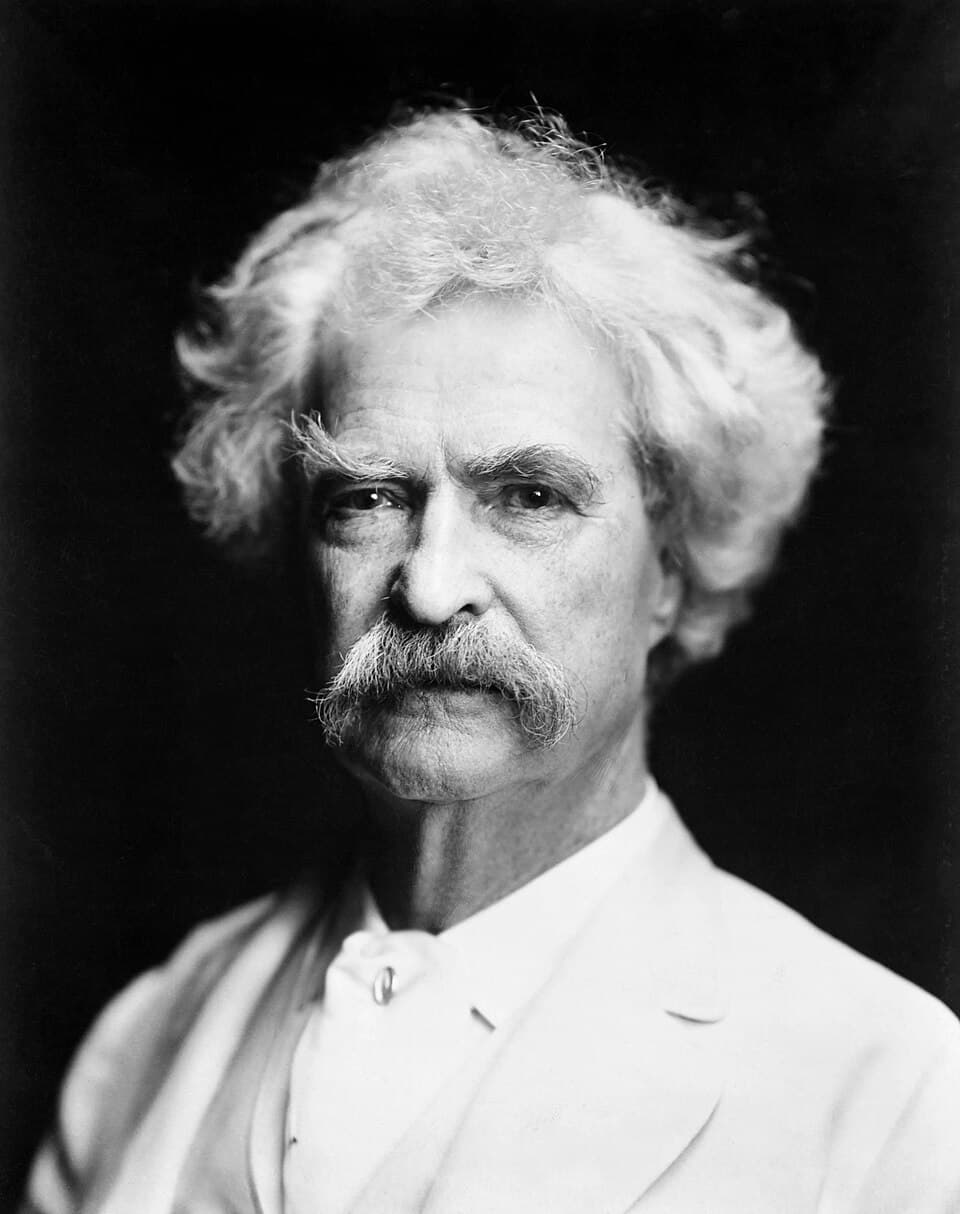
Let me talk about what Twain is really saying, because this isn't the Twain of boyhood adventure. This is the Twain of 1905, who had buried a wife and a daughter and watched American imperialism march cheerfully into the Philippines. The young Satan — not the Satan, he's careful to clarify, just a nephew — appears in this Austrian village and starts performing miracles for these boys. Creating tiny people out of clay. Predicting deaths. Rearranging futures. And while he does it, he lectures them, with complete and total serenity, about how humans are uniquely ridiculous creatures. The only animals with a Moral Sense, he says — and that Moral Sense is precisely what makes them capable of cruelty that no animal would bother with.
That's not a subplot. That IS the book. A fourteen-year-old boy watches a supernatural being dismantle every justification humanity has ever offered for its own behavior, and he can't argue back because Satan keeps being right. The scene where Satan creates a miniature civilization of tiny clay people, lets the boys watch them build and love and fight — and then casually crushes them when they become inconvenient — is one of the most quietly devastating things Twain ever wrote. No melodrama. Just a being who genuinely cannot understand why you'd be upset.
My students would hate this. I love it.
The Narrator, and an Honest Admission
I'm going to be straight with you: Michael Scott (not that one — I had the same moment of confusion) is a competent narrator for this material, but I'm working with limited information here, so I'll tell you what I actually heard rather than what I can't verify.
What I can say is that this text demands a very specific register — it needs to carry Twain's irony without winking at it, because the moment you wink, the whole philosophical weight collapses into a joke. The prose deserves to be savored, and at 1.0x (yes, I'm that person, and I will die on this hill), the pacing felt appropriate. Satan's speeches — and there are several long ones — need a narrator who understands that pause is punctuation. That a beat before "and that is what makes you pitiable" lands differently than rushing through it.
The narration didn't get in the way. For a four-hour listen, that's not nothing. But I can't in good conscience tell you it elevated the material the way, say, a truly committed performance might've. This is a book that could use a narrator with a slightly otherworldly quality for Satan's voice — something that separates him from the Austrian village boys narratively, not just through dialogue attribution. Whether that happened here is something you'll have to judge for yourself.
The Part That Stayed With Me on the Walk Home
The ending. I won't give it away, but Twain's final paragraphs — written, remember, by a man who never finished this book and left multiple manuscript versions that editors later assembled — read like someone who got to the bottom of the glass and decided there was nothing left to be polite about. It's the kind of ending that makes you stand on a lakefront path in November wind and just... stare at the water for a minute.
Denise called to ask where I'd gone. I was about four miles past where she'd left me.
If you loved Candide — that same combination of satirical lightness and genuine philosophical despair — this is its spiritual successor in American literature. Shorter, angrier, and written by a man who'd earned every bit of the anger.
Who Should Actually Listen to This
Readers who know Twain only from the Adventures books need this as a corrective. It's four hours. You can do four hours. Philosophy students who think pessimism started with Camus should also hear what a sixty-nine-year-old Missouri humorist was saying in 1905. And anyone who's ever had a student ask "why does any of this matter" — I've been known to assign this as an answer to that question, which is either brilliant pedagogy or evidence that I've been teaching too long. Probably both.
Skip it if you want Twain to be warm and folksy. He is not warm and folksy here. He is done with you, and with all of us, and he wants you to know it. Stephen King gets to that same place of genuine, unadorned contempt for human nature in Skeleton Crew: Selections — different genre, different century, same conclusion about what we're capable of when nobody's watching.