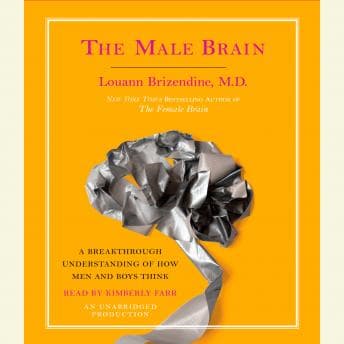

Everyone told me this was the book that would "explain men" to women and help men understand themselves. I went in expecting breakthrough neuroscience. What I got was closer to a well-footnoted Men's Health article.
Let me be clear - I didn't hate this. At 4 hours and 30 minutes, Brizendine at least respects your time, which is more than I can say for 80% of the pop-science shelf. But "respecting your time" and "being worth your time" are two different conversations.
The 45-Minute Insight Buried in 4.5 Hours
Here's what's genuinely useful: Brizendine walks through the male brain lifecycle - from fetal testosterone surges through the "irritable male syndrome" of aging - and some of this is legitimately fascinating. The section on how teenage boys experience a 250% testosterone increase that literally changes how they read facial expressions? That hit different as someone who watched my dad navigate American business culture with a Korean emotional vocabulary. The idea that adolescent boys aren't being rude - their brains are genuinely misreading neutral faces as hostile - that's the kind of insight I can actually use with the startup founders I coach, half of whom are still operating on teenage wiring.
The claim that the male sexual pursuit area is 2.5 times larger than the female equivalent gets thrown around early and often. It's the kind of stat that makes great cocktail party ammunition but leaves you wondering about methodology. Brizendine cites studies, sure. But I've sat through enough McKinsey presentations to know that citation density isn't the same as rigor. I ran into a similar credibility gap with Birds Now and Then and The Bird Primeval — confident claims propped up by selective evidence that looked sturdier than it actually was.
Where My Parents Would Call BS
This is my fundamental problem with the book: it treats "male" as a monolith. The male brain described here is overwhelmingly Western, middle-class, and operating in a context where men have the luxury of "compartmentalizing" work and emotion. My father ran a dry cleaning business in Koreatown for 30 years. He didn't use his "analytical brain structures" to solve personal problems because personal problems and business problems were the same thing. The rent was personal. A broken press was emotional. The hierarchy Brizendine describes as hardwired? In my dad's world, hierarchy was economic - you deferred to whoever could pull your line of credit.
This is what my parents did instinctively. Now it has a TED talk. Except the TED talk version strips out all the cultural, economic, and circumstantial context that actually matters.
Some male listeners apparently felt stereotyped by the book, and honestly, I get it. When you reduce male behavior to "testosterone did it," you're giving men either an excuse or a cage, depending on who's reading. Neither is helpful.
Kimberly Farr Does the Heavy Lifting
I'll give credit where it's earned - Kimberly Farr's narration is the reason I finished this. She's an AudioFile Earphones Award winner and you can hear why. Her delivery of dense neurological terminology is clean and conversational, like a really good professor who doesn't need to dumb things down because she trusts you to keep up. For a book that's essentially one long science lecture organized by life stage, that matters. She doesn't oversell the dramatic moments or drag through the data-heavy sections. Steady, clear, professional.
But - and I say this as someone who listened during a late Tuesday night prepping slide decks for a client pitch - a woman narrating a book called "The Male Brain" creates an interesting dynamic. It's not a flaw exactly, but there's a slight disconnect when Farr reads passages about the internal male experience with clinical authority. Like having your mechanic explain what it feels like to be a car. Competent? Absolutely. Authentic? That's a different question.
Who Gets Value Here (And Who Doesn't)
If you've never read pop neuroscience about gender differences, this is a decent entry point. It's short, accessible, and Farr makes it easy to absorb. If you're a woman trying to understand the men in your life, you'll get some "aha" moments - particularly the sections on why men withdraw during stress and how the daddy brain actually does rewire after a child is born.
If you're a man looking for self-understanding? Skip to the chapters on aging and hormonal decline. That's the least-discussed, most-useful material. The rest you probably already know from living in your own head.
If you're a consultant, therapist, or anyone working with male clients? Read the citations, not the conclusions. The primary research Brizendine references is often more interesting than her interpretations.
The Efficiency Verdict
Bottom line: this is a 3-star book with a 4-star narrator and a 2-star thesis. It's not bad science exactly - it's incomplete science dressed up as complete understanding. At 4.5 hours, the time investment is low. The insight-per-hour ratio is decent but not great. My 2.0x speed couldn't save this one - not because it was slow, but because going faster just made the oversimplifications arrive sooner.
Jenny would say I'm being harsh. Jenny is right. But she'd also agree that "breakthrough understanding" is doing a lot of work in that subtitle.