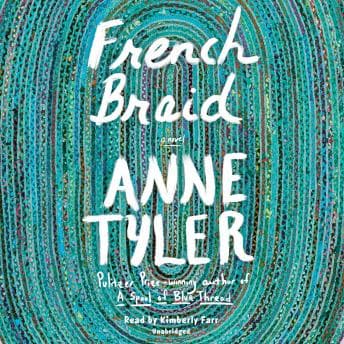

"They were closer than they realized, but they couldn't see it."
That line hit me somewhere around hour seven, and I had to pause the audio because Frida was looking at me like I'd lost my mind. I was crying into my coffee at 2 PM on a Tuesday. Over a family vacation from 1959. Over people who aren't even real.
But that's the thing about Anne Tyler—she makes the ordinary feel like the most devastating thing you've ever witnessed.
The Slowest Knife You'll Ever Love
Let me be honest: if you need plot, if you need things to happen, this book will feel like watching paint dry. And I get it. I've read the complaints. "Boring." "Humdrum." "Gave up three-quarters through."
But here's what those reviews miss—this isn't a book about what happens. It's about what accumulates. The Garretts don't have dramatic blow-ups or shocking revelations. They have decades of small misunderstandings, tiny retreats, moments where someone could have said something but didn't. Tyler stacks these moments like sedimentary rock until suddenly you're looking at the Grand Canyon of family dysfunction and thinking, oh. Oh, this is how it happens.
Mercy Garrett wants to paint. That's it. That's her crime. She wants something for herself, and the ripples of that wanting echo through three generations. Her husband Robin builds a hardware store. Their daughters Alice and Lily become entirely different women. Their son David just... leaves. Not dramatically. Just slowly. The way people actually leave.
The awkward Easter dinner scene? I was designing a logo for a local bakery while listening, and I had to stop because I was holding my breath. Nothing happens at this dinner. Everyone is polite. Everyone is careful. And it's absolutely suffocating.
Kimberly Farr Gets It
Okay, so some people don't vibe with her voice. I've seen those reviews too. But for me? Kimberly Farr understood the assignment.
She doesn't do voices in that theatrical way some narrators do. Instead, she shifts—just slightly—between generations. The teenage Lily has this breathless quality. The elderly Mercy has a kind of tired patience. Robin sounds like every well-meaning man who has no idea he's failing his wife. It's subtle work, and it requires you to actually pay attention.
The fly-on-the-wall quality is real. There's this 50th wedding anniversary scene where the family gathers and everyone is performing normalcy while the cracks show through, and Farr delivers it with this warmth that makes the sadness underneath even more devastating. She doesn't push the emotion. She trusts you to find it.
At 1.0x speed (because I'm not a monster), the nine hours felt like settling into a long conversation with someone who really sees their family. All the love. All the disappointment. All the ways we fail each other without meaning to.
When the Title Finally Clicks
I spent most of the book wondering about the title. French braid. What does that even mean?
And then there's this moment near the end—I won't spoil it, but it involves a face mask and an act of tenderness so small you could miss it—and I understood. A french braid looks like separate strands from the outside, but they're all woven together. You can't pull one without affecting the others. The Garretts think they've escaped each other. They think distance and time and silence have separated them. But they're still braided. They always will be.
Abuela would have loved this one. She used to say families are like that—you think you're your own person, and then you catch yourself making the same face your mother made, saying the same thing your grandmother said. The thread doesn't break just because you move away. Truth About Tall Tales explores that same idea—how stories get passed down and reshaped through generations, becoming part of who we are whether we acknowledge it or not.
I cried at the final paragraph. Not sobbing—just tears running down my face while Diego judged me from the windowsill. The quiet kind of crying. The kind that means something landed exactly where it needed to.
Who This Will Wreck (And Who'll Be Bored Senseless)
This is for you if: you've ever looked at your family and thought how did we get here? If you love character studies over plot. If you want a book that feels like a Sunday afternoon that stretches into evening. If you appreciate narration that whispers instead of shouts.
Skip it if: you need momentum. If family dramas without explosions bore you. If you're looking for resolution or catharsis. Tyler doesn't do neat endings. She does real ones.
Perfect for a long drive or a rainy weekend. Requires focus—this isn't background listening. You need to be present for the small moments or you'll miss everything that matters.
Adding This One to the Cry Spreadsheet
Twenty-four novels in, and Anne Tyler is still finding new ways to break me with ordinary people living ordinary lives. French Braid is not her flashiest work. It's not going to grab you by the throat. But if you let it, it'll settle into your chest and stay there—this quiet ache about the people who made you, the people you've become, and all the things that went unsaid along the way.
The vibes are immaculate. The sadness is earned. Three crying sessions, all of them worth it.