
What do you do with a mother who loves you but couldn't protect you from the worst parts of your childhood?
I finished this one parked in my driveway at 7:15 AM, engine off, Carlos probably wondering why I hadn't come in yet. The sun was coming up over the Superstitions and I just... sat there. Needed a minute. This book does that to you.
The Quiet That Says Everything
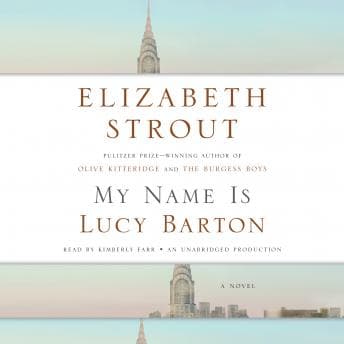
Elizabeth Strout writes the way my patients talk when they're finally ready to tell me what's really wrong. Not the chief complaint—the real thing. Lucy Barton is in a hospital bed (and yes, the hospital details are accurate, finally—the fluorescent lights, the strange intimacy of being stuck in one room, the way time warps when you're healing) and her mother shows up after years of silence. They don't hash out their trauma. They gossip about people from their hometown. Who married who. Who got fat. Who died.
But underneath every single sentence is this ache. This wanting. Lucy's mother can't say "I love you" directly, so she says it through stories about other people's failures. It's infuriating and heartbreaking and so, so real.
My mom does this too. She can't tell me she's proud of me without first mentioning that my cousin Tita's son just got into medical school. It's a language you learn to translate.
Kimberly Farr Gets It
Here's the thing about this narration—Farr doesn't do voices. There's no attempt to differentiate Lucy's mother or her husband or the various Amgash townspeople. It's all Lucy. Her memory, her interpretation, her pain filtered through decades of distance.
And it works. Farr captures this quality of someone telling you something important while pretending it's casual. That slight catch in the voice when Lucy mentions her children. The way she speeds up slightly when approaching something she doesn't want to examine too closely. AudioFile called it "nearly flawless" and I don't disagree.
Now—I've seen reviews where people found her voice irritating, described it as "controlling" or "biting." I get it. Lucy's narration has an edge. She's observing everything, processing everything, and there's a guardedness there that some listeners might find cold. But that IS Lucy. That's a woman who grew up in poverty so severe they didn't have running water, who escaped to New York and became a writer, who's still trying to figure out if she's allowed to claim her own story.
This Is Not a Plot Book (And That's the Point)
If you need things to happen, skip this one. I'm serious. Some listeners complained it felt like "psychotherapy sessions" and yeah—it kind of does. Lucy circles around her trauma the way we all do. She'll mention something devastating—the poverty, the isolation, the things her father did—and then immediately pivot to describing a dress someone wore.
At four hours and twelve minutes, it's a short listen. Perfect for one post-shift drive home and maybe part of another. But don't let the brevity fool you. This is a dense four hours. Strout packs more emotional weight into a single paragraph than some authors manage in 400 pages.
Compared to Olive Kitteridge, this feels more intimate, smaller in scope. Olive is a force of nature you observe from the outside. Lucy you're inside of, seeing the world through her particular lens of longing and observation. Some people prefer Olive's bite. I found Lucy's quiet devastating in a different way.
Who This Is For (And Who Should Run)
Listen if: You've ever had a complicated relationship with your mother. If you understand that love and damage can coexist in the same person. If you appreciate writing so spare it feels like poetry. If you want something that'll make you think about your own family on the drive home.
Skip if: You need plot momentum. If ambiguity frustrates you. If you want your emotional catharsis served up neat and resolved. Lucy doesn't get closure with her mother—not really—and neither will you.
Content heads-up: This deals with poverty, emotional neglect, and strongly implied abuse. Nothing graphic, but it's there, and it's heavy.
Clocking Out
Carlos asked why I was crying in the car. I blamed allergies. But really it was that moment when Lucy realizes her mother came to the hospital because she was scared of losing her—even though she could never say it. Even though their relationship was too broken to fix.
My mom would love this. She'd also call me afterward and talk about literally anything else, and I'd know what she really meant. Untamed hit me the same way—that recognition of truths you've been living but couldn't name.
Some books entertain you. This one understands you. That's rarer.