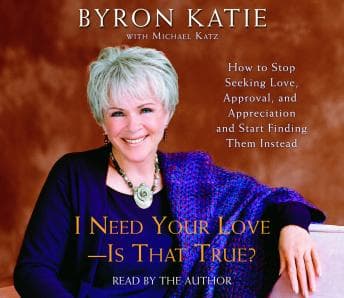

"What if you didn't need anyone's approval to be happy?"
I was on the 7:12 AM Caltrain, crushed between a guy manspreading into my seat and someone's overly fragrant breakfast burrito, when Byron Katie dropped that question. And honestly? It hit different at 6AM when you're already questioning every life choice that led you to this commute.
Look, I grabbed this audiobook because Kevin and I had one of those dumb fights about whether I care more about my manager's opinion than his. (Spoiler: I do, but only because my manager controls my promo packet.) I figured a self-help book about not needing approval might help me debug my relationship patterns. What I got was basically a cognitive behavioral therapy session disguised as philosophy.
The "Work" That Actually Works
Byron Katie's method is called "The Work" and it's stupidly simple. Four questions you ask yourself about any stressful thought. That's it. The ROI on this concept is insane - I've already used it three times this week, including once during a code review where someone called my architecture "interesting" (we all know what that means).
Here's the thing though - Katie's approach is the opposite of what every other self-help book tells you. Instead of "here's how to get people to like you" or "manifest your best relationship," she's basically saying: what if the whole premise is broken? Tao Te Ching asks similar questions about letting go of control and expectations. What if seeking approval is the bug, not the feature?
I finished this in about 4 commutes, and somewhere around hour 3, I had this weird moment where I realized how much mental CPU I burn worrying about what people think. Like, a non-trivial percentage. We're talking production-grade resources going to a process that returns nothing useful.
Kimberly Farr Keeps It Grounded
Okay so Kimberly Farr isn't Ray Porter (nobody is), but she's got this warm, clear delivery that works perfectly for this kind of content. Self-help audiobooks can go wrong fast - too preachy and you want to throw your phone out the train window, too flat and you zone out. Farr finds the sweet spot. She sounds like a really smart friend explaining something she genuinely believes in, not like she's reading a teleprompter at a wellness retreat.
The pacing is solid too. Katie includes a lot of example dialogues where she walks people through The Work, and Farr handles the back-and-forth without making it confusing. I could follow along even when I was half-asleep and the train was doing that thing where it sounds like it's falling apart.
The Parts That Made Me Squirm
I'm not gonna lie - some of this book made me uncomfortable. Not in a bad way, but in that "oh no, she's describing me" way. There's a section about how we perform for approval without even realizing it, and I immediately thought about how I phrase Slack messages to sound more casual than I feel. Or how I rehearse what I'm going to say in 1:1s. (Don't tell my manager I said that.)
The book does get a bit repetitive - Katie really hammers home the four questions from multiple angles. Could've been a blog post? No, actually, this one earns its runtime. But around hour 5, I was like okay, I get it. The last chunk is worth pushing through though.
One thing I appreciated: Katie doesn't promise you'll suddenly stop caring what people think. She's more realistic than that. It's about questioning whether your thoughts about needing approval are even true. Which, as someone who debugs systems for a living, I can respect. That same kind of radical self-inquiry shows up in Tao Te Ching, though it comes at it from a more poetic angle. Question your assumptions. Validate your inputs.
Who Should Listen (And Who Should Skip)
This is ideal commute material - engaging enough to hold attention, but you won't miss critical plot points if you zone out for a station or two. Perfect for the train or gym. Skip it if you need something for deep work sessions - it requires mental engagement, and you'll want to pause and think about your own stuff. Also skip if you're allergic to self-help or need concrete action steps rather than mindset shifts.
I've already recommended it to two coworkers who are way too stressed about their performance reviews. Kevin listened to the first hour with me and said it was "interesting" (there's that word again), but I caught him doing The Work on his frustration about the dishes last night. So.
Bottom Line: Worth your commute. This is basically CBT but for your relationship anxiety. Not life-changing in a dramatic way, but genuinely useful in a "oh, I can actually apply this" way. At 1.5x speed, you'll get through it in a week of commutes and probably annoy fewer people with your approval-seeking behavior.