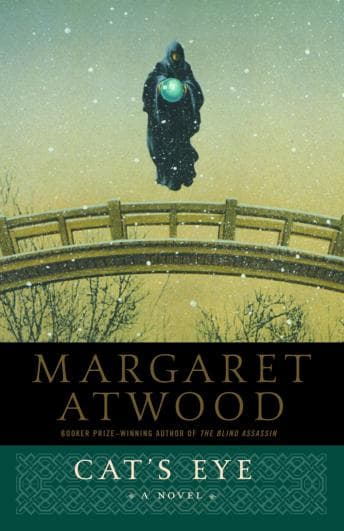

What if the monster under your bed wasn't supernatural at all - just a nine-year-old girl with a cruel smile and your secrets in her pocket?
I listened to most of Cat's Eye during a graveyard shift at the library, which - yes, I'm aware - sounds like the setup for a horror novel. Empty stacks, flickering fluorescents, and Margaret Atwood whispering about childhood psychological torture directly into my ears. Shirley Jackson walked so Atwood could run, and she runs straight into the darkest corners of girlhood.
The Real Horror Was Inside the Friendship All Along
Here's what my podcast listeners need to understand: Cat's Eye is a horror novel wearing literary fiction's clothes. The bullying scenes between young Elaine and Cordelia don't need monsters or jump scares. They have something worse - the slow, methodical dismantling of a child's sense of self by other children who've learned cruelty before they've learned long division.
Atwood writes the Sunday dinner faux pas scene with such excruciating precision that I had to pause the audiobook. Not because it was graphic. Because I remembered. That's the terror here - recognition. The way Elaine describes her abuse with this detached, almost clinical acceptance made my stomach turn. She's not performing victimhood. She's just... stating facts. This happened. I survived it. I still don't understand why.
The structure mirrors memory itself - fragmented, circling back, never quite linear. Elaine as a middle-aged painter returns to Toronto for a retrospective, and the city becomes a haunted house. Every street corner holds a ghost. Every gallery wall reflects something she'd rather forget.
Kimberly Farr's Nostalgic Fog
Here's where things get complicated. Farr's narration has this dreamy, slightly detached quality that works beautifully for adult Elaine processing her past through a protective haze. The nostalgia drips. The fuzzy edges feel intentional.
But - and this is a significant but - some listeners swear by an older, discontinued version. I can't compare what I haven't heard, so I'll tell you what I experienced: Farr captures the emotional flatness of trauma survivors describing their experiences. When Elaine recounts the bullying, there's no dramatic emphasis. No theatrical gasps. Just this steady, almost hypnotic delivery that somehow makes it worse.
She doesn't do wildly distinct character voices. Cordelia doesn't sound dramatically different from Grace or Carol. I've heard narrators try to force distinction where it doesn't belong - the performance in Hot Ice suffered from exactly that problem. But honestly? That works here. These girls blur together in Elaine's memory. They're less individuals than a collective force. A tribunal of cruelty.
The teenage sections - Elaine drying dishes with her brother, the art student sleeping with her teacher - Farr handles with appropriate wryness. There's dark humor buried in Atwood's prose, and Farr finds it without overselling.
Sixteen Hours of Excavating the Past
This is not a background listen. I tried switching to it during shelving once and completely lost the thread. Cat's Eye demands focus. The runtime - over sixteen hours - means you're committing to an extended archaeological dig through one woman's psyche.
Is it slow? Sometimes. Atwood lingers. She circles. She describes paintings that may or may not exist with the kind of detail that borders on hypnotic. If you're coming from her more plot-driven work like Alias Grace, adjust your expectations. This isn't about what happens. It's about what happened, and how we carry it.
Who Survives This Listen (And Who Won't)
If you were ever the target of girl-group cruelty - the whispered exclusions, the social games with invisible rules, the friends who became executioners - this book will crack you open. That's not a warning. That's a promise.
Skip if you need propulsive plot. Skip if you want your horror with fangs and blood. Skip if you're looking for easy catharsis or a satisfying confrontation where the villain gets what she deserves.
But if you understand that horror isn't about gore - it's about dread - and that the worst monsters are the ones who look exactly like us? Atwood gets that. The terror of Cat's Eye is that Cordelia could be anyone. Could be you. Could be the girl you were cruel to in fourth grade without quite understanding why.
Shirley (The Cat) Slept Through It. I Didn't.
My cat remained unimpressed by my 2 AM existential crisis. She's seen me scared before - usually by something with more obvious teeth. But Cat's Eye got under my skin in a different way. It's the horror of memory. The way our past selves haunt our present. The impossibility of ever really knowing if we've escaped.
Atwood doesn't give Elaine clean resolution. The retrospective happens. The memories surface. Life continues. That's the most honest ending a book about trauma could offer.
I finished the last hour during my morning commute, watching the Oregon rain streak my windshield, thinking about girls I knew in middle school. Girls I've forgiven. Girls I haven't. Girls I'm not sure I remember correctly anymore.
Horror that respects the genre - even when it pretends to be something else entirely.