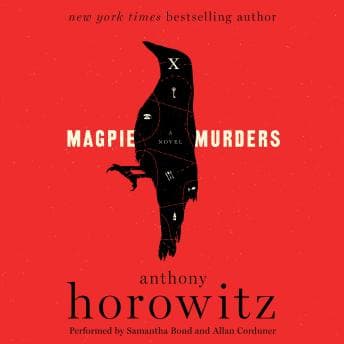

Look, I have a confession to make. I started this audiobook during a particularly brutal week of grading sophomore essays on The Great Gatsby, and I was genuinely irritated that Horowitz had the audacity to write a book-within-a-book. I'm already drowning in layers of meaning with Fitzgerald. I don't need more narrative nesting dolls in my leisure time.
I was wrong. Spectacularly, embarrassingly wrong.
The Trick Horowitz Plays on You
Here's what got me: Magpie Murders presents itself as a cozy British mystery—the kind Agatha Christie perfected and my mother still reads on her Kindle with the font set to "billboard size." You've got Atticus Pünd, a detective who's basically Poirot with a German accent, investigating a murder at a manor house. Dead bodies. Suspicious servants. The whole comfortable formula.
But then Horowitz does something genuinely clever. He embeds this Christie-style mystery inside a modern-day thriller about Susan Ryeland, an editor who realizes her author might have hidden something sinister in his manuscript. It's meta-fiction done right—not showing off, but actually serving the story. The kind of structural gamble that either collapses into pretension or works beautifully.
This one works beautifully.
The dual timeline could have been a mess. (I've read enough student attempts at experimental structure to know how badly this can go.) But Horowitz trusts his readers to keep up, and more importantly, he trusts his narrators to guide us through.
Why the Dual Narration Actually Matters
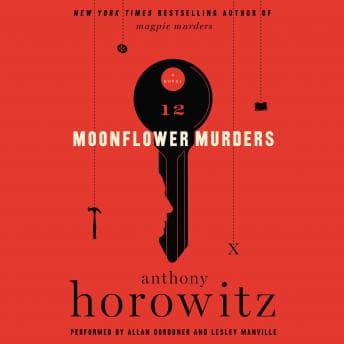
Samantha Bond handles the modern-day sections with Susan Ryeland, and Allan Corduner takes over for the Atticus Pünd chapters. This isn't just a production choice—it's essential to how the book functions.
Bond brings this warm, slightly exasperated quality to Susan that made me feel like I was listening to a colleague vent about a difficult author. There's a husky vibrato in her voice that grounds the contemporary sections in something real and lived-in. When Susan starts suspecting something's wrong, Bond doesn't oversell it. She lets the doubt creep in gradually, the way it actually does when you're reading between lines.
Corduner, meanwhile, channels that classic British detective fiction energy. His Atticus Pünd is precise, measured, almost theatrical in the best way. It's the kind of narration that makes you want to sit in a leather armchair with tea, even if you're actually walking the lakefront in Chicago trying to avoid cyclists.
The transition between narrators signals the shift between worlds so cleanly that I never got lost. And believe me, I was listening during faculty meetings (sorry, Principal Martinez), grading sessions, and one memorable walk where a very aggressive goose interrupted a crucial revelation. The audiobook held up through all of it.
Where the Puzzle Gets Personal
What elevates this beyond clever construction is that Horowitz actually cares about his characters. Susan Ryeland isn't just a framing device—she's a fully realized person dealing with a crumbling relationship, professional frustrations, and the particular loneliness of being good at a job nobody else understands. The publishing world details feel authentic in a way that made me wonder if Horowitz has some editorial grudges to work through.
And the Atticus Pünd sections? They're not parody. Horowitz clearly loves Christie and Sayers, and his homage has real affection in it. The village of Saxby-on-Avon could exist in any golden age mystery, complete with the vicar, the bitter servants, and the family secrets everyone pretends not to know.
My students would probably find the pacing slow in places. They're wrong, but I understand the complaint. There are moments where the narrative pauses for atmosphere, for character, for the pleasure of language itself. This is a book that rewards patience. The author chose those words, and Bond and Corduner deliver them with the care they deserve.
The Confession I Have to Make
I figured out one of the mysteries before the reveal. I'm not bragging—after twenty years of teaching detective fiction, I'd be embarrassed if I didn't catch some of the clues. But the other mystery? Horowitz got me. Completely. I actually stopped walking and stood there like an idiot while the pieces clicked into place.
That's rare. That's worth celebrating.
Some listeners have complained about the layered structure being confusing, and I get it. If you're half-listening while doing something else, you might lose track of which timeline you're in. But honestly? Pay attention. This is a puzzle box that rewards engagement. I had a similar experience with Sing, Unburied, Sing: A Novel—a completely different kind of puzzle, but one that demanded the same level of attention and rewarded it just as generously.
Who Gets an A, Who Should Drop the Course
If you loved Christie, if you miss the golden age of detective fiction, if you want something clever that doesn't condescend—this is your next listen. But if you need constant action or can't commit your full attention, you'll get frustrated with the pacing and lose the thread between timelines. Skip it and find something faster.
Class Dismissed
No, I wouldn't assign this to my students. They'd complain about the length and miss the point about genre conventions. But I've already recommended it to three colleagues and my wife, who listened to the whole thing during her pottery class and texted me theories at 10 PM.
This is what audiobooks can do that reading sometimes can't—give you two distinct interpretive performances that make the book's structure feel inevitable rather than gimmicky. Bond and Corduner don't just read the book. They inhabit it.
At nearly sixteen hours, it's a commitment. Worth every minute.