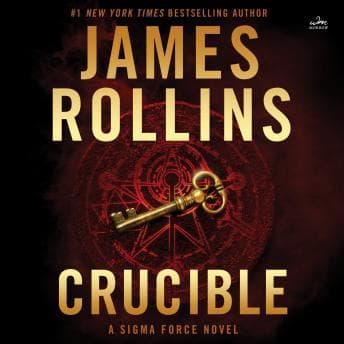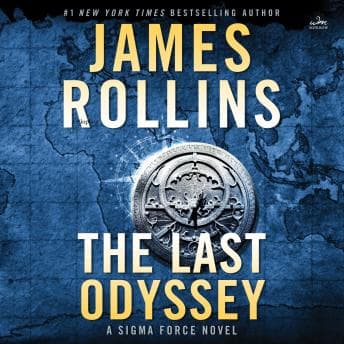

"The gates of Tartarus lie beneath the Mediterranean, and what sleeps there has waited three thousand years."
That line hit me somewhere around hour six, driving back from a client site in Houston. I-10 stretched out flat and endless, and I'll be honest—I nearly missed my exit because Rollins had me locked in on an underwater sequence that felt like a tactical nightmare I'd actually want to plan around.
Let me cut to the chase: James Rollins delivers what he always delivers—a high-octane blend of ancient mystery and modern firepower that moves like a well-coordinated assault. The premise here is bonkers in the best way. A medieval ship frozen half a mile under Greenland ice, carrying Bronze Age weapons and a clockwork map built by the Banu Musa brothers—Arab inventors who made Leonardo da Vinci look like he was working with Legos. That map? It traces Odysseus's actual route from Troy and reveals a subterranean world that the Greeks called Tartarus. Hell itself, basically. And someone wants what's down there.
When Homer Meets Modern Warfare
What Rollins does exceptionally well is make the mythological feel tactical. The Titans aren't just ancient stories here—they're threats that require modern military solutions. Sigma Force operates like any special operations unit I've worked with or against: compartmentalized intel, rapid adaptation, and a healthy respect for things that can kill you in creative ways. The team dynamics feel authentic. Commander Gray Pierce leads without micromanaging. Seichan operates in that moral gray zone that every good operator understands. And the supporting cast—Kowalski especially—provides the kind of dark humor that anyone who's served recognizes immediately.
The research is solid. Rollins clearly did his homework on Kurdish resistance fighters, Turkish military operations, and the absolute mess that is modern Middle Eastern geopolitics. I've seen that region up close, and while he takes creative liberties (it's fiction, after all), the bones are right. The way he weaves in real historical figures—the Banu Musa brothers were actual ninth-century inventors—gives the fantastical elements just enough grounding that you buy in.
At 14 hours, this is a commitment. But Rollins earns nearly every minute. The pacing operates like a proper mission brief: setup, insertion, complications, adaptation, resolution. Rinse and repeat across multiple parallel storylines that converge with satisfying precision.
Baskous Behind the Mic
Here's where I have to be direct, and it pains me because the story deserves better. Christian Baskous handles the American characters and straight narration competently—good pacing, appropriate tension during action sequences, clear differentiation between male and female voices. When Sigma Force is doing Sigma Force things, he's right there with you.
But the accents. Lord, the accents.
Every time a Turkish character speaks, or a Kurdish fighter, or anyone with a Mediterranean background, Baskous attempts something that lands somewhere between distracting and actively painful. I've worked with interpreters and local nationals from that region for years. I know what those accents actually sound like. This isn't it. It's like he watched a few movies and decided that was sufficient preparation.
The frustrating part? He doesn't need to do accents at all. A slight vocal shift, a different cadence—that's enough. The attempt at authenticity backfires into parody. By hour eight, I found myself tensing up whenever a non-American character started speaking, which is the opposite of what you want in an audiobook.
Mission Debrief
Rollins fans will find exactly what they're looking for: ancient mysteries, modern action, and that signature blend of real science and creative speculation that makes his books feel smarter than most thrillers. The Odyssey connection works surprisingly well—he treats Homer's text as a coded historical document rather than pure myth, and the reveals are genuinely clever.
If you can push past the accent issues, the story absolutely delivers. I'd recommend bumping to 1.25x speed, which actually helps—the questionable accents pass faster, and the pacing feels even more urgent. Ranger stayed alert through the entire back half, which is his version of a standing ovation.
For the tactical fiction crowd—Mitch Rapp readers, Jack Ryan completists, anyone who appreciates when authors get the military details right—this scratches that itch while adding genuine historical depth. The mythology isn't window dressing; it's load-bearing. Golden Lion pulls off a similar trick—using historical frameworks to support modern action without letting either side collapse.
Skip if: You're an accent purist who can't unhear bad vocal choices. Or if you need your thrillers grounded in pure realism—there's supernatural-adjacent content here that might not land for everyone.
Green light if: You want a smart, fast-moving thriller that respects both ancient history and modern operators. The narrator issues are a speed bump, not a roadblock.
Mission accomplished, with caveats. Rollins delivers the goods. Baskous delivers about 70% of them intact.