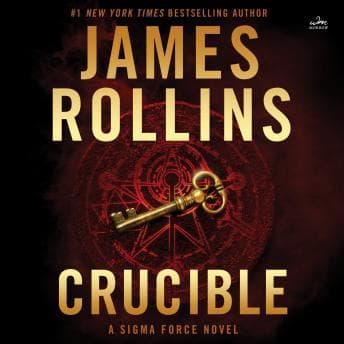

James Rollins writes the kind of books that make you forget you have a thesis due. And honestly? Crucible might be his most ambitious swing yet.
I was deep into a late-night coding session—ostensibly debugging a procedural dungeon generator, actually just staring at my screen wondering why my BSP algorithm hated me—when I decided I needed something to keep my brain from melting. Fourteen hours of Sigma Force seemed like exactly the right kind of distraction. (Dr. Patel, if you're reading this, I was definitely working on my thesis.)
When Medieval Witch Hunters Meet AI Consciousness
Here's what grabbed me: Rollins takes the Malleus Maleficarum—that's the Hammer of Witches, basically the instruction manual for the Spanish Inquisition's greatest hits—and smashes it directly into questions about artificial intelligence and what constitutes a soul. It's the kind of high-concept mashup that sounds ridiculous on paper but actually works? The magic system here isn't magic at all, it's cutting-edge neuroscience and AI theory, but Rollins treats it with the same reverence Sanderson gives his Allomancy. There are rules. There's internal logic. The progression is satisfying.
The central hook—Commander Gray Pierce's pregnant partner kidnapped, his friend's wife Kat left comatose as the only witness, a neurologist using experimental tech to unlock her memories—that's your standard thriller setup. But then Rollins starts layering in this centuries-old conspiracy connecting medieval witch trials to modern AI development, and suddenly you're getting info-dumps about consciousness theory that I genuinely found fascinating. If you don't like info-dumps, this isn't for you (but you're wrong).
The Baskous Divide
Okay, let's talk about Christian Baskous, because the listener reviews are wildly split on this guy.
Some people are calling him the worst narrator ever. Others say he keeps it exciting chapter after chapter. Having listened to the whole thing, I land somewhere in the middle—but closer to the positive side. Baskous has this intensity that matches Rollins' pacing. He's good at differentiating characters, which matters when you've got Sigma Force's ensemble cast plus historical flashback characters plus AI entities (yes, really). The action sequences hit hard. I Am Pilgrim had similarly intense narration that divided listeners, though I thought it worked perfectly for the material.
But I can see why some folks bounce off him. There's an earnestness to his delivery that occasionally tips into melodrama. And if you're coming from, say, Steven Pacey's work—Steven Pacey walked so other narrators could run—the character voices might feel less distinct than you're used to. I adjusted after about two hours. Your mileage may vary.
My recommendation: sample the first chapter before committing. If his style clicks, you're in for a ride. If it grates, maybe grab the ebook instead.
Sanderson-Level World-Building (In Thriller Form)
Look, I'm not saying Rollins is writing epic fantasy here. But the way he constructs his thriller universe—the historical research, the scientific speculation, the way past and present threads connect—it scratches the same itch. My D&D group would love this. Specifically, my DM would steal the AI-as-emergent-consciousness concept for his next campaign, and I would let him because it's genuinely clever.
The book asks: if you could create an artificial mind, would it have a soul? Tolkien wrestled with similar questions about creation and consciousness in Silmarillion, though he approached it through mythology rather than neuroscience. And then Rollins answers that question through explosions and chase sequences and centuries-old secrets, which is exactly how I prefer my philosophy delivered.
At 14 and a half hours, yes, it's a commitment. Yes, it's worth it. I finished it at 3 AM on a Tuesday, my thesis still unwritten, my procedural generator still broken, and I regret nothing.
Roll For Initiative
Who should grab this: Fans of the Sigma Force series (obviously), anyone who likes their thrillers with a hefty side of historical mystery, readers who enjoy Michael Crichton's science-forward approach but want more action. If you've ever gotten into an argument about whether AI can be conscious, this book is for you.
Who should skip: If you need a narrator with a softer touch, or if info-heavy sections make you zone out, or if you're looking for something light—this ain't it. Content warnings for violence, some language, and brief sexual content.
This is one of Rollins' best. The central mystery is genuinely surprising, the action is relentless, and the philosophical questions actually land instead of feeling tacked on. Baskous keeps the energy high even when the exposition gets dense. I'd recommend it for focused listening—driving works great, but maybe not for background audio. Too much plot to track.
Now if you'll excuse me, I have a thesis to pretend to work on.