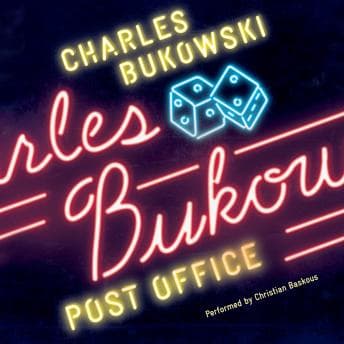

I need to lodge a formal complaint with whoever decided that Charles Bukowski should be taught in high school English classes. Not because he's inappropriate - though he absolutely is - but because I spent twenty years telling students that literature should be elevated, that prose should aspire to something beautiful. And then I listen to Ham on Rye at 11 PM while grading sophomore essays about The Great Gatsby, and Bukowski makes me feel like a fraud.
Here's the thing. My students write like Bukowski. Short sentences. Blunt observations. No metaphors. I mark it up with red pen and tell them to develop their ideas. Meanwhile, this guy built an entire literary career on exactly that voice, and it works. It works so well that I found myself laughing out loud at 11:47 PM, Denise asleep in the next room, red pen frozen mid-correction because Henry Chinaski just described getting beaten by his father with the same emotional detachment he'd use for describing breakfast.
The Anti-Style That Becomes Style
Bukowski's alter ego Henry Chinaski doesn't ask for your sympathy. He doesn't even seem to want it. The Depression-era Los Angeles childhood unfolds in these matter-of-fact observations - the German immigrant father's violence, the acne that covers his body like armor he never asked for, the slow discovery that alcohol makes everything slightly more bearable. What struck me, really struck me, was how Bukowski refuses the redemption arc. There's no moment where young Henry learns a valuable lesson. No wise mentor appears. The Los Angeles Public Library and D.H. Lawrence offer escape, not salvation.
This is why we still read the classics, even the uncomfortable ones. Though I'll admit, Girl with the Make-Believe Husband offers a much gentler take on survival and what we do to endure. Bukowski understood something that Fitzgerald understood, that Hemingway understood - the American Dream has a body count, and sometimes the survivors aren't heroes. They're just survivors.
Christian Baskous Gets the Rhythm
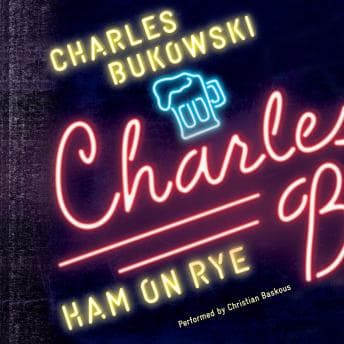
I listen at 1.0x because the author chose those words. With Bukowski, the pauses matter as much as the sentences. Christian Baskous - and I hadn't heard of him before this - understands that pause is punctuation. He doesn't try to make Chinaski sympathetic. He doesn't add warmth where Bukowski left coldness. The narration has this flat, almost deadpan quality that suddenly breaks into something approaching tenderness, then snaps back.
The character differentiation surprised me. Baskous provides distinct voices without ever feeling like he's *doing* voices, if that makes sense. Chinaski's father sounds different from his mother sounds different from the kids at school, but it's subtle. No cartoon accents. No theatrical choices. Just enough variation that you always know who's speaking. One listener called it "one of the best narrations I've ever heard," and while I've heard a lot of narrations, I understand the enthusiasm.
At seven hours and thirty-nine minutes, the pacing feels right. This isn't a book that should rush. The episodic structure - childhood memory to childhood memory, humiliation to humiliation - benefits from the steady rhythm Baskous maintains.
What Bukowski Is Really Saying
Let's talk about what the author is really saying, because my teacher brain can't help itself. This is a coming-of-age novel that refuses to let its protagonist come of age. Henry Chinaski at the end of the book isn't wiser or better or more equipped for life. He's just older, slightly more drunk, slightly more cynical. The title itself - Ham on Rye - is so aggressively ordinary, so deliberately unpoetic, that it becomes a statement.
Hemingway said the dignity of an iceberg comes from only one-eighth being above water. Bukowski keeps everything above water. He shows you the whole ugly iceberg. And somehow that's its own kind of dignity.
My students would hate this. I love it.
Who This Is For (And Who Should Run)
If you loved Catcher in the Rye but wished Holden Caulfield was less whiny and more drunk, this is your book. If you appreciate Steinbeck's Depression-era portraits but want something rawer, less sentimental, less concerned with your comfort - here you go. Skip this if you need redemption arcs, if you want your protagonists to learn and grow, or if you're looking for something to fall asleep to.
Fair warning: content warnings exist for a reason. Violence, abuse, language that would get a student sent to the principal's office, sexual content that's more sad than titillating. This isn't background listening. This is focused, dedicated listening for when you're ready to sit with something uncomfortable.
Worth Pausing the Faculty Meeting For
I finished this during Principal Martinez's monthly budget presentation. (Sorry, Principal Martinez. I really was going to pay attention this time.) And I sat there afterward, pretending to look at spreadsheets, thinking about how Bukowski made ugliness into art without ever prettifying it.
The prose deserves to be savored. Even when - especially when - it's describing something you'd rather not picture. Christian Baskous delivers it with exactly the right lack of sentimentality. If you're ready for Bukowski, this audiobook does him justice. If you're not ready, maybe start with something gentler.
But then again, gentler never changed anyone's understanding of what literature can do.