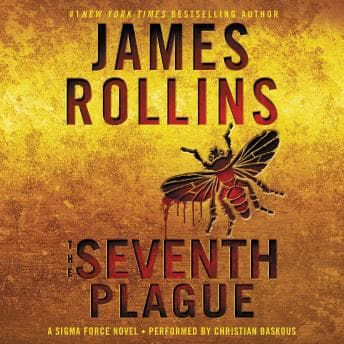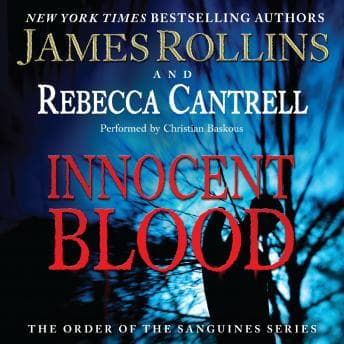
"Grief, pain, hope, and determination" — that's what Baskous delivers somewhere around hour six, and honestly, it's the line that kept rattling around my skull while I was reshelving returns at the library the next morning. I'd been up until almost 3 AM with this one, lights off in my apartment, Shirley curled up on the arm of the couch doing her best gargoyle impression. The Sanguines were doing their thing. I was doing mine.
Let me back up.
When the Vatican Sends Vampires and You Send an Archaeologist
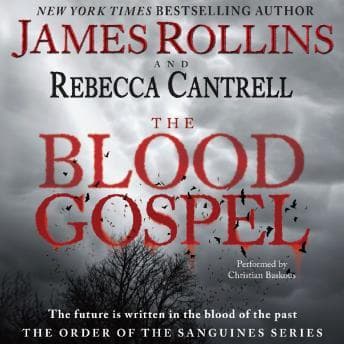
So the Order of the Sanguines series does this thing I find genuinely interesting — it takes the vampire mythos and shoves it straight into Catholic institutional horror. We're not talking sparkly boys or even gothic seduction. These are vampires bound by faith, serving the Church, and Rollins and Cantrell use that tension between predatory nature and religious devotion as the actual engine of the story. Erin Granger, the archaeologist protagonist, is the human caught between ancient spiritual warfare and a guy called Iscariot who's basically trying to speedrun the Apocalypse. The premise is wild. I respect the ambition.
But here's where Innocent Blood stumbles compared to The Blood Gospel: the heroes feel stuck. There's a lot of positioning, a lot of moving chess pieces across international locations, and not nearly enough of Erin actually doing things. For a book that clocks in at over fifteen and a half hours, there are stretches where I kept waiting for the confrontation that never quite arrives. Nicolae: The Rise of Antichrist has the same problem — heroes reacting while an apocalyptic villain runs circles around them — and I found it just as maddening there. The dread builds — and I love dread, you know I love dread — but dread without payoff starts to feel like stalling. The villains maneuver. The heroes react. And react. And react again. By hour ten, I was starting to wonder if anyone on the good guys' team was going to make a decision that actually changed the trajectory.
This understands that horror isn't about gore — it's about dread. I'll give it that. The atmosphere is thick, the world-building around the Sanguine order remains genuinely cool, and there are moments where Rollins and Cantrell tap into something primal about what it means to serve a God who might be losing. But understanding dread and sustaining it across sixteen hours are different skills, and the pacing sags in the middle third.
Baskous Has the Voice — Does He Have the Book?
Christian Baskous has this raspy quality that works beautifully for the material. When he's narrating action sequences — the attack outside Stanford, the descent into ancient tombs — his confidence sells it. He makes Erin sound like an actual academic, not a Hollywood version of one. There's intelligence in his delivery, a measured quality that grounds the supernatural elements. His transitions between accents and character voices are smooth enough that you always know who's speaking without it feeling like a performance showcase.
But. (And this is a real but.)
Something shifted between the first book and this one. I can't pin it to a single technical flaw — no mispronunciations jumped out, pacing seemed consistent — but the energy is different. Quieter, maybe. More restrained in places where the story needed him to push harder. The emotional delivery during grief scenes? Excellent. Genuinely affecting. But during those long middle stretches where the plot is treading water, Baskous doesn't quite compensate with vocal urgency the way some narrators can. He's riding the material faithfully, and when the material dips, so does the experience.
The narrator commits. That's rare. But commitment to a slow stretch is still... a slow stretch.
Growing Up Forbidden and Finding the Sacred in Monster Stories
Here's what I keep coming back to, and maybe this is the ex-religious-kid in me talking: the Sanguines concept fascinates me because it takes the institution I grew up in and says "what if the monsters were the faithful ones?" There's something deeply uncomfortable about vampires who've chosen the cross, who fight their hunger through devotion. It's body horror meets spiritual crisis. Rollins and Cantrell don't dig as deep into that tension as I'd want — this is more adventure thriller than existential horror — but the bones are there. Shirley Jackson walked so... okay, nobody's walking toward Shirley Jackson territory here. But the religious horror DNA is present, and for someone who spent their childhood being told horror was sinful, there's a particular thrill in a series that makes the Church the setting for the horror AND the salvation simultaneously.
Who Needs This (and Who Should Grab Book One Instead)
If you loved The Blood Gospel, this is worth your time — but temper your expectations. The scope expands, the mythology deepens, and Baskous remains a strong narrator even when the material doesn't give him enough to chew on. If you scare easily, skip. If you don't, you need this — but maybe not at full price.
If you haven't read the first book? Start there. Seriously. This is a sequel that assumes you're invested, and the setup-heavy pacing will feel even slower without that foundation.
I listened in the dark. Mistake? Maybe. Worth it? Absolutely. Even when the plot meandered, the atmosphere kept me pinned to my couch at 2 AM. Shirley (my cat) was unimpressed. I was... mostly engaged. Frustrated in spots. But engaged.
My podcast listeners are going to have opinions about this one. I already know.